

8 Things To Always Avoid When Using Oven Cleaner
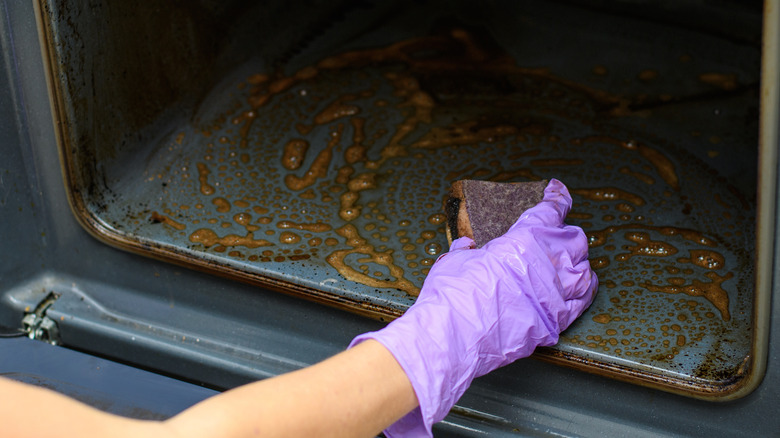
Thinking 2026 might be the year of a serious deep clean? Then there's one item you have to add to your deep cleaning checklist to make every room in your home sparkle: oven cleaner. It's incredibly potent, in part because it has to be. Your oven can be full of tough debris, whether it's carbonized frozen pizza cheese or greasy residue from a juicy roast. Powerhouse oven cleaners have chemicals that can break down the buildup, working wonders on even the dirtiest of ovens. There are also tons of unexpected ways to use oven cleaners around the house. From cookware stains to bathtub ring, the tough cleaner can seemingly do it all.
The problem is, it shouldn't be doing it all — or at least, you shouldn't be trying to do it all with this tougher-than-tough product. There are a few key mistakes people make when using oven cleaner, such as applying it where it does not belong (like ovens that rhyme with "shelf-cleaning") or storing it improperly. In short, oven cleaner works best when it is used sparingly and in the right places. When in doubt, check out our list of all the things you want to avoid if you plan on putting oven cleaner to work.
Don't use it in a self-cleaning oven
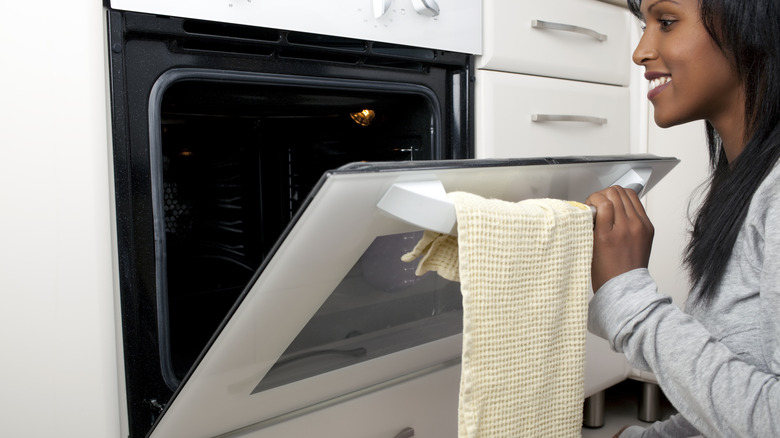
When an oven calls itself self-cleaning, it means it — you really don't need additional oven cleaner (or much of your own elbow grease) to give it the cleanse it needs. Using oven cleaner on these models can etch or break down the interior elements of the appliance, making the entire oven and its self-cleaning option less effective over time. Many manufacturers even issue warnings against it, meaning that if you ignore their guidance, it could mess with your warranty.
Don't use it if you're sensitive to harsh cleaning products

We continue to learn more about how harsh cleaning products can affect the body, from allergies to irritated skin. If you have an underlying condition like asthma or eczema, or don't react well to powerful scents, oven cleaner might be one of the common cleaning products that is doing more harm than good. See if your oven has a self-cleaning option instead, or try natural solutions like lemon steams or sugar and apple cider vinegar. Frequent cleanings can prevent buildup, allowing less harsh cleaners to easily remove grime.
Don't use it on broilers, fans, or other internal elements

If you're scrubbing away with your cleaner and run into a spot with an internal heating element, it's best to stop scrubbing. Areas like broilers and fans are often protected with sealants that can easily be broken down by harsh cleaners, rendering them ineffective or faulty going forward. Once those protective coatings are compromised, repairs can be costly and may require professional service. Instead, use more gentle agents like lightly soapy water and a microfiber cloth for these parts.
Don't use it on the oven exterior
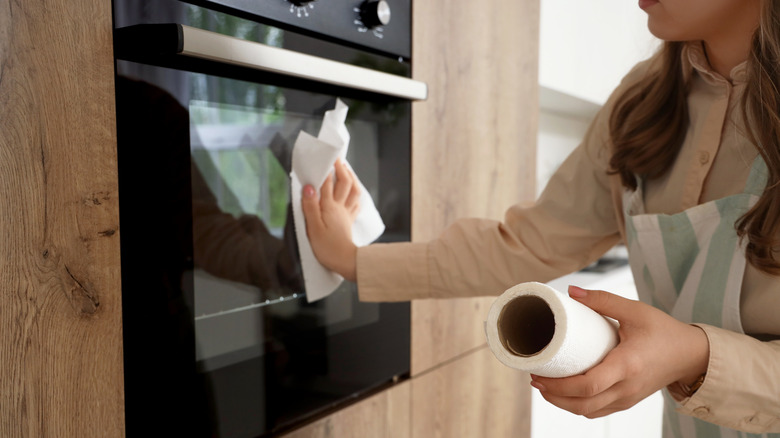
The inside of your oven may have seen some things, but the exterior of your appliance is much more innocent. It shouldn't have the same sticky residue, food debris, or carbonized bits that require tougher cleaners. In fact, those harsher chemicals could etch or damage the more fragile outer doors. Fortunately, it's easy to clean the outside of your oven using gentler household cleaners, like a baking soda and vinegar solution or an all-purpose cleanser.
Don't use it without protection
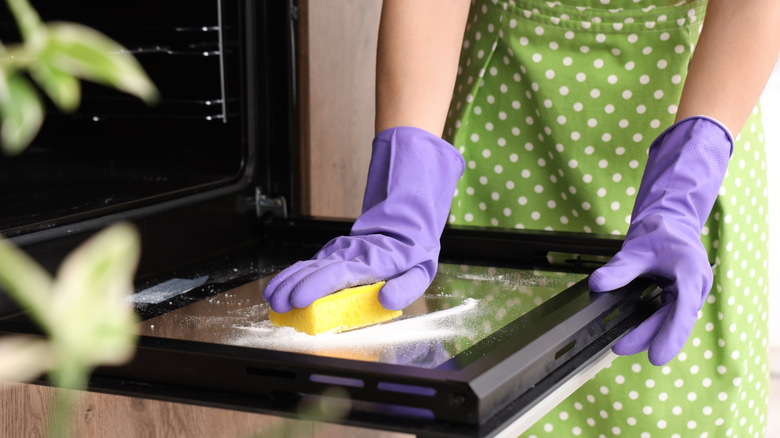
Don't let tough oven cleaner go to work on your skin or eyes the same way it does on your appliance. Use protection like good rubber gloves while you're cleaning, or a mask or goggles if your eyes or respiratory system is particularly vulnerable to harsh chemicals. When possible, it's also smart to get some good ventilation going. Consider opening a couple of windows or firing up an air purifier to ensure those chemicals aren't lingering in the air you breathe.
Don't leave any behind
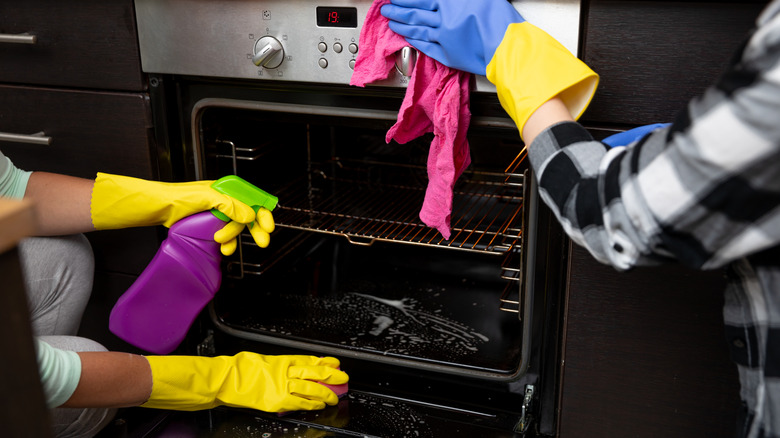
Oven cleaner is meant to do its job and then be fully removed. Or more accurately, you need to help it get the heck outta there. You'll want to follow manufacturer instructions for the entire cleaning process, but in general, a good wipedown with a damp microfiber cloth or the spritz of a little diluted dishwashing liquid should help make sure all that cleaner is gone. In some cases, heating your oven for up to 30 minutes after cleaning can help eliminate lingering residue.
Don't leave it anywhere kids or pets could find it
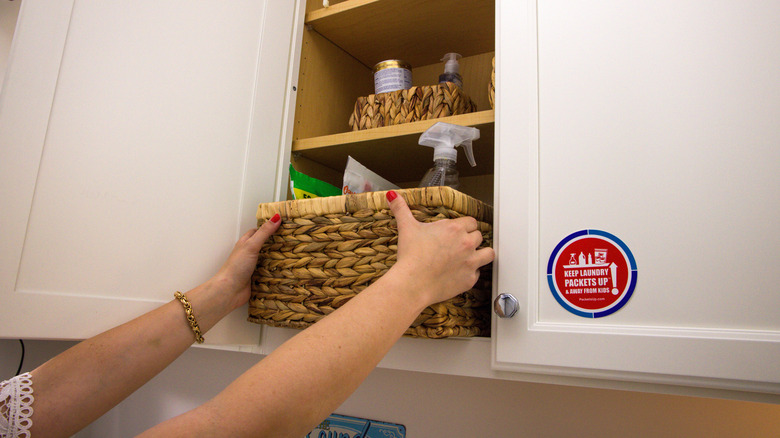
This one goes for all types of cleaning products, but it bears repeating for one of the harshest ones out there — you really don't want little kids or pets to get their hands on oven cleaner. Even if the bottle is sealed, oven cleaner is corrosive enough that a tiny amount could do harm. Accidental exposure can lead to skin irritation, breathing problems, or more serious injuries. Keep it somewhere they can't get it, and try to avoid using it when they'd be able to breathe it in.
Don't mix it with anything

Oven cleaner is designed to be strong enough to tackle anything on its own. So let it be a solo star, and avoid mixing it with any other cleaners — especially not with bleach. Combined, these products can create a toxic gas that irritates the eyes and makes breathing difficult. If your oven cleaner really isn't working its magic on its own, maybe check out a different product or consider bringing in the pros for a one-time deep clean.