

How To Get Rid Of Black Ice On Your Driveway
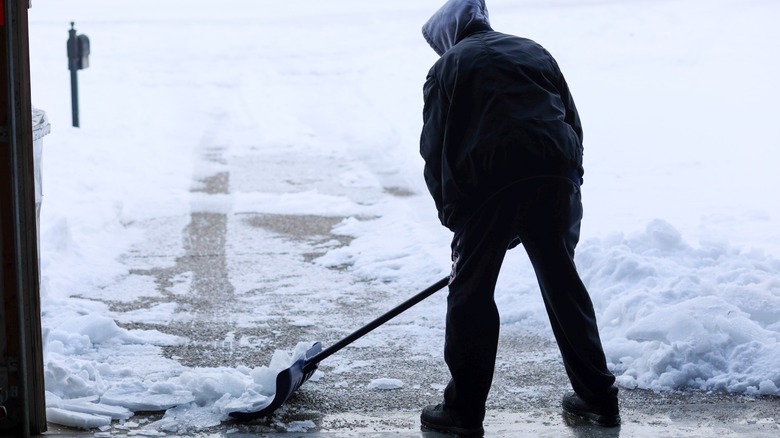
We may receive a commission on purchases made from links.
If you've ever experienced the terrifying, unexpected feeling of stepping outside onto your driveway and feeling your feet slip out from beneath you, then chances are you are familiar with black ice. Dangerous to pedestrians and vehicles alike, black ice describes thin ice sheets that form over surfaces, making it nearly impossible to spot as it hardens. This can cause you to slip while walking or your car wheels to spin. You may see black ice after rain when the temperature drops below freezing; however, it could form even when the temperature is above 32 degrees Fahrenheit. This is due to the fact that the pavement might still be colder than the air, especially when the sun isn't out. Thankfully, black ice isn't difficult to remove from your driveway.
While your local home improvement store may sell black ice-specific products, you can utilize a few basic household items, saving cash while keeping your home safe. This list includes rock salt (or sodium chloride), sand or gravel, a saltwater mix, and hot water. Some have even used pickle juice as an effective de-icer in a pinch. If the black ice is already established, try sprinkling sand or gravel onto the area. This will help create instant grip, making it easier for you to safely walk and drive across the surface. Sodium chloride, or rock salt, is another popular option as it melts ice down to 15 degrees Fahrenheit, though it can also damage concrete when used in large amounts and potentially harm surrounding vegetation. If you're wondering if salt or sand is better to melt ice on your winter driveway, the answer is a mix of both.
Here's how to remove and prevent black ice on your driveway
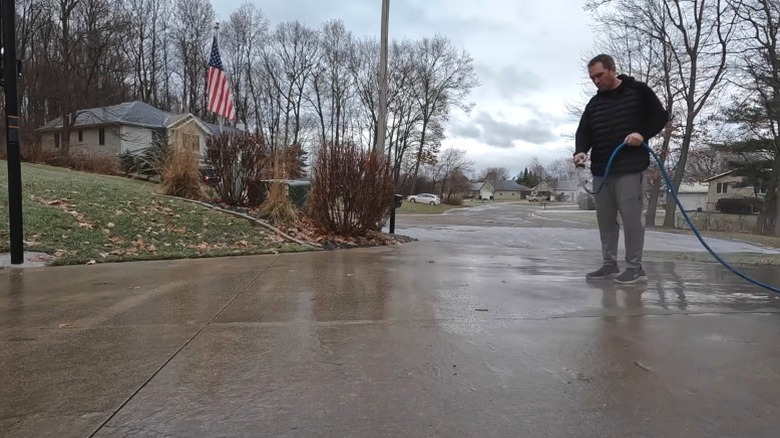
As silly as it may sound, you can even defrost your driveway with an affordable kitchen essential like dish soap. You'll just add a few drops of soap to a mix of warm water and rubbing alcohol (about ½ gallon of water and ¼ cup of rubbing alcohol). Spraying or pouring hot water alone is another easy trick that makes rock salt work faster on your ice driveway. However, it's important to note that you'll want to attempt this one when it's warmer and not going to rain or snow in the near future. Otherwise, your water will simply re-freeze into more ice.
You can work proactively to stop black ice from forming on your driveway in the first place. This includes making sure that your driveway, sidewalks, and walkways have efficient drainage, making it more difficult for water to pool and for black ice to form. Another helpful technique is to ensure your driveway stays free of snow and ice, clearing these areas as soon as inclement weather hits. You could also pre-treat these surfaces with products like magnesium chloride and anti-icers before a storm or freeze occurs. Some homeowners even invest in a heated driveway, which, as you might imagine, is a pretty pricey project, but heated mats, such as ABORON Heated Snow Melting Mats at Home Depot, offer a cheaper alternative.