

Here's How Often Should You Reseal Grout In Your Tile Shower
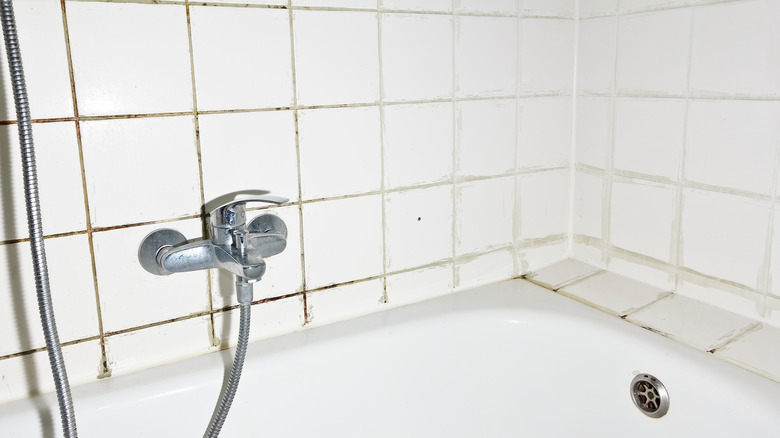
Grout is an essential part of any tile project, but it requires regular TLC to look its best, especially when dealing with a high moisture environment, like a shower. Because it's such a porous material, grout is prone to accumulating everything that hits it, from shampoo residue to skin cells. As these build up over time, they can become a breeding ground for bacteria, mold, and mildew. That's why regular grout cleaning is key, although you need to be wary of the grouting mistake everyone makes, which is scrubbing too hard and using acidic products that can actually make the grout even more porous.
Another key to maintaining a clean shower is to properly seal, and reseal, the grout. While sealing is actually not a mandatory step, it can reduce the frequency of needed cleanings and extend the overall lifespan of the grout. When dealing with cement-based grout in your shower, opt for a penetrating sealer that will be fully absorbed by the grout and work to repel residue from within. This is an easy project you can do yourself and it's recommended to be repeated at least once a year. If your shower gets a lot of use, though, you may need to reseal the grout every six months while, on the other hand, a guest bathroom might only need to be resealed every other year. Here's how to check when it's time to reseal and the best way to do so.
How to check if it's time to reseal the grout in your shower
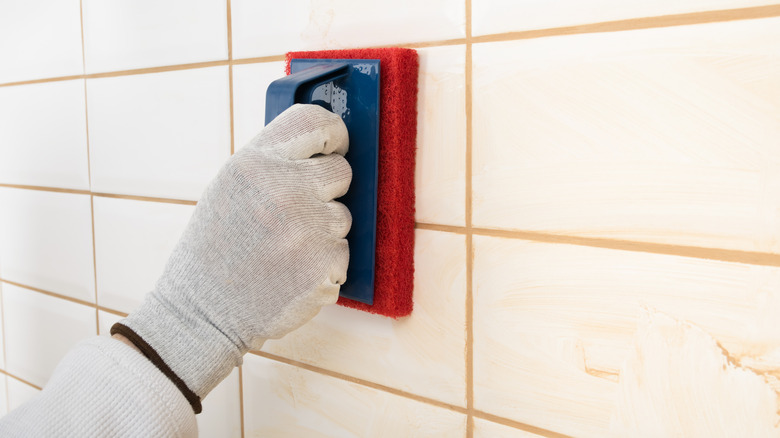
While it may be tempting to skip this optional step, what happens when you don't seal grout is that mold and mildew build up even more quickly. Adding a penetrating grout sealer to your shower is a simple but effective way to help keep nasty bacteria from taking over, although regular cleaning will still be necessary. It's important to note, though, that non-penetrating grout sealers should not be used in the bathroom because they can lock moisture in and actually encourage residue buildup.
To seal your shower grout, simply follow the label instructions, either squeezing or spraying the sealant onto clean, dry grout and allowing it to fully set. To check that it has been properly applied, spray water onto the grout lines — if the surface forms beads, your job is done. Otherwise, you should apply a second coat. Similarly, to find out if your grout needs resealing, you can use the same simple trick: Spray water onto the grout and wait to see if it turns into beads. If it doesn't, that means the water is being absorbed by the grout and it's time to reseal your shower.