

The Old-School Kitchen Appliance Nobody Uses Anymore

For all the problems plaguing our daily lives, there's one modern miracle we can always count on: refrigeration. We don't have to wonder how we'll keep our items cold and fresh. Instead, we're asking ourselves how to choose a more energy-efficient refrigerator or trying to figure out whether stainless steel or black would be the better finish. Before people relied on refrigeration, they had tons of other methods of preserving food, like canning, pickling, drying, curing, or fermenting foods. Many of these techniques are still used today, often for flavor enhancement or bulk item storage rather than basic food safety.
People also relied on one retro appliance to keep their items chilly, the ice box. Once a staple for storing perishables, it has now almost entirely disappeared from modern American kitchens. It's one of the appliances that some older generations may remember, but not one of the kitchen essentials you'll still find today. More efficient electric refrigerators and freezers now handle the job, but back in the day, households relied on an ice delivery and their ice box to keep items fresh.
What is an ice box?
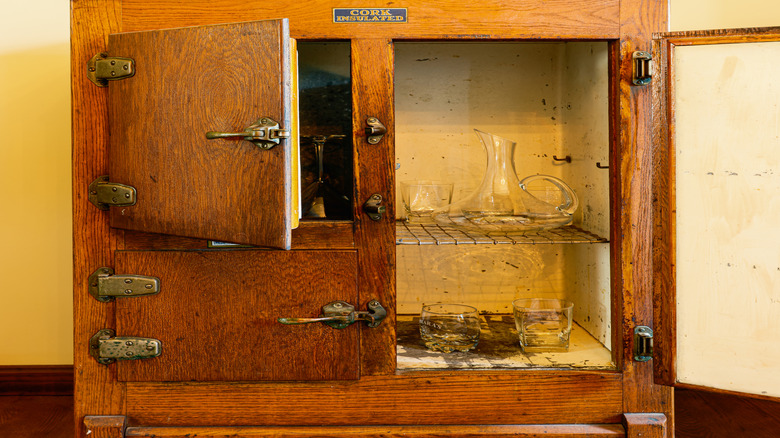
Ice boxes were part of many American kitchens starting in the 1800s and lasting as late as the 1950s. Often, it looked like a cabinet or cupboard that stood on four small legs. The exterior was often made of wood, but inside it would have layers of insulation designed to keep the ice cold for as long as possible — anything from sawdust to seaweed to cork. There were often separate compartments within the box. Some would house large blocks of ice; others held the items that people hoped to keep cold. But where did those blocks of ice come from? Of course, it wasn't like today, where you can head out to the nearest grocery store to buy a bag, or just turn on your handy ice maker. People had to get ice delivered from the ice man, who drove around with a horse-driven cart full of ice.
Depending on where you lived, ice was often sourced from local lakes or ponds that froze during winter. Horses and teams of workers would use ice-cutting tools to harvest the frozen bodies of water, and then try to preserve the ice throughout the year and also transport it around the area. The process was labor-intensive and complicated, and while it was better than no refrigeration at all, the ice box didn't really compare in efficacy to today's refrigeration. It's a nice reminder that even if your fridge isn't the one of your dreams, it's probably doing a better job than the ice boxes of yesteryear.