

Say Goodbye To Traditional Gutters: The Modern Alternative That Enhances Curb Appeal
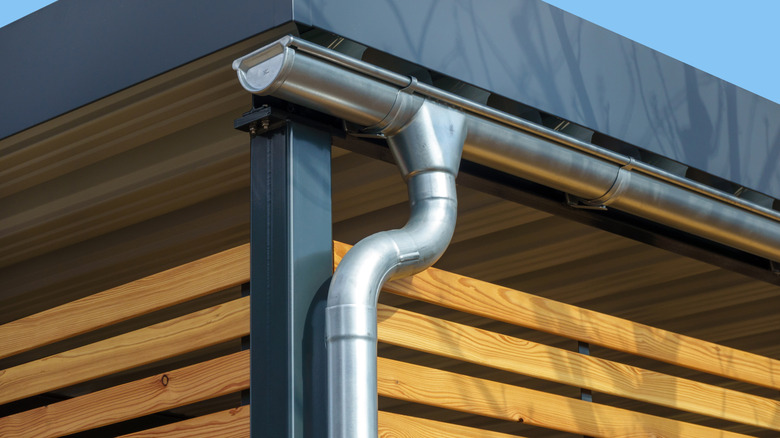
Gutters feel like a necessary evil that comes with owning a home. Though they are important because they stop rain from flowing off of your roof and directly towards your foundation, they are equally problematic. For one, they are pretty unattractive. Though you can hide the eyesore of downspouts and boost your curb appeal with DIY solutions, that only conceals them somewhat.
Another problem, and probably the biggest, is that they are difficult to maintain. They need regular cleaning, which involves getting up on the roof and making sure the insides of the gutters are clear and there are no holes or problems. Even if you follow all of the tips to keep your gutters unclogged and clear of falling leaves, you will still end up with some debris you have to clean out and tasks you need to do to keep them in tip-top shape. The chances of falling are high, and such a task isn't easy for those afraid of heights or with mobility issues.
Thankfully, there are some alternatives to gutters. One option is something called a drip path. This involves letting rain fall off your roof into a non-porous surface at an angle away from your home. It may involve materials like concrete, rocks, plastic sheeting, and sandbags to get it to work well. Before you get too excited, this doesn't fit every house, but if it works for yours, it can keep your curb appeal high, and be much easier to maintain than traditional gutters.
The perks of choosing a drip path over traditional gutters
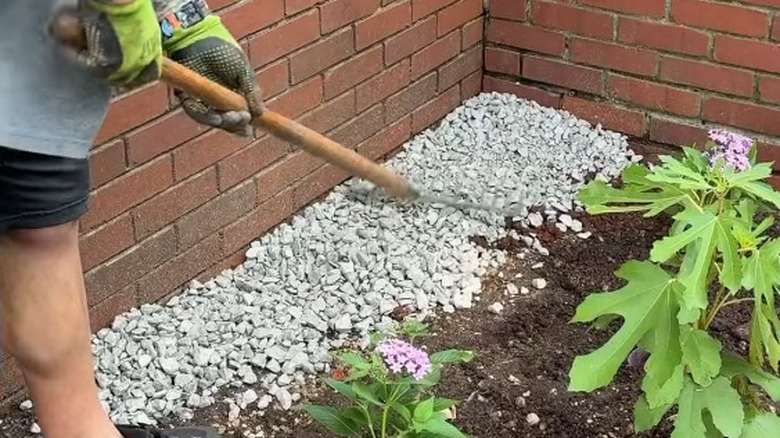
If it works for you, there are a lot of perks to this method. For one, it may eliminate the need for pretty much all gutters, including the parts on the roof. This is a great choice for the elderly or those who are scared of heights who don't want to hire someone to come and clean out the gutters regularly.
Another perk is that it helps prevent erosion around your property. Sometimes, gutters just stop. Depending on where you live, gutters have to redirect water a minimum of 4 feet from your home, but that often just means that the water just releases out at a fast speed and is slowly eroding a channel right in front of it after every rain, which is not only unattractive but also dangerous. Sure, you can consider downspout extensions to save your home's foundation from water damage, but it's just more work and maintenance for you do deal with regularly. This drip path is also an ideal option for homes that can't have traditional gutters because of their design, such as those with low pitches on the roof.
One of the biggest benefits, though, is that it's easy to do yourself. Gutters require specific installation that can be complicated to DIY, but this drip paths offer an easy and fairly cheap way to protect your foundation. It requires a lot of work, but it's relatively easy manual labor.
There are some situations in which a drip path may not be the ideal choice.
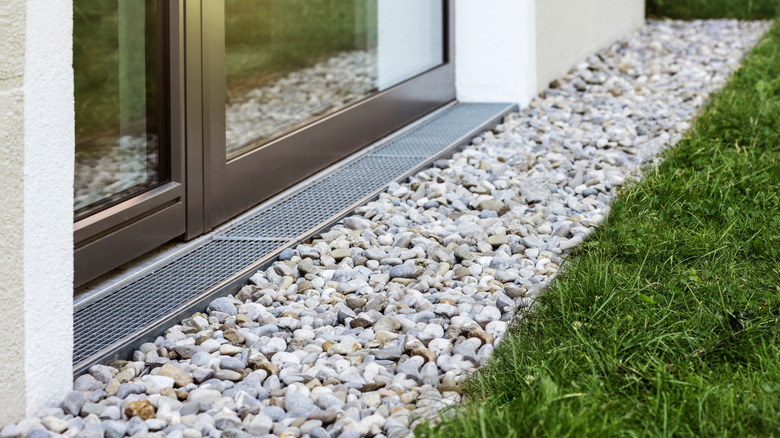
Of course, there are downsides. The first is that, if your yard isn't naturally sloped away from your house on all sides, you may need to have it fixed, which can be very costly or labor-intensive. Alternatively, you can choose a non-porous material you can grade, like concrete, though it might require the work of a professional.
Another thing to think about with this design is that, depending on how your roof and home are set up, it doesn't automatically move the runoff away. Gutters are designed to take water falling from all parts of your roof and drain it in specific areas several feet away from the foundation. This doesn't do that, and instead lets the rain fall straight down unless you angle it just right so it goes away from your home.
Some roofs are also angled in such a way that they pour much of the runoff into one area, which could overwhelm your drip path in certain spaces. In these cases, it may be a good idea to have at least partial gutters in areas where your runoff is heaviest. You also need to take into account rainfall from more severe weather events. While the drip path you are considering might be good for regular precipitation, you need to consider situations when the rain is heavier so you can ensure your foundation is always protected.