

The Compact Boxwood Variety That Is A Perfect Addition To Any Winter Garden
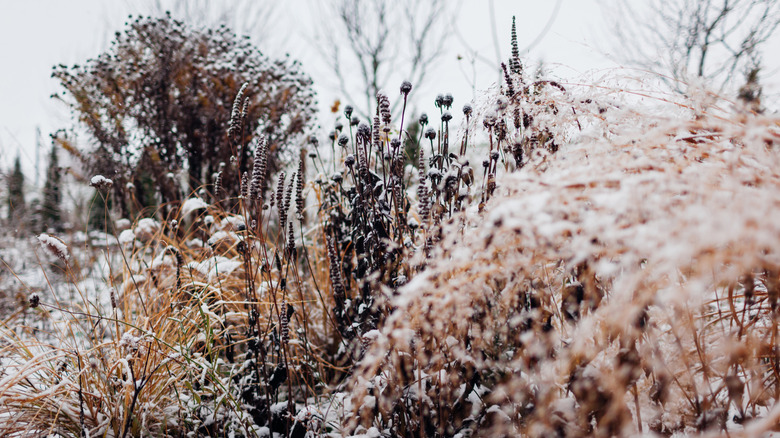
Winter is often viewed as the season in which everything either dies or goes dormant from the cold, and this has a major benefit: Plants return their carbon to the soil when they die, giving the ground a chance to rest and renew its organic matter. However, many plants have also adapted to grow in cold weather. A winter garden with the right selection of plants can provide cover for birds, keep some color around to contrast the snowy landscape, and grow berries or nuts that will nourish nearby wildlife. For example, if you want to attract robins to your yard, planting holly bushes will provide food and shelter. Broadleaf evergreen shrubs like boxwoods are also great options, and in particular, you should consider growing a Golden Dream boxwood (Buxus microphylla 'Peergold').
This variety of boxwood is a woody shrub that's originally native to Japan, but can grow in climates within USDA growing zones 6 through 9. That actually puts the plant best in the stretch of middle-to-southern states, so while it is considered a hardy boxwood, you probably won't be able to grow it actively in the more hazardous winters of northern North America. In fact, Golden Dream boxwoods tend to bronze when exposed to the open sun and harsh winter winds, which may leave them a more unattractive color. Even so, this flora — also known as littleleaf boxwood — is best known for its rounded edge of golden leaves that make for a beautiful sight in the midst of more barren landscapes.
Golden Dream boxwoods can thrive in a variety of winter conditions with the right care
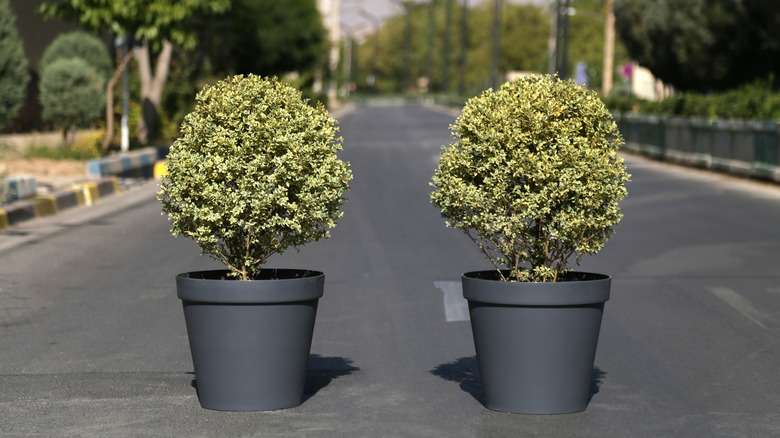
Although Golden Dream boxwoods will start to buckle under heavy winter climates, they are capable of growing within a range of versatile conditions. Golden Dreams can grow in partial shade to full sun exposure, though once again, you'll want to be careful about them scorching or bronzing in too much sunlight. Moist, well-drained, loamy soil is going to be best, but it can thrive in soils that are both slightly acidic or slightly alkaline. This variety of boxwood is a very slow-growing plant that will not flower, though its active "blooming" season comes around April or May, giving gardeners their best look at the shrub as winter is starting to fade away.
Boxwoods generally will thrive with increased airflow and sunlight to their interiors provided by thinning their vegetation, and the Golden Dream variety is no exception. Lightly pruning with hand prunes or shears in late winter or early spring can help the plant maintain its desirable shape in your garden, but you'll want to be careful about the timing in your given climate. Pruning before the last spring frost of the year could result in tender new growths that die when the cold snap hits. Golden Dream boxwoods have shallow roots and their leaves will lose moisture quickly from sharp winds, so you'll want to make sure you keep them in more of a tucked-away corner that avoids overcrowding by other plants. In fact, Golden Dream boxwoods make for great edging and hedge plants, and also thrive if grown in containers separate from the main garden. In fact, most boxwood shrubs will make an excellent fence alternative for your yard if given the appropriate time and attention.
Watch out for issues that might arise when growing Golden Dream boxwoods
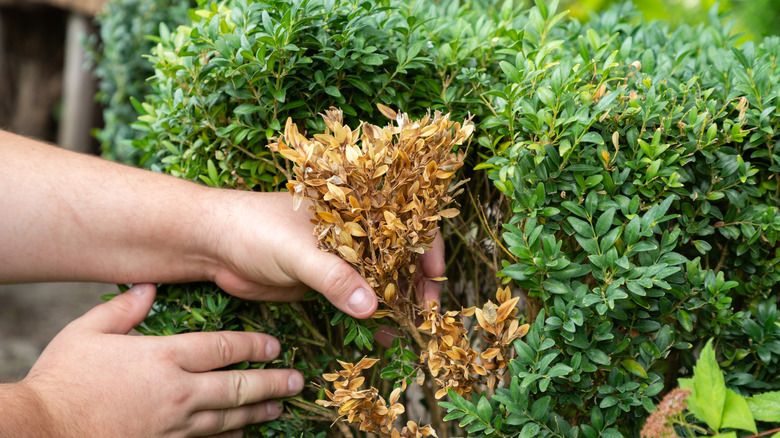
Golden Dream boxwoods are resistant to deer as well as rabbits, which is part of what makes them great along the edges of your winter garden. However, in larger and denser quantities, boxwoods are very susceptible to fungal diseases like boxwood blight. If the leaves of your Golden Dream boxwood begin to bronze like it's afflicted by the winter chill but soon become more of a yellow-tan color, it may have contracted Volutella blight. Alternatively, if you see your boxwood's leaves develop dark spots that turn brown, it may have Calonectria blight. The Golden Dream variety is fairly resistant to blights in comparison to other boxwoods, but you should still keep an eye on warning signs.
Pruning and destroying infected branches is the quickest way to deal with blights — just be sure to sanitize your tools with an alcohol and bleach solution between each cut. Pests are going to be a much bigger concern for your Golden Dream boxwoods, which are susceptible to boxwood leafminers, mites, and moths. However, if you're prepared to deal with these kinds of pests at the same time as you follow some simple steps to keep your boxwoods safe from winter damage, Golden Dreams will really add a lot of color and shape to your winter garden.