

Never Prune This Type Of Tree In Early Spring (It Just Invites Pests & Disease)
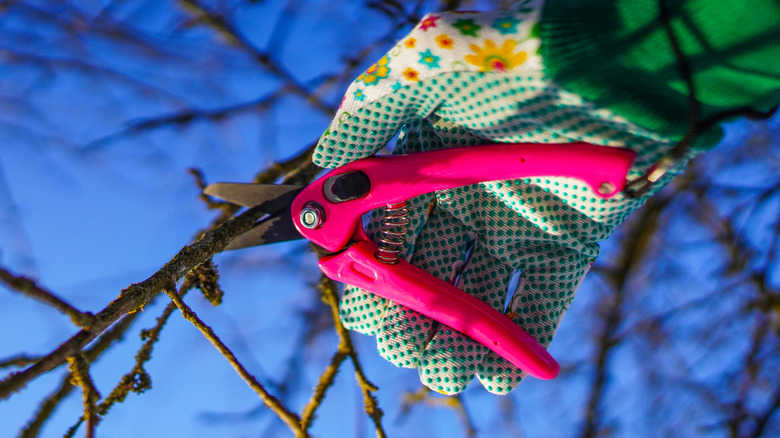
In many parts of the country, gardeners move indoors as their outdoor plants shut down for months on end. Early spring is when many gardeners' patience is most tested, as they're looking to get outdoors and do some garden cleanup projects, such as pruning trees and shrubs. In many instances, that's not a bad idea. There are a number of fruit trees that are best pruned in early spring, as this can encourage new growth and greater fruit production. But it's especially important to not prune maples in early spring, once their sap has started flowing. Pruning them at this time of year can expose them to pests and disease.
As producers of maple syrup know, early spring is when maple trees' sap starts flowing in abundance. But that's also when spring temperatures are high enough for insects and fungal diseases to become active. Cankerworms, leafhoppers, scale species, aphids, and borers emerge at that time and can be attracted to maples' sweet, energy-rich sap. Those pests then lay their eggs on the maple tree, and their larvae hatch in the summer and start feeding on maple leaves. All these pests can weaken a tree and make it less resilient to other threats like bacterial leaf scorch or the fungi anthracnose and phyllosticta leaf spot.
When and how to prune maple trees
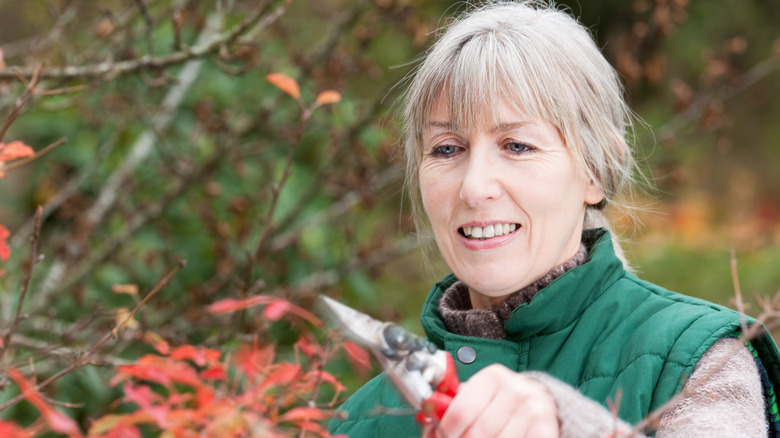
There are two ideal times to prune maple trees: late winter and early to mid-summer. In late winter, it's easier to shape maple trees after their leaves have fallen and the trees are dormant, before their buds start swelling. The trees have lots of energy stored up from the previous summer. Pruning away dead or damaged limbs allows the tree to focus that energy on new growth once it emerges from dormancy. Some sap might flow from pruning at this time, but this does not harm the plant, as it's still too cold for pests and diseases to be active. You can also do some pruning after they've completed their new spring growth, beginning as early as May, into July or August. This is when sap flow has slowed, the trees have flowered, and their leaves are producing lots of new energy to help the tree recover from its wound while still storing energy for the winter. Waiting until late summer or early fall is not a good idea, however, as this can promote new fall growth that may not be strong enough to survive a winter freeze.
Pruning maple trees the right way means using sharp saws, shears, or loppers that have been recently cleaned in order to prevent the spread of disease. Maples seal poorly, so cut only branches 2 inches in diameter or less. Cutting more than a quarter of a tree's leaf area can weaken the tree. And know the "three D's," the rule to remember when pruning maples and other trees: cut back dead, damaged, or diseased branches. Gardeners often prune Japanese maples to produce a more desirable shape, but if the tree is healthy and in good condition, there's no need to prune.