

Eggshells Work Wonders In Your Garden — Just Not For This Particular Purpose
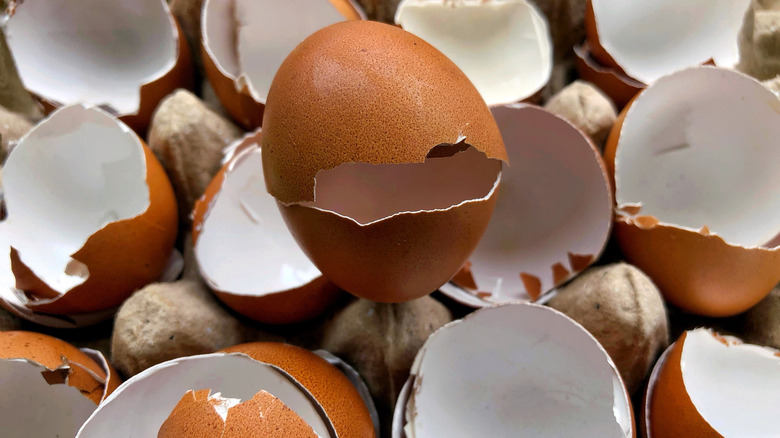
Eggshells can be a great fertilizer and work wonders for your lawn or veggies if you want to turn your hydrangeas pink or add calcium to your soil. One thing crushed eggshells won't do, however, is deter pests like beetles, slugs, or snails from crawling around in your garden. Eggshells pulverized into a powder form can kill off soil-borne pathogens that can harm your plants, and even has pesticidal properties that kill red flour beetles, but you're more likely to breed unwanted bacteria with crushed eggshells than you are to deter any beetles. Likewise, while there are effective ways to keep snails and slugs out of your garden, spreading crushed eggshells around isn't one of them.
You can find dozens of gardening websites making unsubstantiated claims about the ability of eggshells to deter beetles, slugs, snails, and other crawling pests. Intuitively, it does make sense: You would think that soft-bodied pests would shy away from the sharp edges of crushed eggshells. After all, using diatomaceous earth in your garden is an effective way to control pests, as it's a sharp-edged dust that causes pests to dry out and die. Eggshell powder does absorb water, but to date there is no scientific evidence showing that eggshells kill or even deter beetles other than red flour beetles (a pest to stored grains, not gardens). And search YouTube for "slugs snails razor" and you'll understand why eggshells are no deterrent to these mollusks, either. The slime that slugs and snails produce protects their soft bodies from sharp surfaces. In short, take the suggestion that eggshells deter pests as nothing more than an evidence-free suggestion.
How to use eggshells correctly in your garden
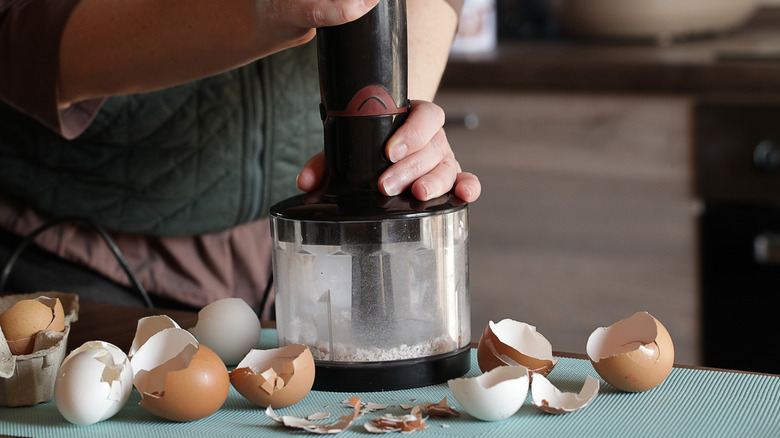
Eggshells do have lots of garden benefits. In a 2025 study using laboratory conditions (rather than a field study), a "nano-powder" of eggshells acted as a desiccant to kill red flour beetles – when it is applied directly on them. Powdered eggshells can also kill some soil-borne pathogens when it is mixed into the soil. In addition, eggshells are 94% calcium carbonate, so adding powdered eggshells to your soil can be just as effective as garden lime in raising the pH of soil. Absorbed by plant tissues, this is what can help turn hydrangeas pink, and can benefit plants that love calcium.
The key word is "powdered." Crushed eggshells break down too slowly to release a useful amount of their calcium. You can even find eggshells buried in 19th-century archaeological sites. To create an eggshell powder, you'll need to first bake the eggshells to kill any bacteria or other pathogens, then grind up the shells into a fine powder in a coffee grinder or blender. Sprinkling the powder directly around the base of your plants and watering it in can add nutrients to the soil, but you can also add your powdered eggshells to your compost pile or worm bin as a natural fertilizer. You'll likely reduce the number of pathogens in the soil and kill off a few stray red flour beetles that come in direct contact with the powder, but adding spent eggshells to your compost is a much better use of your them than crushing them and leaving them around in your garden.