

Don't Throw Out Fireplace Ashes Without Trying This Gorgeous Bathroom DIY
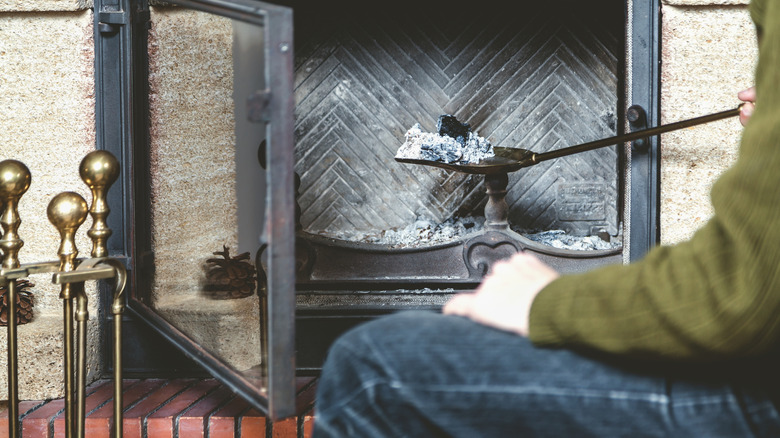
Even the most hardcore recyclers probably don't realize how many ways wood ash can be used around the house. You can even use them as a foundational ingredient to create stunning homemade soap. The main components in handmade soap are lye (sodium hydroxide) and fat. When they're mixed together, a chemical reaction called saponification occurs that gives you soap. Some people hesitate to tackle soapmaking because they're afraid of working with lye, which is extremely caustic. While you do need to be careful, saponification eliminates any trace of lye in your finished bars of soap. In the days before you could easily order lye from a soapmaking supplier, people used to make their own using leftover ashes from their fire.
You can do the same with your fireplace ashes. It may be less intimidating to work with lye if you make it yourself with natural ingredients rather than using premade chemicals. Before you start working with lye, you need to understand what safety measures you need to take to avoid chemical burns. While homemade lye is all-natural, it's still caustic. Cover any exposed skin when you're working with lye by wearing a long-sleeved shirt, long pants, closed-toe shoes, and gloves. Tie your hair back if it's long, and wear safety goggles to protect your eyes. Use glass or stainless steel containers (never use plastic or aluminum) and mix the lye outside or in another very well-ventilated area because you want to avoid inhaling the fumes or steam, which is created by the natural heat formed when mixing lye with water. When you're mixing up the lye, always measure the water first, then add the lye to avoid a caustic eruption.
How to make lye from fireplace ashes
Start by gathering your ashes. You need to use ashes from hardwoods because softwoods have too much resin in them to work effectively. Sift the ashes into a bucket and add water, stirring constantly, until the mixture reaches the texture of runny pancake batter. This will be easier if someone else adds the water while you're stirring, using a long wooden spoon or stick. Let the mixture sit overnight so the sediment settles to the bottom of the bucket. In the morning, pour off the liquid into a stainless steel cooking pot (don't use an aluminum one), leaving the solids in the bottom of the bucket. Dump the solids into an old cotton cloth and squeeze it out over the cooking pot (make sure you're wearing gloves), then discard it.
At this point, you can either make liquid or crystallized lye. For liquid lye, boil the mixture until it's thick enough that an egg won't sink in it. Let it cool and store it until you're ready to use it. For powdered lye, boil the mixture briefly, then turn the heat off and let the mixture rest again. When it's cool, pour it into a large jar. Your lye solution should be a clear golden color, though you'll still have some sediment in the bottom of the jar. Carefully pour the liquid into a large frying pan, making sure not to pour the sediment in. Bring the liquid to a simmer over very low heat and stir until it thickens and eventually turns to powder. Store in a glass jar until you're ready to use. In addition to soapmaking, you can use lye to clean drains and ovens.
How to make gorgeous bar soap from your homemade lye
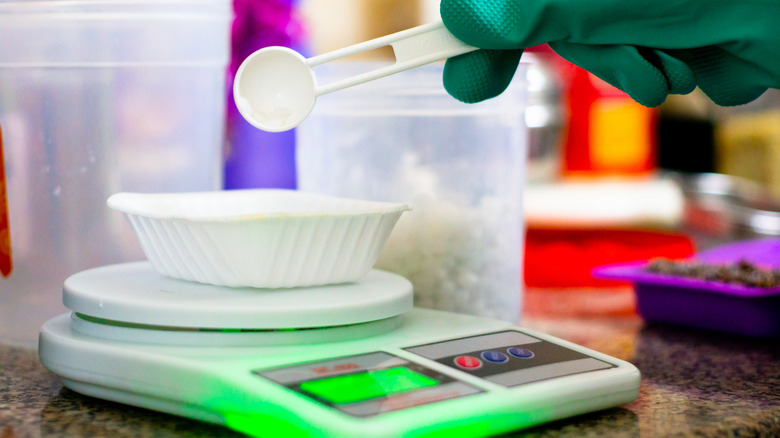
Soap making is a fairly simple process. However, it's a chemical reaction that won't work if your measurements are off. You'll need a digital scale for precision. Powdered lye will probably give you the best results. Once you're confident, you can play around with different types of oils, colors, and fragrances, but starting with Castile soap (made with 100% olive oil) is probably the easiest. It produces a gentle, nourishing bar of soap.
Weigh out 4.7 ounces of distilled water and add 2.1 ounces of powdered lye to it, stirring until it's dissolved. The lye solution will be hot due to the chemical reaction. In a microwave-proof bowl, measure out 16 ounces of olive oil and heat it until it reaches at least 100 degrees Fahrenheit but no more than 110 degrees Fahrenheit. When the lye solution cools to approximately the same temperature as the oil, pour it through a strainer into the olive oil. Use a stick blender to mix the oil and lye until they combine and start to thicken. It's ready to pour into the mold when you can drizzle it onto the surface of the mixture, and it leaves behind a trace without disappearing immediately.
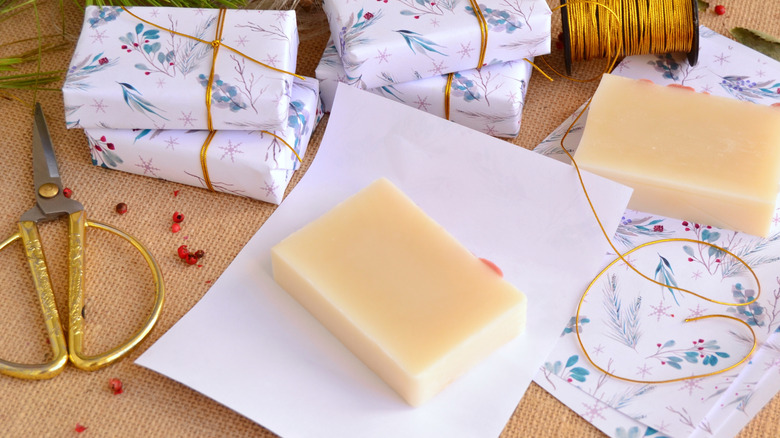
Pour your soap into a mold, such as a specialized silicon mold or a pan lined with freezer paper. Let it stay in the mold until it hardens, which can take up to a week. Then remove it from the mold, slice it into bars, and put them in an area with ample airflow out of direct sunlight. Allow them to cure for at least a month and up to a year before using. If you aren't ready to tackle making lye, you can also DIY whimsical soap with melt-and-pour glycerin.