

The Low-Maintenance Evergreen Shrub With Gorgeous Year-Round Golden Foliage
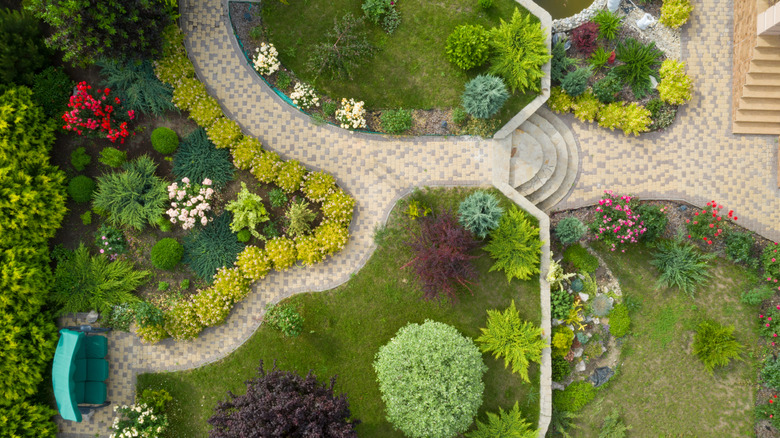
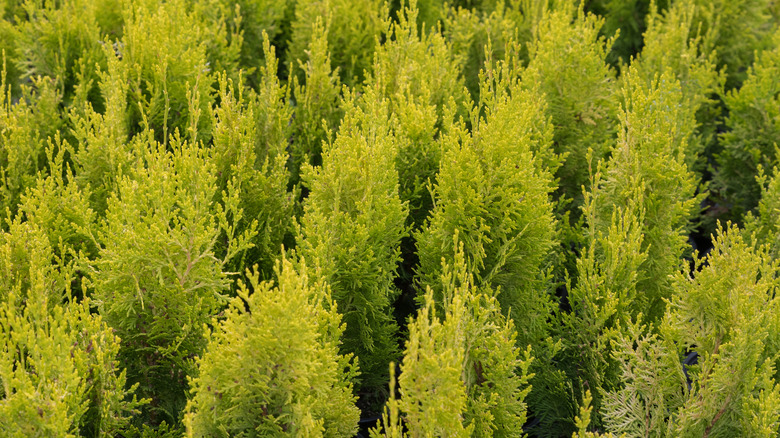
Evergreen trees are the best. They stay green year-round, holding their color proudly, while their deciduous fellows shed their leaves and fade away each season. The issue, though, is that those unchanging green tones of typical evergreens can feel a bit monotonous at times. So, you might be tempted to look for a plant to brighten things up — a plant that brings a pop of another hue but still keeps its color all year round. Well, that is exactly where the Highlights Arborvitae (Thuja occidentalis 'Janed Gold') comes in. It has gorgeous golden-yellow leaves that stay bright all year and never turn green, no matter the season, weather, or how long you have had it.
The best part? It is quite low-maintenance. All you need to do is plant it properly, give it some basic care, and soon it will rise to about 8 feet tall, with the potential to climb another 12 feet, should you choose to let it grow. And since it naturally has a pyramidal-columnar shape, Highlights Arborvitae can work perfectly as a hedge, or as a single standout tree to serve as a focal point. And thanks to its compact pyramidal form, you can even grow this evergreen tree on your patio for natural privacy while saving space.
Ideal growing conditions for Highlights Arborvitae
Just like with other perennials, the first thing you want to do when planting a Highlights Arborvitae plant in your home is check your USDA Plant Hardiness Zone. Highlights Arborvitae is hardy only in USDA Zones 5 to 8. So, if you live outside these zones, you might want to look into some other perennial plants that will bring timeless beauty to your garden for years. Nevertheless, once you have this out of the way, the next step is to select the right spot to plant it.
The Highlights Arborvitae does best in full sun, especially if you want those golden-yellow colors to really pop. The trees can grow well in partial shade, but some sun, ideally afternoon sun, is still a must for them to thrive. As for the soil, the plant isn't particularly fussy. But if you want it to really do well, plant it in moist, well-draining, slightly acidic to neutral soil.
When planting Highlights Arborvitae, dig a hole that is about twice as wide as the pot. Then take the plant out of the pot and put it in the hole. If the root ball seems sitting a bit too low, lift the plant and put some soil under it. You need to make sure it sits about 1 to 2 inches above ground level. Then just mulch around the root zone, and you are good to go.
Watering, fertilizing & pruning Highlights Arborvitae
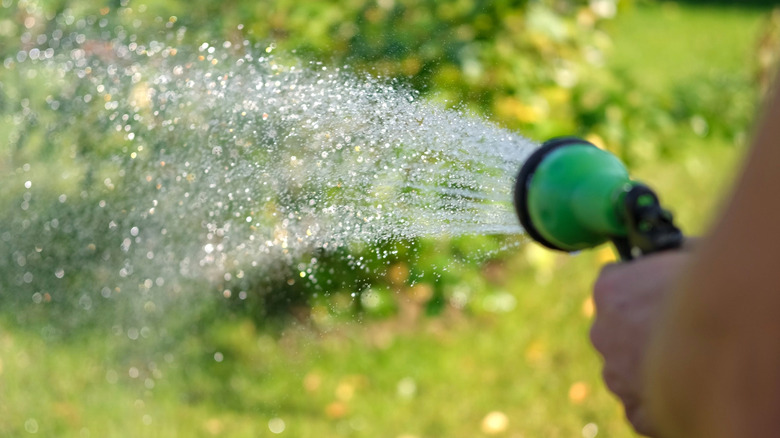
After planting, for the first few growing seasons, you need to water your Highlights Arborvitae regularly. This will help them establish a robust root system. Once the roots are well-established, shift to deep, less frequent watering. Just make sure the soil doesn't get too dry, though, especially in the fall, as this could cause the plant's foliage to dry out during the winter. As for fertilization, you only need to do it once a year. The best time is in early spring, right before the new growth emerges on the plant, using a slow-release, balanced fertilizer.
Do not over-fertilize. It can be just as harmful to plants as under-fertilizing and can even kill them. Lastly, when it comes to pruning, Highlights Arborvitae is one of those beautiful garden plants you never have to worry about pruning. It's only needed if you want to limit its size or remove any dead branches. And the best time to prune is in late winter or early spring.