

The Simple Hack That Turns Rusty Nails Into A Rich, Beautiful Wood Stain
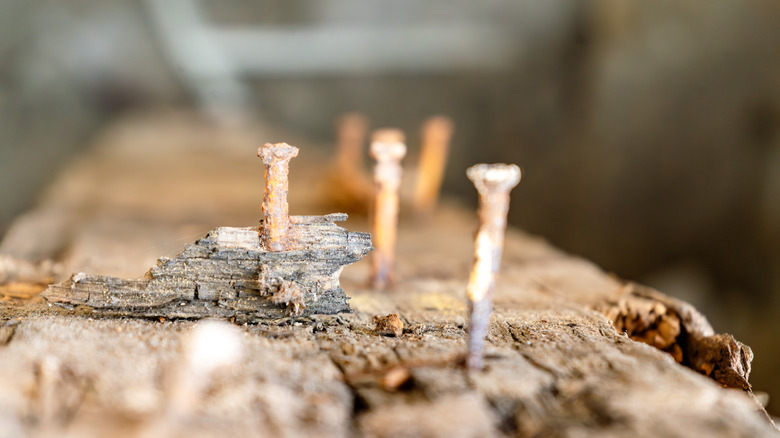
Stain enhances the color of wood and protects it from moisture, contaminants, and UV rays. If you struggle determining the best type of stain for your project, why not just make your own? The process of making stain involves creating a chemical reaction using a solvent. This will cost you hardly any money, as you can find everything you need at home. So, if you have a wooden trunk or a picture frame that could use some color, grab some rusty nails from your shed and a bottle of vinegar from your kitchen — either white or cider will work. You'll also need a Mason jar and a paint brush or sponge.
Nails rust when their iron comes into contact with oxygen and water and a process called oxidation occurs. This produces iron oxide, which is the red, flaky material we call rust. Although many people find rust to be ugly, you can use it to make an old piece of furniture look beautiful again. All you need to do is soak your rusty nails in vinegar. The same chemical components and acidity that make vinegar brilliant for hacks to remove rust around your home and garden also react to form iron acetate, which will act as your stain.
How to make wood stain out of rusty nails and vinegar
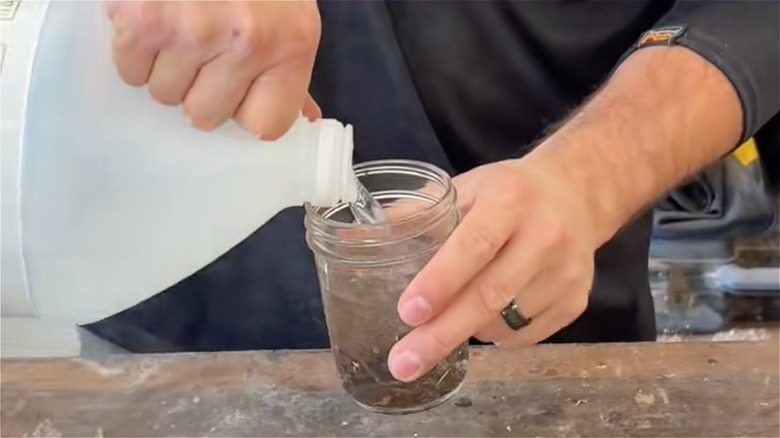
The first thing you need to do is collect your rusty nails or pry some from any junk wood you have lying around. This also serves the secondary purpose of removing any dangerous nails that someone could step on. Put them into a jar full of vinegar, seal it closed, and let them sit for a week. Then, unseal the lid and let it sit for another couple of weeks. Finally, strain the mixture to remove any sediment or flakes of rust.
Test the stain on a small piece of wood and let it sit for about an hour. This process, which is called ebonisation, involves the iron acetate chemically reacting with the tannins in the wood. Unlike paint, the stain does not simply coat the wood, but instead reacts with its natural pigments to create a distinct color. If you like the color of the piece of wood you tested, then use the stain for a larger project. Just remember that even if the stain is the same, the final color will always be different for different types of wood. Consider applying an additional sealant if you are staining a something that will be exposed to moisture. For another ingredient that you can use to naturally stain wood, try out coffee.