

If You Notice This On An Item At The Thrift Store, Leave It On The Shelf

It is said that one person's trash is another person's treasure. That's why thrifting is one of those hobbies that can leave you feeling like you've found a gold mine. One minute you're flipping through endless racks of clothing and the next, you're holding a valuable vintage item, like a perfectly worn pair of jeans that costs as little as that latte at the corner coffee shop. Sometimes it seems too good to be true — a feeling that will be amplified when you finally go to wear your newly found item only to watch it fall apart. Not everything you find at a thrift store is worth the bargain, and one of the biggest problems you'll find lurking in your favorite vintage haunts is dry rot.
Most shoppers have never even heard about dry rot, but it's incredibly disappointing when it creeps into your purchase. Specifically targeting textile-based items like clothing, shoes, and bedding, this issue leaves noticeable signs of deterioration on products, slowly breaking them down until they are practically dust. The real bummer is that once dry rot sets in, it's impossible to undo. So, if you're thinking you can get the item home and give it some TLC, you'd be wrong. You cannot clean, condition, or repair the item to save it. The only thing you can do is familiarize yourself with dry rot, understand why it happens, and know how to spot it. This will save you money and frustration.
Why dry rot happens

The name implies that the issue is caused by dryness, but it is more complicated than that. Dry rot is a type of fungus that forms on textiles, rubber, leather, and certain synthetic materials that are stored without proper temperature and moisture control. Over time, this eats away at the fabric due to age and environment. This is particularly an issue with footwear because natural fibers contain oils that help condition the shoes to make them pliable. When shoes are stored in parched conditions for long periods of time, the oils tend to dry out. This is also true for natural fabrics like cotton, linen and silk. Dry rot happens when these items are stored in sealed environments like an unventilated closet or a plastic garment bag.
In the 90s and 2000s dry rot was amplified due to the rising popularity of graphic tees made with cheap sulfur-based dyes. These (commonly black) T-shirts were rarely washed after being produced, causing the material to become acidic, before they made their way into store stock rooms. Now, it is easy to find these retro tees, along with other vintage thrift store items in second-hand stores, just waiting to turn to dust. That's why it is important to inspect your garments before you even leave the store.
How to spot dry rot
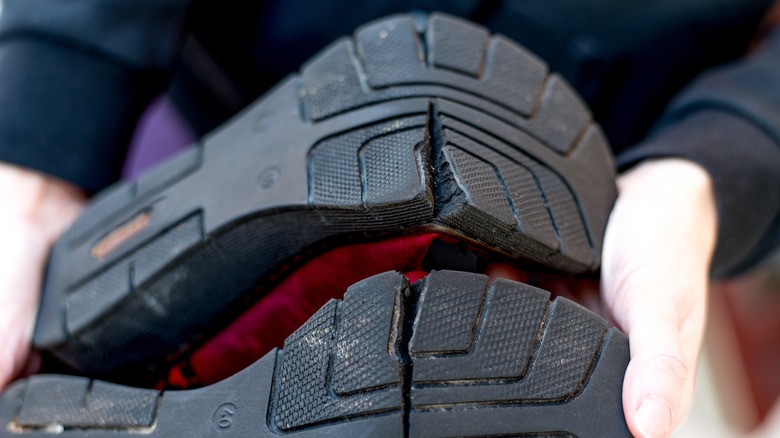
Recognizing dry rot can save you time and money on your thrifting adventures. When you find a must-have item, look for a powdery residue, flaking, or cracks in the material. Run your fingers along the shoe sole or fabric. If dust comes off, put the product back on the shelf. And when it comes to shoes, be extra cautious since they are more prone to dry rot. Soles should be flexible when you bend them. So, if the sole cracks when you fold it, you are likely dealing with the fungus. And if that's the case, the shoes are compromised and are not fit to wear.
In regard to clothing or other textiles, examine areas of the garment that would see a lot of wear and tear such as seams, waistbands, and underarms. If you just lightly tug on the material, it shouldn't feel stiff. Even if it looks like it's in pretty good condition, it's best to exercise a bit of caution. Clothing should feel strong and flexible if it has any life left in it. The last thing you want to do is bring the item home and never get to wear it. While thrifting is a fun and sustainable way to stock your wardrobe, you should be watchful and take the extra steps to ensure you're avoiding problematic products. And when you do find that perfect, damage-free dress, make sure you know a good way to store clothing to protect it.