

The Simple Storage Tip That'll Help You Make The Most Of Your Shoe Rack
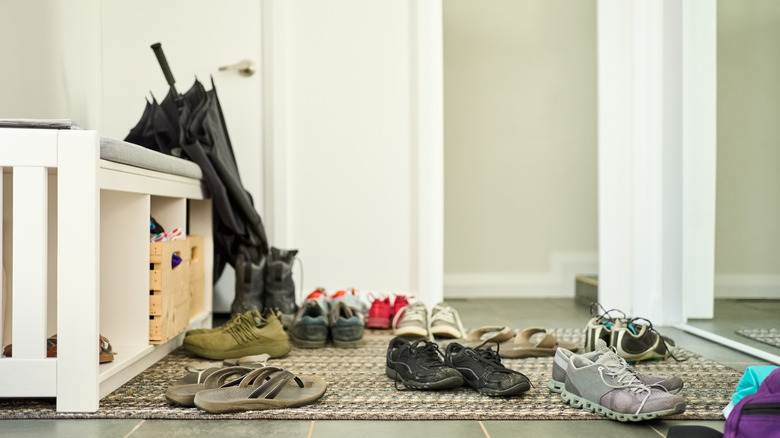
The last time you were late for work, you spilled coffee all over the entryway and your new shirt after tripping over a pair of boots near the front door. You knew the shoe clutter was out of control, so you bought a shoe rack the next day, thinking it would solve all your problems. But the clutter has simply moved from the floor to the rack. Buying another shoe rack seems like overkill, so what are you supposed to do? After sorting through countless shoe storage ideas, one simple solution stands out as the best way to maximize your shoe space: storing them sole to sole.
When you place shoes on the rack side by side, it takes up twice as much space as it would if you stacked the shoes one on top of the other. But if you just stack them on top of each other, the dirty sole of one shoe is on top of the other. Placing them sole to sole helps prevent dirt and debris from transferring between pairs. To store them that way, turn one shoe upside down and place the other shoe right-side-up on top of it, so the soles of the shoes are touching. Then place them just like that on your shoe rack. Stack all your shoes on the rack this way and watch your storage space double right before your eyes.
Shoe types sole to sole storage will & won't work for
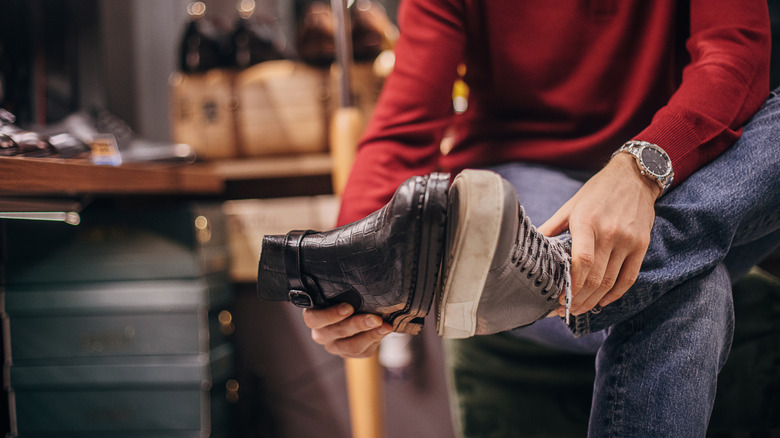
Storing shoes sole to sole works great for low-heeled shoes like flats, sandals, and sneakers — basically anything without a large heel. It's helpful to dry off your shoes before you store them this way to keep any moisture from the top shoe from sliding down onto the other. While sole to sole storage is a great way to keep shoe clutter neat and organized, it won't always work for all types of shoes. High heels don't line up very well, and tall boots or even large wedges won't balance correctly. But with the space you save by using this hack on all the other shoes, you'll easily be able to lay your heeled shoes and boots side by side.
To really optimize the efficiency of your shoe storage, arrange your shoes in a way that the ones worn most frequently are most accessible. This will save you time as you're rushing out the door. You can also clear out some extra space by only having the shoes you actually wear out on the rack and packing the rest away. Snow boots, for example, don't need to be readily available in the middle of summer. Rotating seasonal footwear by putting away shoes that aren't going to be used in the current weather conditions and only keeping out shoes that are means you won't have unused shoes taking up space. Along those same lines, don't be afraid to audit your shoe collection and sell or donate shoes you no longer wear or want.