

8 Salt-Tolerant Plants That Can Thrive In A Winter Garden
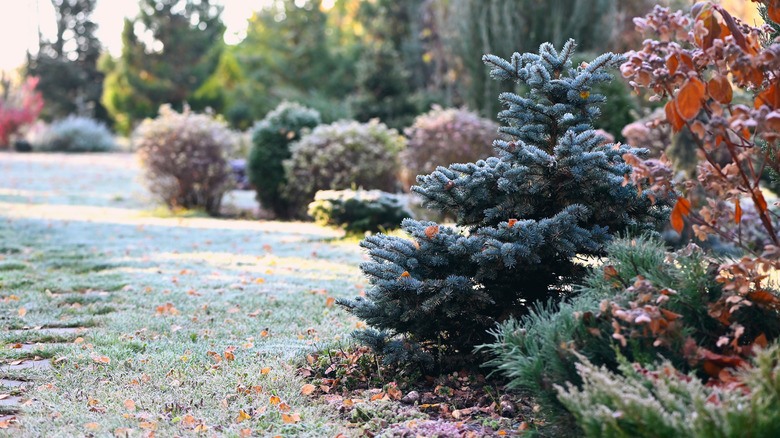
While many people in the northern US wonder what a polar vortex means for our winter gardens, we're not just worried about freezing temperatures. We're also concerned about what snow and freezing temperatures bring — salted roads. All that extra salt can not only cause salty soil, but also overspray that can land on the plants we care for and damage them. Thankfully, there are a variety of winter evergreens that are better-suited to tolerate the extra brine that winter can bring. Introducing some of these salt-tolerant plants will not only bring some color to your dreary winter but also prevent you from stressing over salt-damaged greenery. Adding something like a Winterberry (Ilex verticillata) or a beautiful Colorado blue spruce (Picea pungens) to your winter landscape will be sure to add interest, while also lowering worries about damage from the salt trucks or salt-sprinkled walkways.
There are many evergreen trees and shrubs that bring color and beauty to a snowy winter garden, but only a few are built to survive the extra salt that winter roads can bring. While some gardeners may be able to create barriers to prevent this excess salt from damaging their evergreens, it might be easier to just purchase salt-tolerant plants along your roadside and walkways instead. After all, sometimes it's just easier to work with your environment instead of fighting it. Many varieties of salt-tolerant plants create year-round interest and can look beautiful in a winter garden without you worrying about their health when the salt truck comes around.
Winterberry
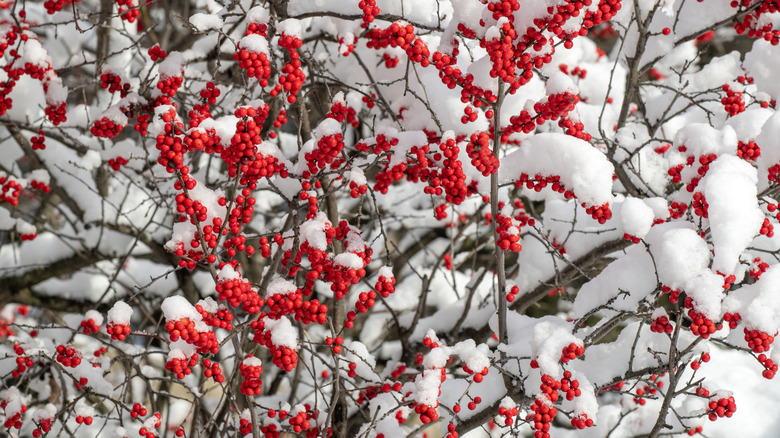
The winterberry is a deciduous shrub that grows moderately fast and has lovely red berries that create an amazing contrast in snowy conditions. Its low-maintenance nature makes it a great plant for beginner gardeners to have in their winter gardens. It is also very resilient. Not only do critters tend to avoid it, but can thrive in poor soil conditions, including mildly salt-contaminated soil. It's a reasonable choice for those looking to grow a lovely shrub that can stand some proximity to salted pathways or roads. Be sure to have both a male and female plant for berry production.
Colorado blue spruce
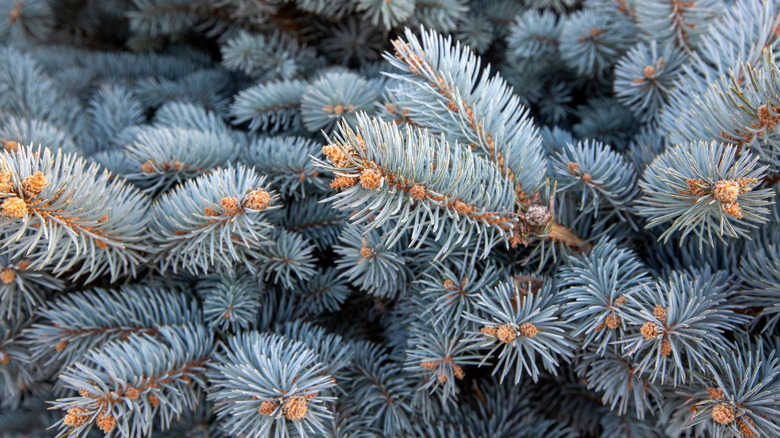
The Colorado blue spruce is known for its frosty-looking blue-tinted needles created by a waxy coating this plant produces to retain moisture. This pine does best in higher elevations where it won't be affected by extreme heat or humidity. Its salt tolerance is higher than most evergreens, so it's a great choice for a garden near a salted area. The Colorado blue spruce is best grown in USDA Hardiness zones 2 through 7 for a healthy tree.
Mugo pine
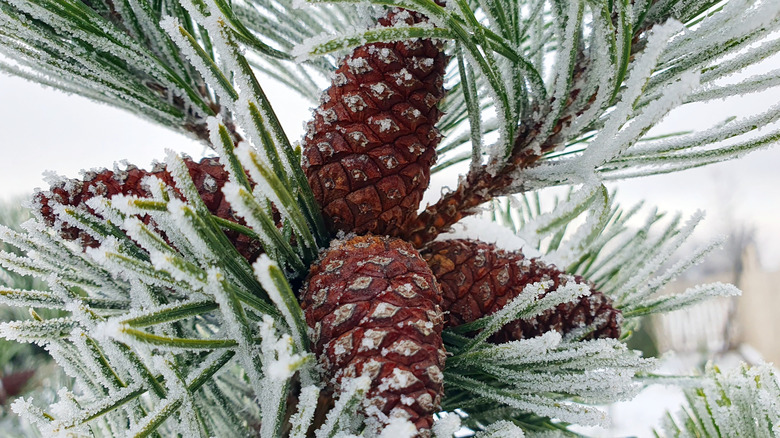
The Mugo pine (Pinus mugo) is an evergreen shrub with lovely medium to dark green needles that add much-needed color to a winter garden. It is also another low-maintenance plant for those who might be intimidated by adding shrubberies to their yard. The Mugo pine does well in cooler regions in USDA Hardiness Zones 2 through 7. This evergreen is moderately resistant to not only salt, but also deer, drought, and pollution — making it a solid choice for a hedge along a roadway. This variety of evergreen is perfect for smaller yards as well due to its size.
Bearberry cotoneaster
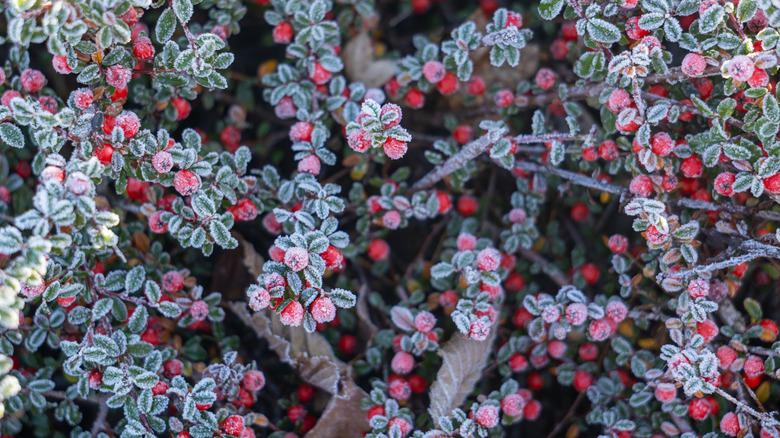
The bearberry cotoneaster (Cotoneaster dammeri) is a low-growing shrub that produces tiny, bright red berries that provide a lovely display in the winter. It is also another easy-to-grow plant suited for a variety of soil conditions, as long as the soil is well-draining. It can thrive even near salted pathways and roads. This variety of evergreen shrub does best in USDA Hardiness Zones 5 through 7. The bearberry cotoneaster is very tolerant of salt spray — making them a good choice for those who experience frequent passes of the salt truck near their yard. This lovely shrub can also provide much-needed food for birds. Just note that, in some regions (especially parts of the Northeast and Pacific Northwest), cotoneasters can self-seed aggressively.
Winter jasmine
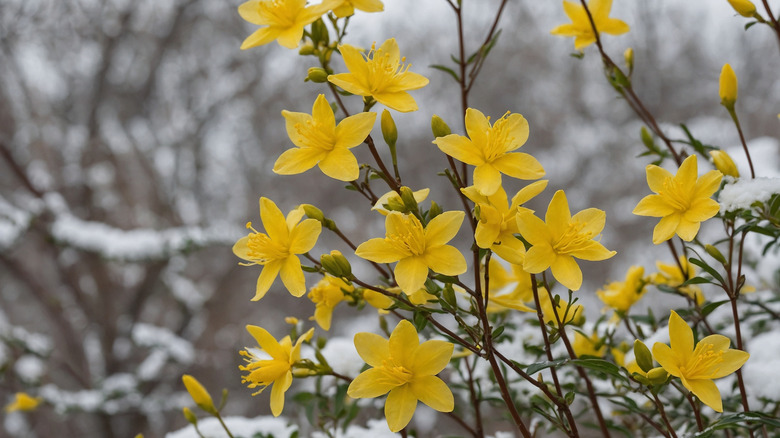
Winter jasmine (Jasminum nudiflorum) is a great way to add a bit of sunshine to a winter garden. It has bright yellow winter-blooming flowers, tolerates a variety of soil conditions, and is a shrub that can reach around 3 to 4 feet tall. It is also low-maintenance and moderately salt tolerant — making it well-suited for gardens that see overspray from salt trucks. This flowering shrub does best in USDA Hardiness Zones 6 through 9.
Sedum
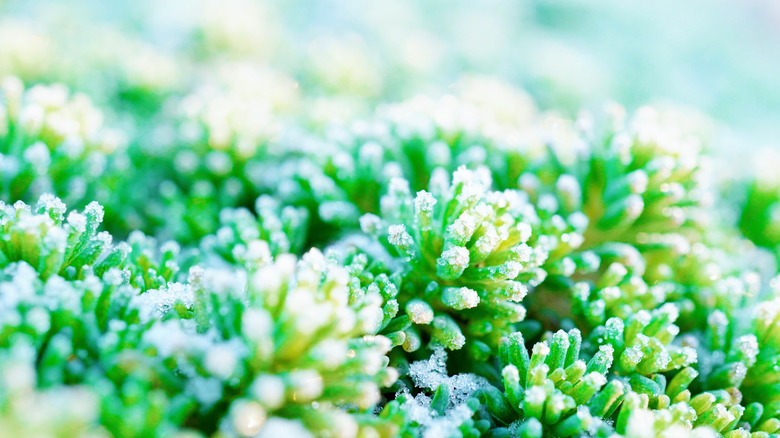
Sedum is a group of plants from the succulent family, also known as stonecrop. There are multiple types of sedums that are salt tolerant, which makes them a good choice for those in wintry areas wanting a groundcover with winter interest. While sedum can thrive in many soil conditions, including some salt exposure, in USDA Hardiness Zones 3 through 9, good drainage is important to help prevent disease.
Thyme
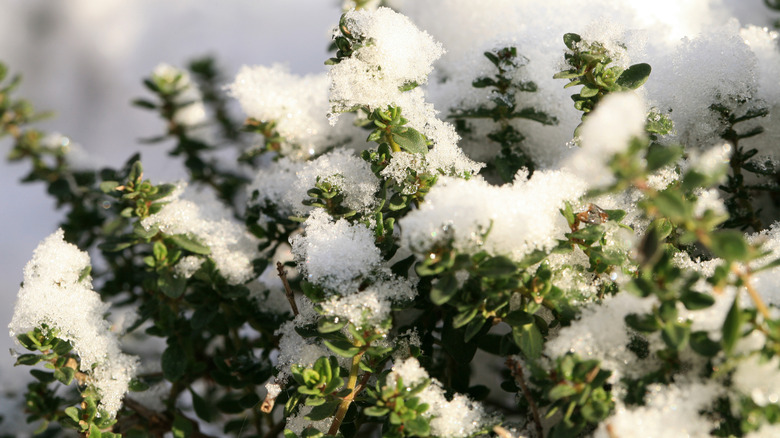
Besides being a wonderful addition to many flavorful dishes, thyme (Thymus) is also a great addition to your garden. Many varieties of thyme are evergreen plants that can provide lovely pops of color to your winter landscape. Creeping thyme (Thymus serpyllum) is a great choice with its winter interest, and it is moderately salt tolerant. It can create a great barrier along sidewalks that may experience some salt overspray. Thyme is suited for USDA Hardiness Zones 4 through 9.
Inkberry holly
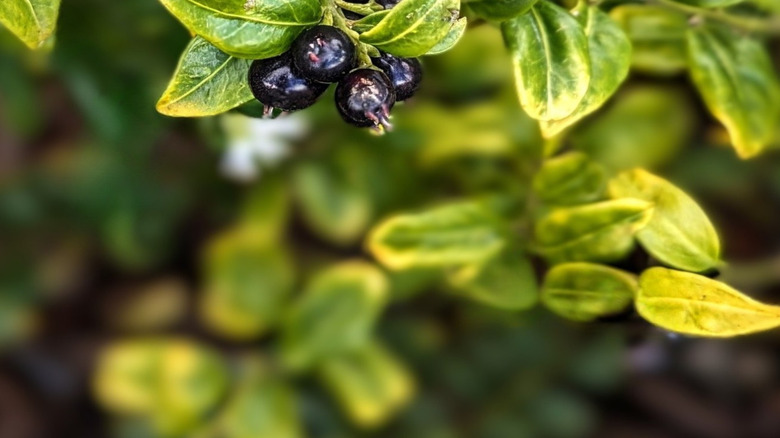
Not only is inkberry holly (Ilex glabra) a low-maintenance evergreen plant, but it is also tolerant of a variety of soil conditions as well as some salt spray. Planting inkberry holly in your yard is not only a great idea to provide a pop of green in your winter garden, but it also provides food for birds. This lovely holly variety has the widest growing range of the plants on our list and can be planted in USDA Hardiness Zones 4 through 9. Plant this variety and winterberry shrubs together, and you have a lovely contrasting hedge.