

The Gardening Trend Taking Over In 2026 That Doubles As Kitchen Countertop Decor
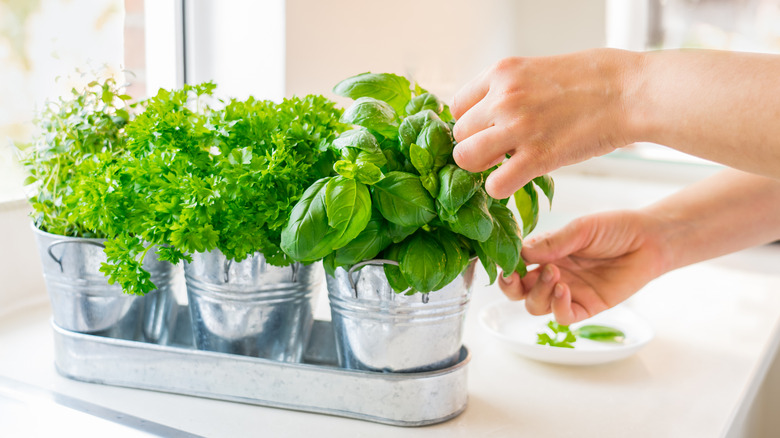
One of the easiest ways to brighten up a kitchen countertop or table is to adorn it with a stunning flower arrangement, or even a simple bouquet of daisies or tulips. But according to the gardening predictions released by the United Kingdom's Royal Horticultural Society for 2026, there is another budget-friendly and multi-functional way to incorporate greenery into your kitchen: tabletop vegetables. Many container-grown vegetables and herbs can thrive indoors, from greens like basil, mint, and arugula, to miniature radishes, small chilies, and dwarf tomato varieties. In addition to adding beauty and greenery to your living space, these plants are cost-savers, lasting far longer than fresh-cut flowers and yielding produce that you can use at home.
While indoor vegetables are predicted to really take off in 2026, some indoor gardening enthusiasts have already jumped on the trend. Good Bones, an interior design studio based in London, turns supermarket basil into beautiful decor for her table and kitchen countertops (Careful watering and patience are key!) Meanwhile, New York City resident and urban gardening expert SherSheGrows makes space on the countertop for a petite but high-yielding hydroponic dwarf cherry tomato plant.
Considerations for starting a tabletop garden
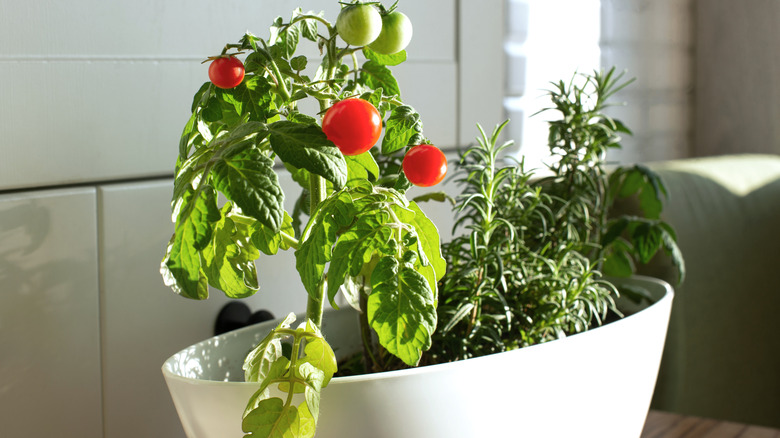
When starting an indoor vegetable garden, light is a primary factor to consider. Your countertop or table should receive plenty of direct sunlight through a window or skylight. If your space does not have ideal sun access, consider using grow lights in your garden that provide budding veggies and herbs with a consistent dose of the right light spectrum to foster growth. Just like with outdoor plants, making sure your countertop veggies get plenty of water and fertilizer is also critical. Vegetables grown indoors often require more frequent watering and fertilizing to grow effectively.
Dwarf vegetables grown as indoor plants can thrive in a variety of pots. While traditional terracotta is a great option, you can also repurpose items in your home as adorable planters. Before planting, take some time to research the best pot for the vegetable variety you're growing, and consider which pots fit spatially and aesthetically in your kitchen. Investing in pots that are porous enough to foster good drainage, or are even self-watering, can help your plants thrive and grow. And if you like the idea of vegetables on the countertop, but are hesitant to commit to soil maintenance and pruning, start simple and small. Many kitchen scraps can regrow, such as scallions, celery, and lettuce, when you place their roots in glass jars filled with water.