

9 Stunning Vintage Doilies To Look For At The Thrift Store
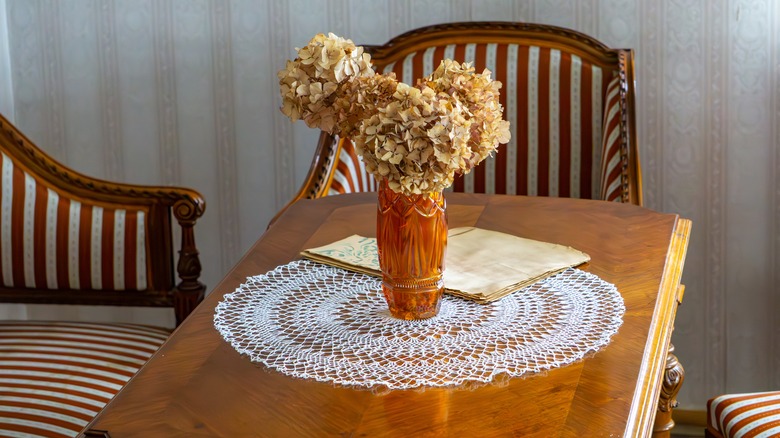
The thrift store provides a world of opportunity for those looking to decorate their home with unique pieces on a modest budget. Great for finding second-hand, quirky vintage items and scoring that cheap find that everyone overlooks yet makes your room look charming and nostalgic, a thrift store is like joining a treasure hunt. With cottagecore and grandmillennial decor all the rage in home design, it's no wonder that thrift store finds are surging in popularity. And the most overlooked yet stunning pieces may be hiding in the linen bin tucked in the corner.
Lace doilies are making a big comeback as they instantly give your space a lived-in, historic charm without overwhelming the decor or breaking the bank. Antique lace doilies truly represent a lost handicraft — one in which it took an individual hours of careful, dedicated labor to complete. Pieces range from princess lace crafted with mixed machine and hand stitching to the meticulously crafted filet crochet. This renewed love for doilies reflects a larger design craving for craftsmanship and individual artistry in the way that modern and sleek decor is missing.
To spot any of these treasures on this list, you must train your eye to look for the imperfections of the handmade, human touch. Flip the doily over to look for irregular knots and tiny variations to indicate the maker's hand movements. Also look out for the material; shiny and scratchy synthetic materials are often a giveaway that the doilies aren't as antique as you may like. Keep your eyes peeled for natural fibers such as linen, silk, or fine cotton. With a keen eye and some diligence, you may be able to score any number of these stunning antique doilies at the thrift store.
Princess lace
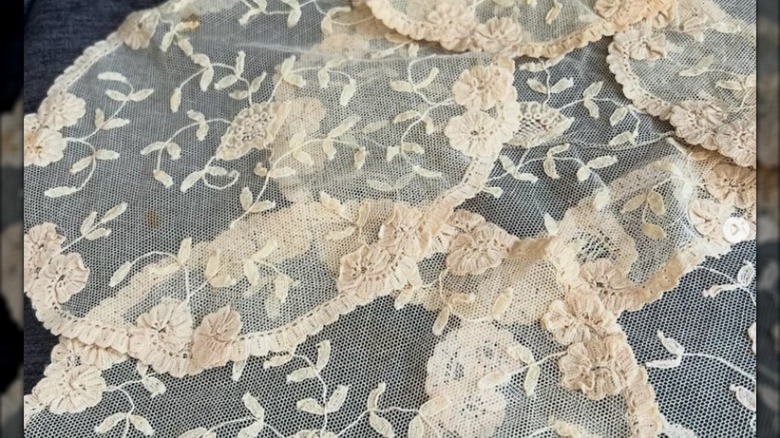
Known for its delicate appearance, princess lace (also referred to as Brussels or Belgian princess lace) features a machine-made netting with hand-embroidered appliques placed on top. Usually featuring floral motifs, this lace remains extremely popular on wedding veils and dresses. It's no wonder, as doilies made of authentic Brussels lace were carefully constructed by hand, weaving the tapes of leaves, flowers, and vines through the thin netting, giving the appearance that it's all one piece. Digging at the thrift store is well worth the effort to find a piece of Brussels princess lace.
Filet crochet
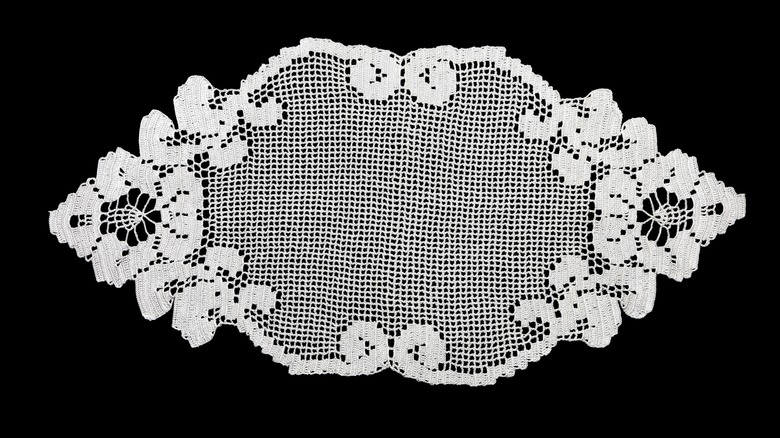
A variation of the filet brode style of needle work, filet crochet often features intricately designed geometric or floral patterns with fine threads and needles. They display variations of wider, open stitches paired with closely knit, tape-like designs that allow for crisper patterns. This style of doily is absolutely stunning, particularly if you find a piece that features a "figural" motif — a crochet scene of people or animals. Patterns made by famous designers such as Mary Card, a Victorian phenom, are also collectible, depending on the size and the scene's complexity.
Irish crochet lace
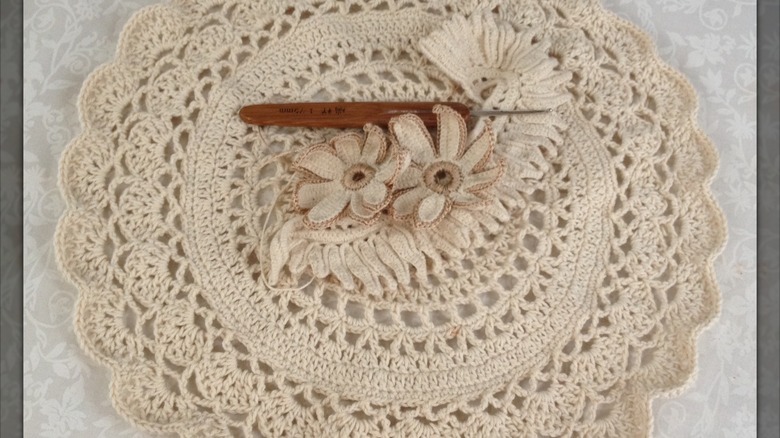
Identifiable by the three-dimensional effect of its raised features, Irish crochet often dons sculptural elements like roses and shamrocks on these doilies, using basic supplies. This style became famous in the 19th century as a cheaper, faster, and more efficient choice against the more time-consuming Venetian needlepoint lace. Coupled with the Irish potato famine, which made households more cognizant of their spending, Irish crochet spread across the nation as a way to have a piece of luxury without compromising their families' needs. Today, they're still a gem to be found in thrift stores.
Venetian needlepoint lace
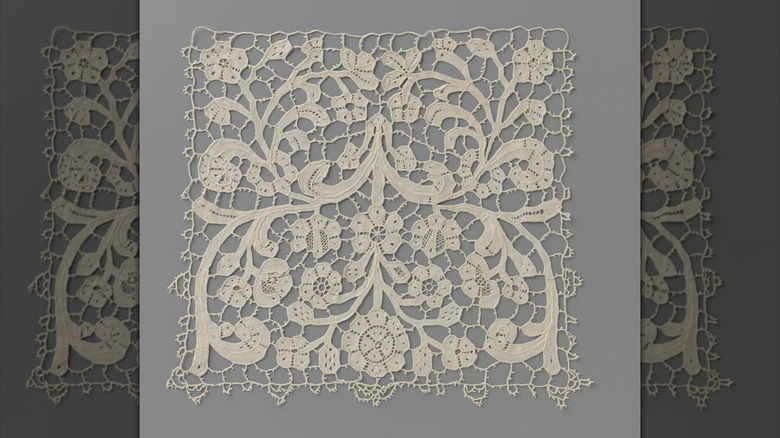
Speaking of Venetian needlepoint lace, this kind of handicraft dominated the zeitgeist in 16th century Europe, when the Republic of Venice in Italy was known for its signature lacemaking. However, as the centuries passed and with the onset of various economic upheavals and the machine age, Venetian needlepoint's popularity waned. Experiencing a resurgence during the Victorian era, however, doilies made from this fine, precision art form exhibited new variations, including different weighted laces. Today, it's a treat among your thrift store finds that shows off handicraft from a bygone era.
Spider web lace
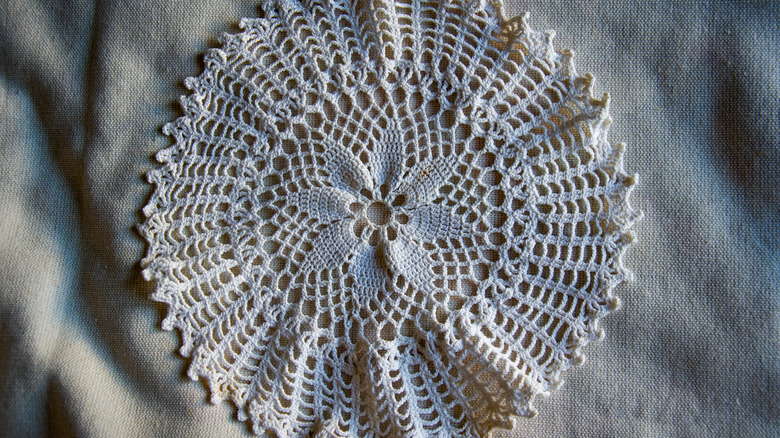
Deriving from the Polish craft called "snutki," spider web lace doilies are known for their circular shape as well as radial design that resembles a spider web. Also referred to as Polish eyelet embroidery, these doilies are recognizable due to the different elements of the web that are stitched separately and then embroidered together, strengthening and reinforcing the connections with techniques that enclose it. Some variations of this style of doily are devoid of any particular motif, like flowers, instead letting the radial nature (the spider web-ness, if you will) of the doily stand on its own. Other versions feature a central design, with delicate waves radiating outwards.
Hand-tatted lace
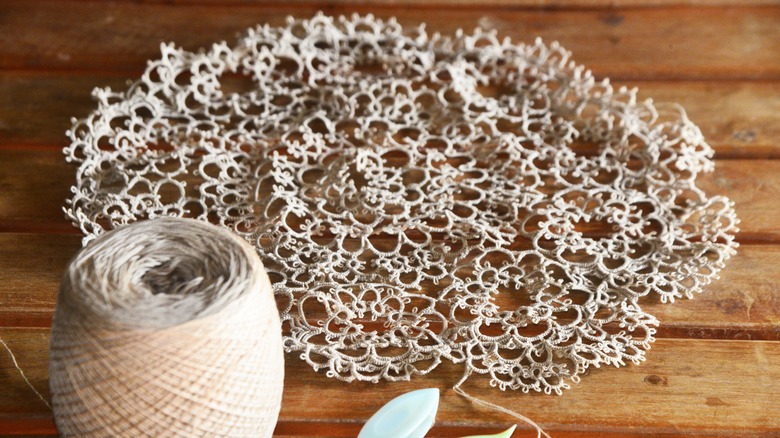
Tatting is an incredibly complex method of lacework, involving creating a series of intricately fine knots and loops into a bigger pattern. Often used as an edging technique on textiles to up their price tag, a doily made entirely from tatting is a unique, rare, and precious example of vintage craftsmanship to cherish if you find it in the thrift store. There are different forms of tatting, from shuttle tatting that uses the tool to make and connect those knots, to needle tatting that uses — you guessed it — a needle to guide the craft.
Madeira embroidered
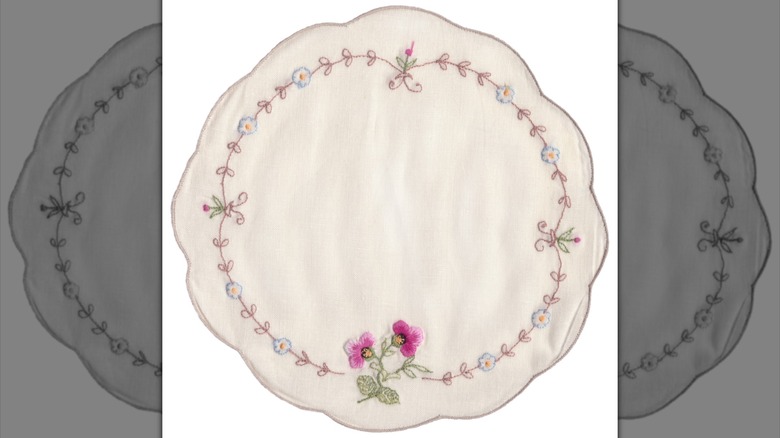
Like Venetian needlepoint, Madeira embroidered doilies are named for their location of origin: the Madeira Islands of Portugal. Famous for their fine-stitched embroidery, Madeira doilies often feature floral or animal motifs and scallops around the edges of the mat. While some doilies more resemble linen placemats than the traditional open-lace pieces, more traditional doilies were also produced in Madeira historically (and still is to this day). Cutwork was and is also an extremely popular design in Madeira as well, featuring cut patterns with embroidered edging.
Patchwork lace
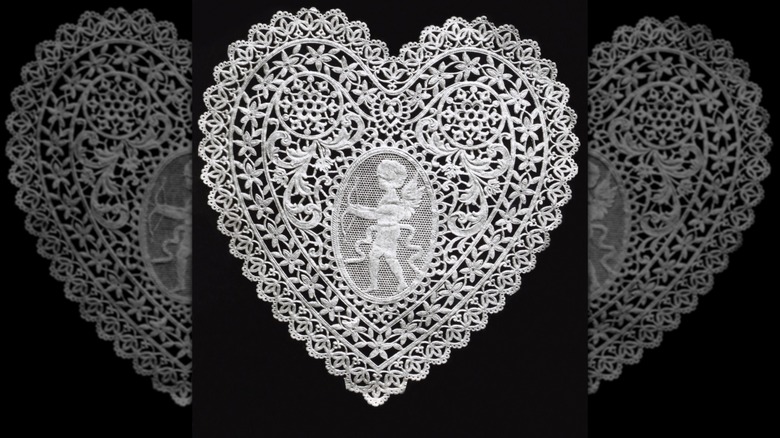
Not unlike our creative ways to upcycle old vintage doilies, patchwork lace doilies are made by piecing together different types of lace into a single mat. Also known as Normandy lace, this assemblage of doilies often rescued fragments of bygone, older laces to give them new life. They also can be comprised of smaller scraps of pricier laces that utilized each piece of material, mitigating the wasting of any quality or expensive supplies. The result of these vintage repurposing projects is an absolutely romantic doily with incredibly unique patterns and shapes.
Tape lace
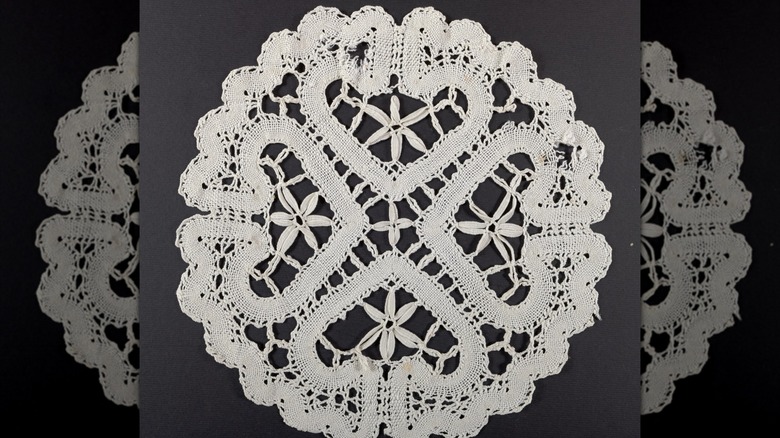
Commonly referred to as Battenberg lace, tape lace describes a technique where thicker, woven tapes of designs are joined together with more delicate decorative bars. First popularized in the late 19th century as a "stitch-by-numbers" invention, Battenberg lace mixed pre-made cords, braids, or woven cotton with more delicate needle stitch techniques. This was a more efficient, less expensive, and less difficult way to achieve the same lace looks as older designs without as much fuss. Common motifs include swirls, scrolls, lattice work, and oval medallions.