

How Much Control Do You Actually Have Over Your Sidewalk?
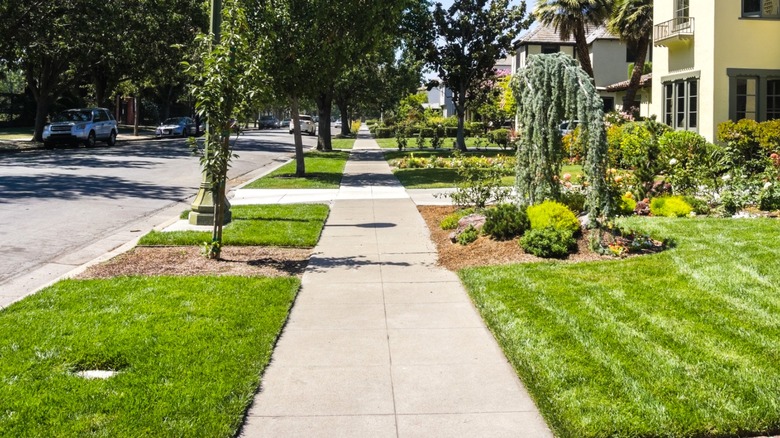
We've all been there with that one unfriendly neighbor who thinks they own the sidewalk and curb. No cars can park in front of their house because they believe they "own" the spot, or they seem to take issue with folks walking on the sidewalk next to or in front of their home. Or, perhaps on the other side of the coin, you're that neighbor that loves to dress up the sidewalk with flowers and decor, but your grumpy neighbors say it's a public space that shouldn't be encroached upon by your things. The question on everyone's minds is likely: Who is right in these situations?
The answer is no one, really. There are an abundance of misunderstandings when it comes to sidewalks. They often create an illusion of ownership to the homeowners, especially when the property line technically goes all the way to the street. However, sidewalks serve as a form of easement to the public that allow for passage; sidewalks are conceded pathways dedicated to pedestrian traffic that ensure public safety and thus are public spaces. While homeowners are tasked with the responsibility and burden of upkeep in many localities, the ownership ultimately falls to local governments. Therefore, you don't "own" the sidewalk or the curb, and neither does that territorial neighbor.
Where you have control over your sidewalk as a homeowner
As a homeowner, you do have some freedom when it comes to the sidewalk. If you're that neighbor mentioned above that loves dressing up the sidewalk for passerby to enjoy, some cities and towns allow homeowners to plant flowers and shrubs in the parkway or boulevard, the strip of land in between the curb and sidewalk. While some local governments mandate a permit be obtained for these activities, others (like the city of Los Angeles) do not necessitate one for a parkway in front of a residential property. As long as the vegetation isn't obstructing the sidewalk, growing too tall, or compromising the pathway's safety, gardening or landscaping the parkway in your front yard shouldn't be an issue.
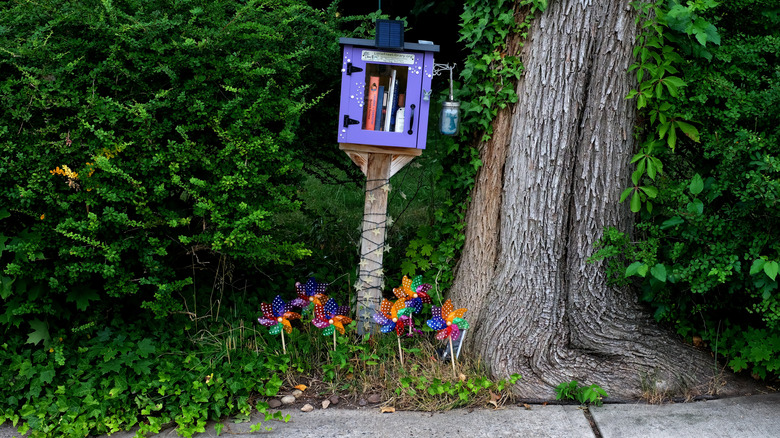
Another fun addition adjacent to your sidewalk are stop-and-go things like a little, free library. While you must abide by municipal rules (and possibly apply for a charter from the Little Free Library organization) when it comes to operating a free library in your front yard and near the sidewalk, features like these are a cute way to brighten up a neighborhood, as long as you're not obstructing safe passage on the path. Of course, before you dress up your sidewalk in any way, remember to check all of your local regulations, including those from your homeowners association. Depending on your HOA or town's unique rules, even something as harmless as using chalk on the sidewalk in front of your home could stir up conflict. No, you don't own the sidewalk and can't just do whatever you want with it (including keeping people off of it), but if you do everything correctly when it comes to upkeep and additions, there shouldn't be a legal issue.
Aspects of the sidewalk you may be liable for
Like we discussed, while ownership of the sidewalk is held with local governments, the burden of maintenance and upkeep can often fall on the homeowner, depending on municipal regulations. General repairs of sidewalks will fall into the responsibility of the local government, but sometimes, repairs must be undertaken by the homeowner. It's best to check with your local Department of Public Works for information on how much control and responsibility you have over the stretch in front of your house.
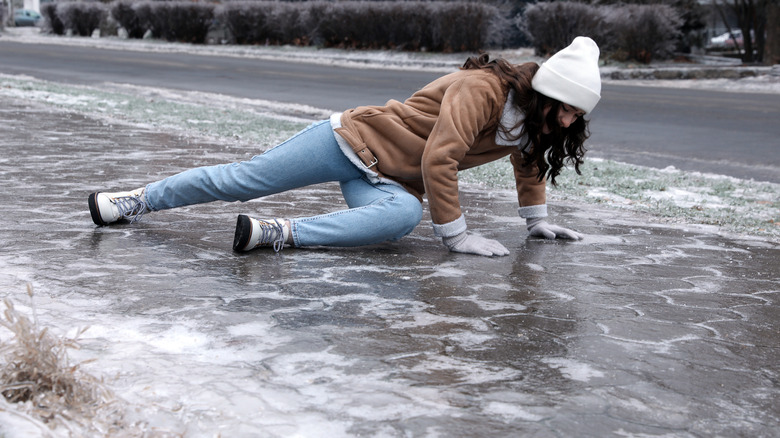
Other less intensive maintenance duties, like removing snow from sidewalks adjacent to or in front of homes, most often default to the homeowner, despite the easement. Rules vary by state and city, with some local governments taking care of this sort of seasonal upkeep, but if it's your responsibility and you neglect to safely and efficiently remove snow and ice from the walkways, you may face fines. Or worse, you could be found liable in the event of a slip and fall! While you might get help from your homeowner's insurance, it's best not to run the risk of needing to use it. With all of these nuances at play, it's no wonder neighbors get confused (and even irritated) about sidewalk activities, but at the end of the day, while you don't own the sidewalk, you likely have some responsibility for it.