

The Essential January Gardening Task For Healthier Hydrangeas This Spring
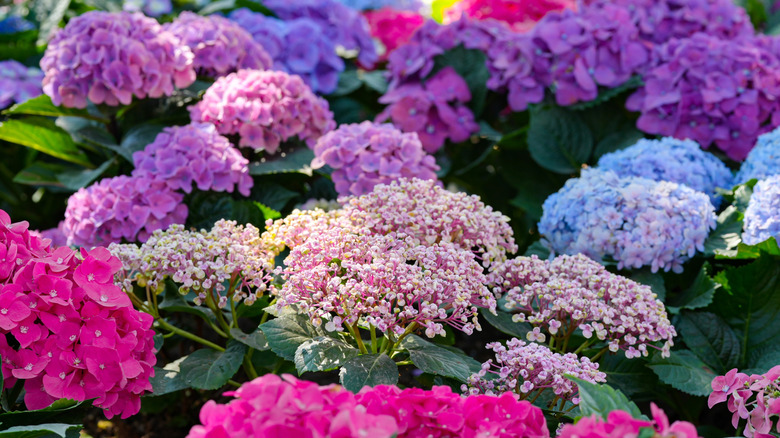
Many hydrangeas are easy to care for, so long as you meet their basic requirements. However, if you want them to truly thrive, you need to know how to give them the chance to focus on their beautiful blooms. One way to promote flowers on your shrubs is to prune them at the right time. In fact, pruning is one of the best ways to prep your hydrangeas for spring to ensure stunning blooms.
While not every hydrangea needs pruning at the same time, those that bloom on new growth should be cut in late winter or early spring, making January the perfect time to do so. Panicle (Hydrangea paniculata) and smooth hydrangeas (Hydrangea arborescens) are two prominent species that fall under this category. Avoid early hydrangeas that bloom on old growth and produce flowers quickly when spring arrives.
Pruning at this time also helps reduce your workload. Winter is generally the perfect season for planning and mentally preparing your garden, but there isn't much labor involved. Meanwhile, the other three seasons are busy with harvesting, watering, and planting. Accordingly, pruning in the winter helps to get rid of some of the workload you would have to do at other times of the year. Additionally, you can cut off old stems and make space for new growth and an abundance of blooms. However, there are many gorgeous hydrangea varieties to choose from, so it's important to know which one you have before you prune in January.
Prune your new growth hydrangeas
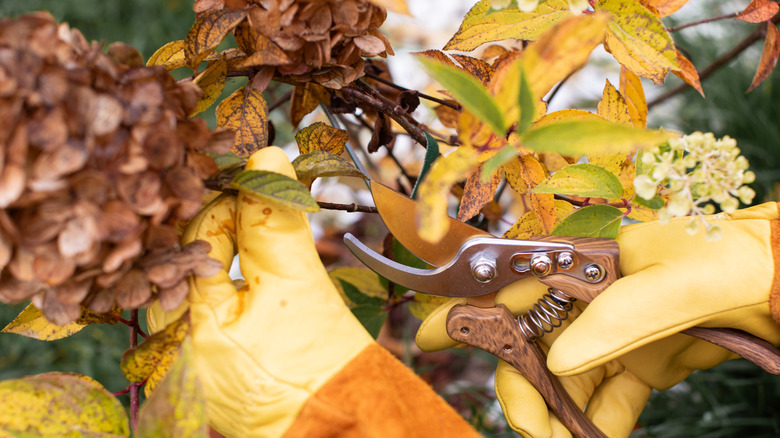
Though you could technically prune new growth hydrangeas as soon as their flowers die, it's often safer to wait. First, pruning before winter sets in can cause damage to the plants and is one of the mistakes to avoid at all costs when winter-proofing your hydrangeas. Second, they offer a unique charm with their browning flowers in the winter, so pruning shortly before new growth starts may be the best time.
If your hydrangeas are new, you may want to skip hard pruning for a few years. It needs the first few growing seasons to establish itself before it should be given big cuts. However, you can make small trims to help promote new growth. These types of hydrangeas are pretty durable. They can handle roughly a third to half of their old growth in one pruning session.
Theoretically, you don't have to prune your hydrangeas at all. However, by doing so, you promote denser growth and more blooms. For example, smooth hydrangeas will be leggy, and because they have so much older growth, they produce fewer flowers. Trimming panicles back creates a denser plant. However, if you want one that spreads out more, do smaller trims. Additionally, these hydrangeas can turn into "trees" rather than shrubs if taken care of properly, but you have to be sure to avoid cutting the top branches and the main stem.