

16 Tips That Make Your Outdoor Mosquito-Repelling Plants More Effective

We may receive a commission on purchases made from links.
Every other day, there's a new product being advertised as the solution to mosquitoes ruining your evening outside, but most of them, from wristbands to ultrasonic gadgets and clip-on devices, don't work. DEET bug repellents can provide effective protection, provided you use them safely so you don't harm your yard and minimize their environmental impact. However, the smell and feeling on the skin isn't for everyone. You might be able to tolerate DEET-based products when you're hiking or camping, but not if you're reading on the patio or grilling on the deck.
For anyone who wants to reduce their reliance on topical repellents when hanging around their home, consider growing mosquito-repelling plants that actually work — then boost their effectiveness with additional tactics. You can trigger the release of the plants' oils through crushing the leaves, positioning plants where people will constantly brush against them, or using airflow to disperse the plants' compounds. And that's just a few examples of how to level-up mosquito-repelling plants.
Plants like lemon eucalyptus, rosemary, lavender, and certain basil varieties contain compounds that mosquitoes avoid such as citronellal, linalool, and geraniol. But these compounds stay concentrated inside the plant tissue and don't emanate into the air at useful levels on their own. That's why you can plant these mosquito-repelling herbs all around your space and still get bitten. The problem isn't that the plants don't work. It's that simply placing a pot in your yard doesn't activate their repellent properties. Here's how to make mosquito-repelling plants actually effective.
Crush the leaves of mosquito-repelling herbs

Aromatic plants store volatile compounds in their leaves and stems. Small amounts evaporate naturally, which discourage insects from chewing the leaves, but these amounts aren't strong enough to repel mosquitoes across your yard. Crushing the leaves, however, breaks open the plant's oil-storing tissue and releases a concentrated burst of those compounds into the air. A study published in the Journal of Plant Physiology in 2015 showed that even needle punctures increase oil emissions by 200 to 600 percent for at least 48 hours. When you're outside, gently bruise the mosquito-repelling herbs growing nearby.
Rub bruised herb leaves directly on your skin

Since crushing easy-to-grow herbs that help keep mosquitoes out of the yard and garden releases oils, rubbing them on your skin just makes sense. A 2011 Malaria Journal paper confirms, "many plant extracts and oils repel mosquitoes, with their effect lasting from several minutes to several hours." If you'll be outside longer, reapply. But before trying this, confirm the plant isn't toxic or an allergen. Test a little on a small area of your skin before applying it to your arms, wrists, and ankles. Avoid citrus plants since they increase UV sensitivity.
Keep mosquito-repelling plants close to seating areas

The closer your mosquito-repelling potted basil, rosemary, or citronella grass grows to where you're actually spending time, the better. Place potted plants near entryways, along walkways, and beside patio seating or the grill — anywhere you'll hang out long enough and often enough to attract biting insects. Even just brushing against the leaves as you walk past releases bursts of oil, although this won't match the level of protection you get from crushing leaves and rubbing them on your skin. Also, when they're that close, it's easy to grab a handful.
Combine plants mosquitoes hate with a fan

Does it feel like you're still swatting off pests even with mosquito-repelling herbs planted nearby? Mosquitoes track you by your natural body scent, sweat, and the carbon dioxide you breathe out. Pairing the repellent patio plants with a box or oscillating fan can help. The plants on their own mask your scent with their strong aroma, and the fan disperses your body odor, making you harder to locate. It works because mosquitoes are weak fliers, so the breeze from the fan makes it harder for them to reach you.
Use the wind to your advantage
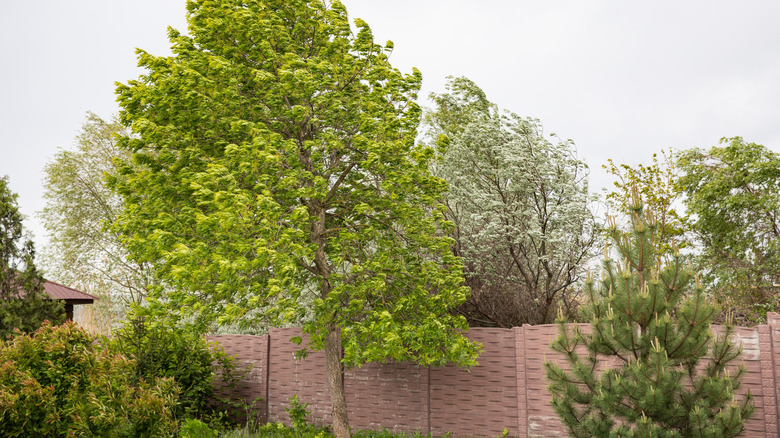
Once mosquitoes get a whiff of your sweat, they fly upwind and follow the scent trail to the source. You may have noticed that you barely spot any mosquitoes on windy days. The wind makes it harder for mosquitoes to fly and it spreads the plants' fragrance around you. It also keeps you cooler, which means less sweat for them to pick up on. If you can't use a fan, leverage the breeze in your yard. Pay attention to which way the wind blows and arrange your seat, pots, and hanging baskets accordingly.
Clusters of insect-repelling plants are best
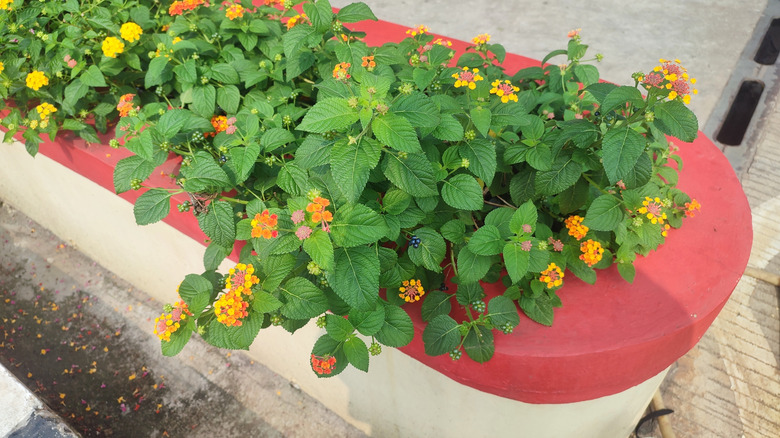
It's one thing to deal with mosquitoes around the patio or beside the grill; it's quite another to find them inside. A single pot of lavender here and a lone container of peppermint usually don't help much. Density makes a difference. You need taller plants packed closely together anywhere you're plagued by mosquitoes. In a 2011 PLOS One study, Tanzanian families grew common lantana (Lantana camara) around their houses. Locations with at least 25% of the perimeter covered in plants about 16 inches to 5 feet tall saw a drastic drop in indoor mosquitoes.
Some plants are more effective at driving away mosquitoes

You only get a strong release of aromatic oils from most mosquito-repelling plants if you rub or crush the leaves. However, there are exceptions. For example, mosquitoes feeding on common lantana have shorter lifespans and produce fewer eggs. And in the aforementioned 2011 PLOS One study, researchers found that the same plant emits high levels of volatiles even when the leaves aren't crushed, touched, or otherwise damaged. It's one of the few plants that can drive mosquitoes away and make conditions less favorable for the ones that remain.
Choose the right plants for your specific microclimate
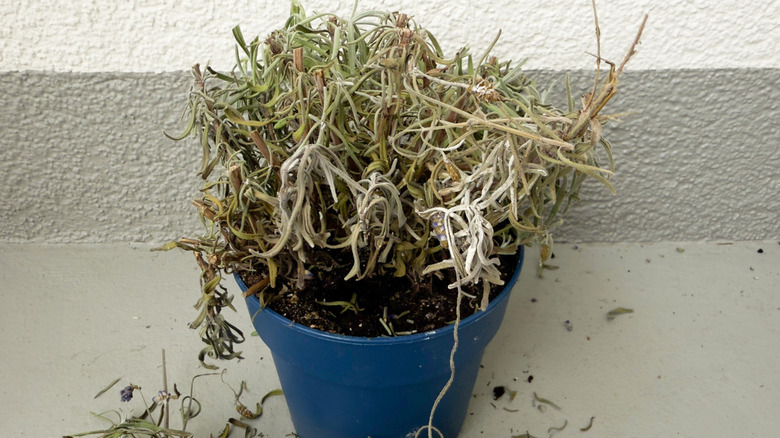
No matter how well a plant repels mosquitoes, it won't make a difference if it struggles to survive in your yard or on your balcony. A stressed plant is not productive. Consider your growing zone (which may have changed, by the way) before picking plants. Citronella grass and lemongrass, for instance, thrive in dry Zone 10 to 12 gardens. Grow them in cooler, wetter climates and they may rot. Lavender is suitable for Zones 5 to 8, while catnip, lemon balm, and bee balm do well in about Zones 3 to 9.
Arrange potted plants at different heights

Mosquito species don't take up the same air space. Some, like Aedes mosquitoes, prefer the lower reaches, where they attack legs and ankles. Meanwhile, Culex pipiens often fly several meters off the ground, much higher than their ankle-biting counterparts. For better coverage against these flying insects, arrange your potted repellent herbs and plants in layers. Place some on the ground to repel low flyers, others on a side table or planter at seat height to keep the scent closer to your hands and face, and, if you have the space, add hanging baskets.
Plant multiple repellent species for the broadest coverage

Again, mosquito species don't all behave the same way. What deters yellow fever-spreading Aedes aegypti, an invasive mosquito breed that was just found in Idaho, may not repel Anopheles gambiae, a mosquito that carries malaria. By relying on a single repellent herb or plant, you're betting everything on one scent profile. If the mosquitoes in your area tolerate it, it's not very helpful. Instead, mix and match compatible herbs to layer scents and compounds and create a more complex barrier: lemongrass brings citral, common lantana adds alpha-pinene, and sage has camphor.
Take good care of your potted mosquito-repelling plants

Healthy, vigorous growth usually means stronger oils and fragrance, which is what you're counting on. Most mosquito-repelling herbs need at least six hours of direct sun each day to produce those compounds. If you're growing in containers, give your plants a light feeding of compost or infused water fertilizer (proven to naturally improve soil) because potted growing medium loses nutrients quickly. Rotate the pots every few days so plants get even sun exposure. Finally, don't cram the containers — it causes poor air circulation. Good spacing reduces powdery mildew, keeping plants healthy.
Don't give your repellant herbs too much water

Water is the one thing you may want to be a little stingy with when caring for mosquito-repelling herbs. This may seem counterintuitive, but when certain aromatic plants experience mild water-stress, they tend to ramp up production of their protective compounds. This, in turn, increases the concentration of the essential oils that repel mosquitoes. Water your plants only when the top inch of soil feels dry and make sure your pot drains well.
Don't forget to trim herbs regularly
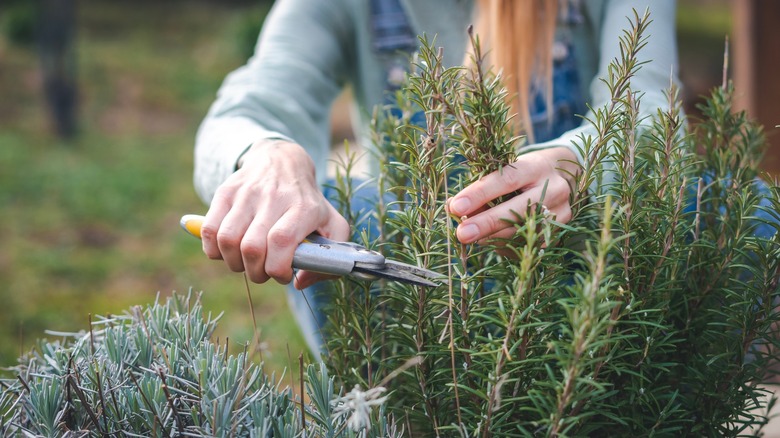
Pruning plants regularly encourages bushier growth, giving you more leaves to work with and keeping what leaves remain effective. The younger leaves of basil, for example, produce significantly more of the aromatic oils that repel mosquitoes. As plant leaves age, the structures that store the compounds start to break down and oil production stops. If you never prune your herbs, you'll end up with tall, sparse plants full of spent leaves. Pinch off any flower buds you spot, too. Once herbs start flowering, they send their energy away from leaves into blooms and seeds.
Burn the leaves and stems of mosquito-repelling plants
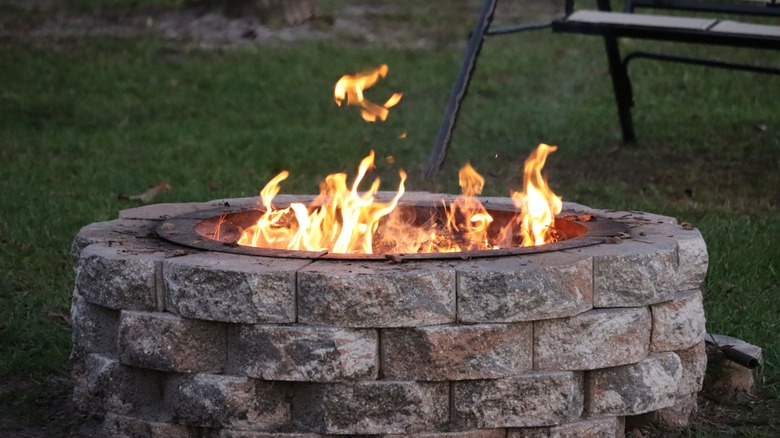
Burning both the dried and fresh leaves of herbs like rosemary and thyme helps release their oils into the atmosphere and repel mosquitoes. The key is to burn them slowly for a long time, like incense. Fresh leaves are harder to torch — a Ceramic Cedar and Zen Herb Burner works. Bundle dried leaves together before adding them to a fire pit or grill. Skip this idea if you or your neighbors have respiratory sensitivities, and check local open-fire ordinances first to make sure you stay compliant.
Reduce mosquito breeding sites in your garden
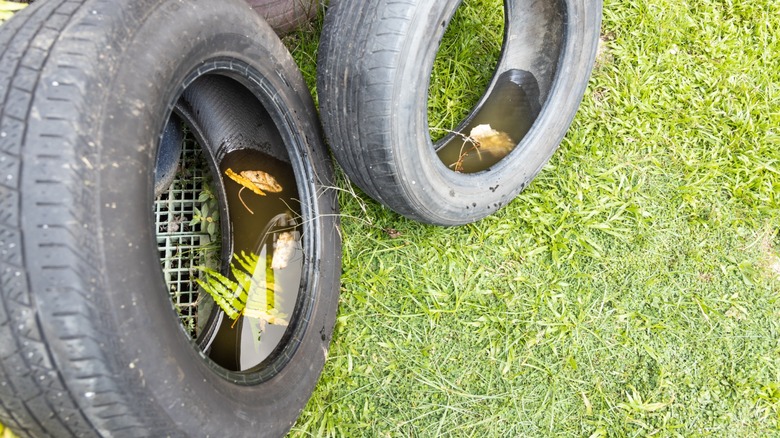
Make sure there's no standing water anywhere in your yard or garden. Mosquitoes can breed in a bottle cap full of water. It's also not enough to just tip out any standing water you find, including plant pot saucers. Mosquito eggs can survive dry spells of up to eight months. After you remove water from a vessel, scrub clean and rinse the nearby area, too. Then make it harder for water to pool in the first place by flipping over anything concave, especially near where you sit outdoors.
Manage garden water sources you can't remove
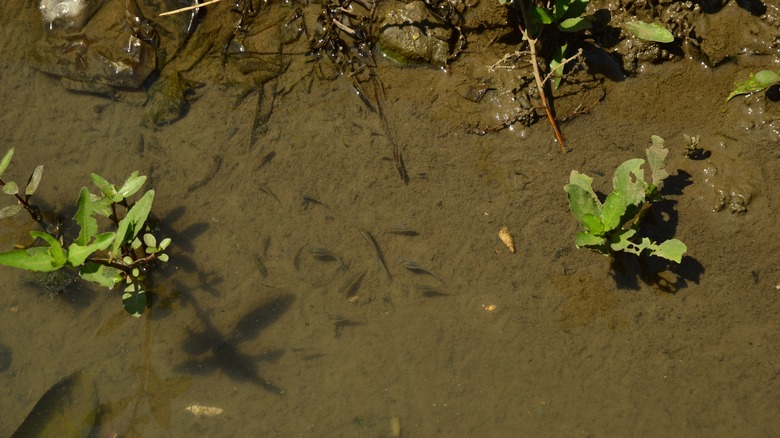
If you can't eliminate a backyard water source, you need to manage it. You don't want it to breed mosquitoes in numbers that will overwhelm any oils your plants release. Fix dripping, puddle-causing outdoor faucets. Screen off rainwater cisterns. Replace the water in pet dishes daily and in birdbaths every few days — or add a Summit Mosquito Dunk Tablet. They contain Bti (Bacillus thuringiensis israelensis), which naturally kills mosquito larvae without harming birds, pets, or pollinators. Populate your pond with hardy mosquitofish (Gambusia affinis). They eat hundreds of larvae a day.