

Primrose Vs Pansy: Differences To Know Between These Two Popular Flowers
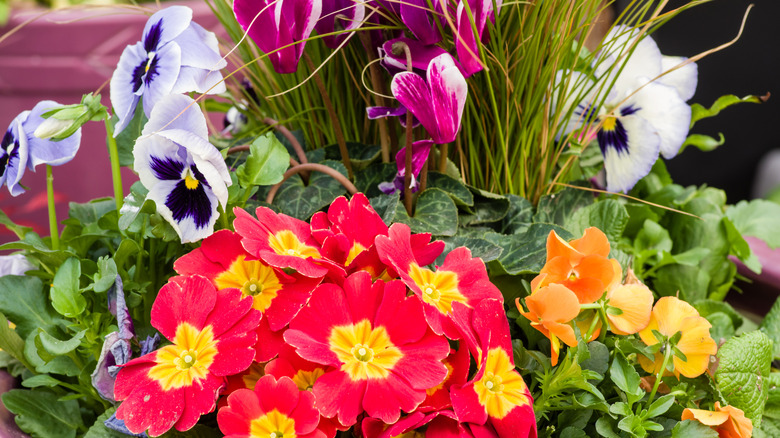
People everywhere love flowers. They liven up your yard with their pretty colors, add pleasant scents to landscapes, and attract essential pollinators like bees and butterflies. And when it comes to flowers, pansies (Viola × wittrockiana) and primroses (Primula spp.) are two of the most popular choices. On one hand, pansies are appreciated for their beautiful blooms, which come in many colors, and for their ability to grow well even in the coldest months. On the other hand, primroses are loved by gardeners for their low-maintenance nature and for being one of the earliest bloomers in spring. But while both species are loved alike, they have quite a few differences in their blooming windows, floral shapes and sizes, growth habits, and hardiness zones.
Being aware of these differences is crucial if you want to design a stunning flower garden and figure out which of these flowers is the ideal choice for you. Take, for instance, the hardiness zones. They determine whether a particular flower can survive local winter extremes or summer heat. Planting a flower outside its hardiness zone can result in poor growth as well as inferior quality of the blooms. Similarly, differences in growth habit and flower colors determine where a flower can be used in a garden or landscape. In addition to hardiness zones and growth habits, another critical consideration is bloom timing. It is especially important in situations where you want to create a flower garden with a continuous display of colors all year long.
Differences between pansies and primroses
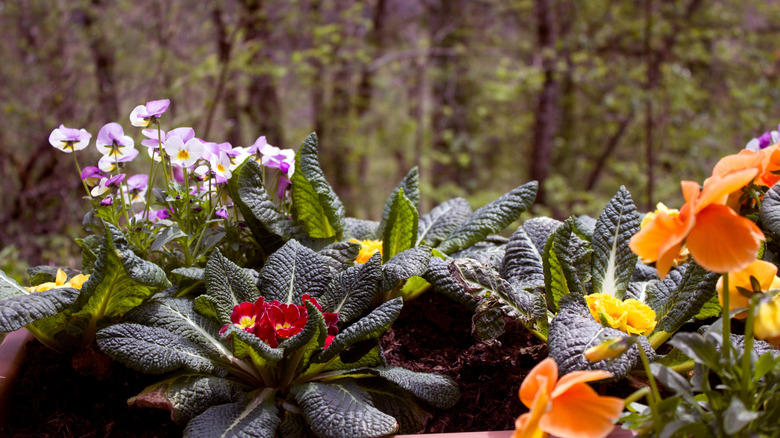
Let's start with the hardiness zones. Primroses are cold-hardy across USDA zones 3 to 8, whereas pansies thrive across zones 6 to 10. This means you cannot plant pansies as perennials across much of the northern US. Regarding their life cycle, pansies are typically treated as cool-season annuals or short-lived biennials in their respective hardiness zones, whereas primroses are reliable perennials that can last in a garden for up to five or six years. In terms of flower colors, both pansies and primroses come in a range of colors, but they differ in shape and size. Flowers of primroses are usually flat or tubular and are less than 1 inch across.
In comparison, the flowers of pansies have a distinctive "blotch" or "face" form with a size of about 2 to 3 inches. The differences in their flowers don't end here, though. Another critical difference between them is their blooming times. Primroses typically bloom from February to May. In contrast, most pansies flower from April to June. As for their growth habit, pansies usually form a mounding, spreading plant about 6 to 9 inches tall and are often used in container plantings, in edgings, and as bedding plants.
Primroses typically grow as a clumping plant with leaves in a ground-hugging rosette, and you can grow them in pots, in rock gardens, along garden borders, or as standout specimen plants. Lastly, they have different sunlight needs, too. Pansies prefer full sun but can survive in partial shade. However, primroses are intolerant of full sun and should be planted only in areas with partial shade or dappled sunlight.