

Is Your Snow Blower Difficult To Maneuver? Here's What You Can Do
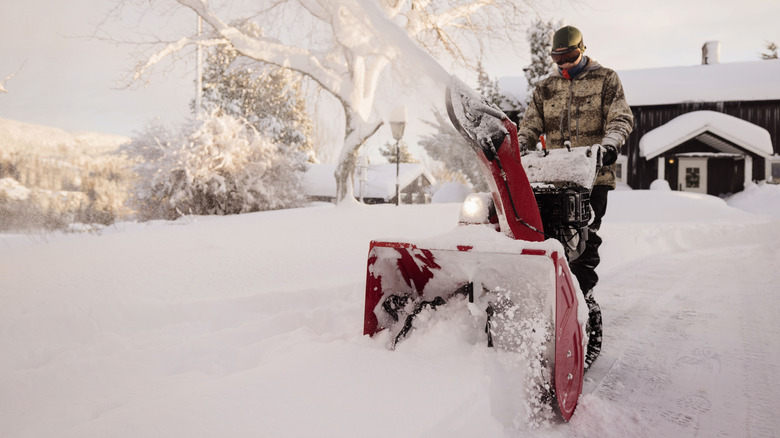
When a heavy snowstorm hits, your two-stage snow blower should be your greatest ally, not your workout for the day. However, sometimes you can end up feeling exhausted after clearing the driveway if your blower feels jerky, heavy, or just flat-out uncooperative. If your snow blower lurches forward or needs a big shove to get moving, know that the culprit likely isn't the engine or the wheels: it's the drive belt tension. For two-stage blowers, the engine uses a belt to power the transmission. Over months of use, this belt can stretch out and wear, causing slippage that creates that fighting sensation at the handles. This stretching is completely normal, but it's still annoying.
To regain control, you need to address the slack in the drive cable. Before you begin, though, remember that safety is key: turn off the engine and pull the spark plug wire to prevent any accidental starts. Then, locate the adjustment bracket or threaded barrel on the cable that's connected to the drive lever (usually on the left handle). Adjust this barrel to increase the tension, and test after each adjustment; there are YouTube tutorials on this, or you can call up a professional if you don't feel comfortable handling it yourself. This adjustment makes it so the belt grips the pulley firmly whenever you grab the handle. A properly tensioned belt should let your snow blower move at a steady and predictable pace, without creeping, when you aren't grabbing the lever. Finding this perfect balance eliminates the annoying lurching problem and brings back the smooth ease of use your blower was designed to provide.
How to keep your snow blower's drive belt running smoothly
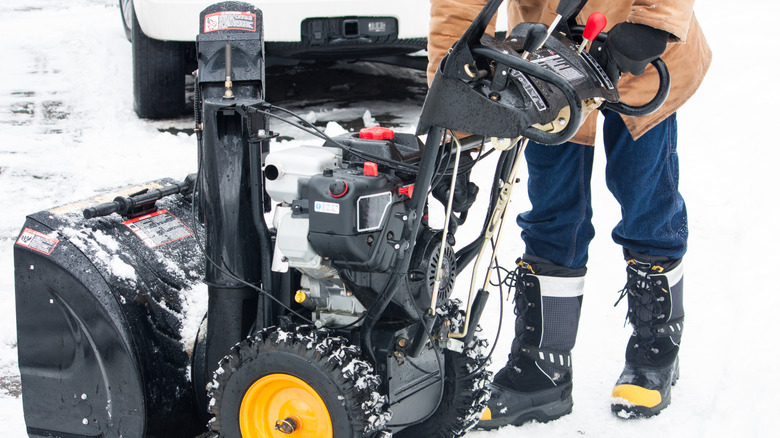
Once you've got the belt tension dialed in, the next step is keeping it that way. To do that, we need to reduce mechanical friction. While the belt provides power to the blower, the pivot points and linkages it interacts with serve as the machine's joints. One of the biggest issues is that, throughout the winter, these metal parts end up touching lots of road salt, ice, and moisture. That, in turn, leads to issues like rust and the rough operation we mentioned above. This is easy enough to fix, though: apply some high-quality lubricant to every moving pivot point and shifting linkage you can find.
Applying lubricant helps these internal components slide effortlessly, so it always feels like you're steering the snow blower and not the other way around. Focus your efforts on the points where the control levers attach to the frame and the underside linkages that move the friction disc. However, it's important to be surgical when applying it to extend the life of your snow blower. Don't allow any grease or oil to touch the drive belt or pulleys, as it can lead to slippage. Belts are made of porous rubber, and any lubricant can break the material down.
By tightening up the belt drive and carefully greasing the pivot points, you can stop wrestling with your winter equipment and get your driveway cleared in no time. Taking 20 minutes for this little bit of snow blower maintenance today will help you use your snow blower on your driveway more efficiently all winter long.