

Prune These Plants In January For A Healthier, More Vibrant Garden In The Spring
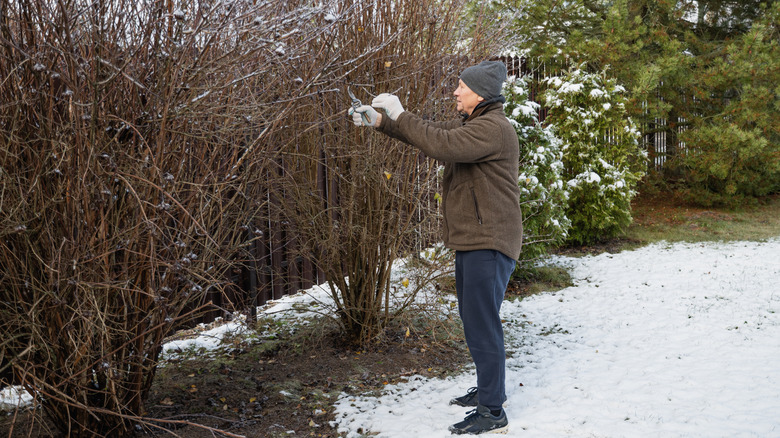
In many parts of North America, January is when most outdoor plants are dormant. Spring is months away, leaving gardeners feeling like there's nothing they can do outside in their garden. Yet there are many trees and shrubs that can profit from being pruned in January. Most pests and diseases are also dormant in the winter, which means plants can seal up any cuts you make while threats to their health are minimal. For "bleeder" trees, pruning while dormant allows them to retain more of the energy stored in their sap, leaving them better able to fend off pests and disease when spring comes.
Some fruit-bearing trees and shrubs produce flowers on "new wood" that grows in the spring or summer. Pruning those plants during dormancy doesn't interfere with their flower- and fruit-producing schedule. A good rule of thumb is: If your plant flowers in spring, prune it in summer; if it blooms in summer, January pruning is usually fine. For deciduous trees and shrubs that need shaping, winter can be a great time to prune because you can better see the plant's shape after it's dropped its leaves.
Before you head out into the January cold to do some pruning, just keep in mind that overzealous pruning limits the plant's ability to collect the sun's energy and can weaken a plant, making it more susceptible to disease and pests. Remember the "three D's" rule of pruning: Limit your pruning to dead, damaged, or diseased branches or canes.
New wood hydrangeas
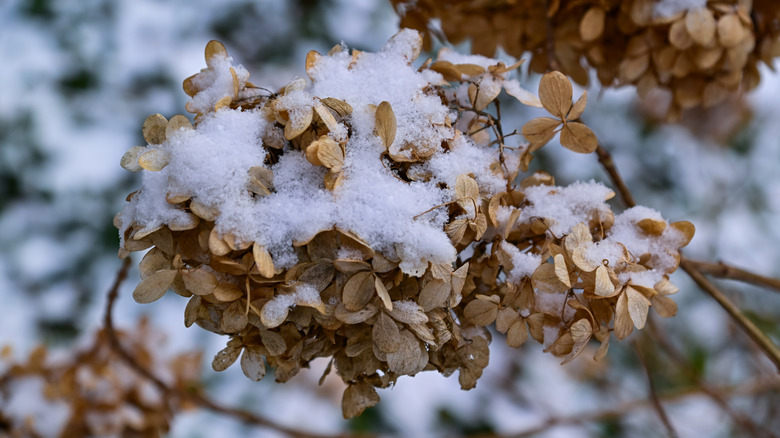
Know your hydrangeas before grabbing your garden shears. Some hydrangeas bloom on new wood and are fine to prune in January. These include smooth hydrangeas (Hydrangea arborescens) and panicle hydrangeas (Hydrangea paniculata). They flower from summer to fall on wood that has grown that year. By contrast, bigleaf hydrangeas (Hydrangea macrophylla) and oakleaf hydrangeas (Hydrangea quercifolia) should be pruned in summer after they've flowered. Pruning "new wood" hydrangeas will allow you to shape the shrub to your liking, as well as allow the plant to devote its energies away from lifeless branches and into healthy ones.
New wood roses
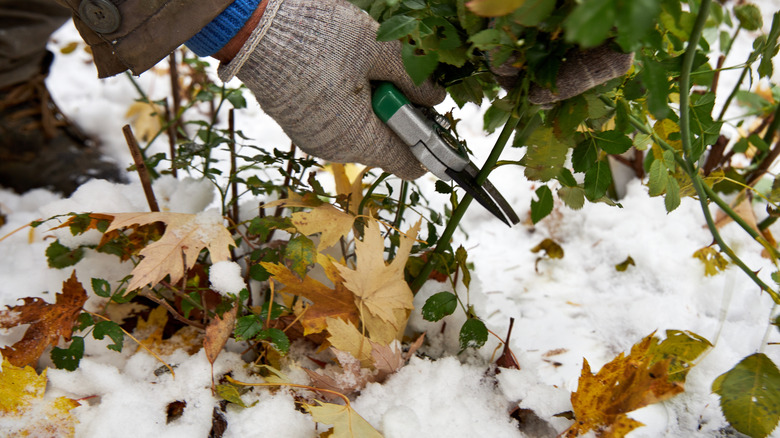
As with hydrangeas, some roses (Rosa spp.) bloom on new wood and some on old wood. Cutting back roses that produce flowers on "old wood" could have unfortunate consequences. Those that bloom on new wood include hybrid tea roses, as well as summer-blooming and repeat-blooming roses. In January, you can cut back dead or diseased canes on "new wood" roses so that come spring, the plants focus their energy on producing new canes and flowers. If you're unsure whether you have "new wood" or "old wood" roses, you can usually tell by when they bloom.
American holly
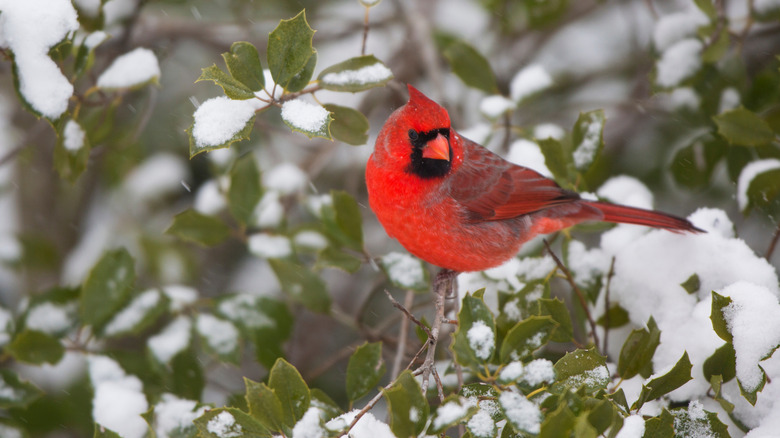
Even if you pruned some American holly (Ilex opaca) branches to harvest some Christmas greenery, you can certainly prune it in January. American hollies can grow large, so the main reason to prune them is to keep them in a size that fits your garden. The shrub is able to withstand a heavier pruning than most trees or shrubs, but prune judiciously: Leave as much fruit on the shrub as you can, since American holly is an important food source for native wildlife.
Crape myrtle
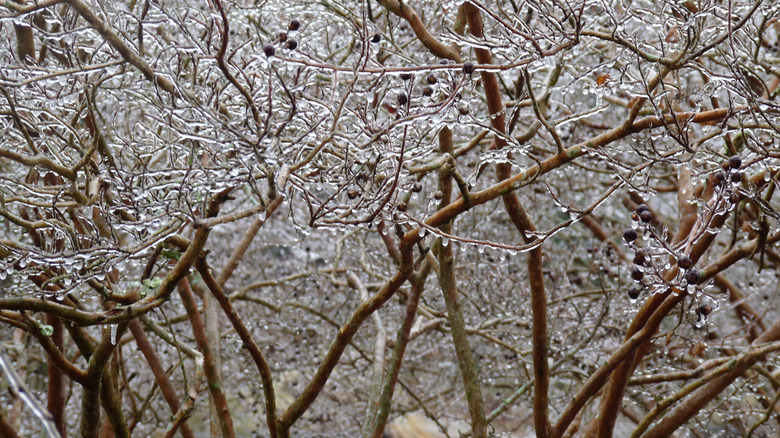
Like roses and hydrangeas, crape myrtles (Lagerstroemia indica) flower on new growth. And like hollies, they can grow large. Pruning suckers will help your crape myrtle grow into a more tree-like shape rather than a multi-stemmed shrub. Avoid the popular habit of "topping" the top of a crape myrtle, which is unnecessary and can weaken and even kill the plant. Crape myrtle will benefit from pruning to increase air movement and access to sunlight, which helps prevent the spread of powdery mildew. Fortunately, only light pruning is needed to achieve that.
Dogwoods
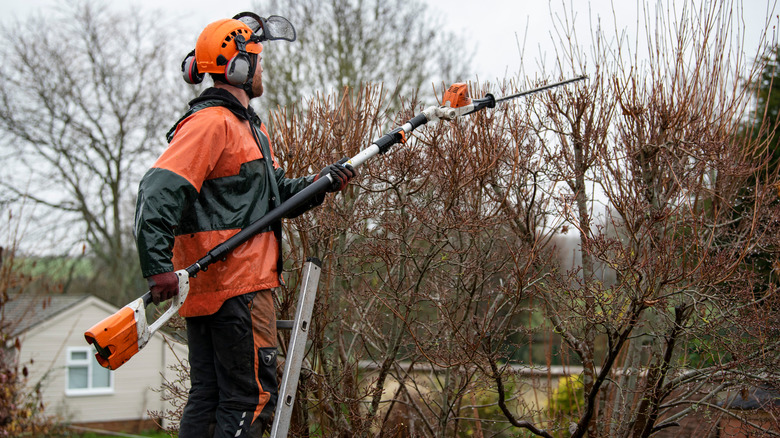
Dogwoods (Cornus spp.) come in tree and shrub varieties. While both benefit from pruning to promote flowering, it's important to know the different seasons when you should prune them. Dogwood trees bloom in spring on buds that they've produced on last year's wood. While you can prune the trees when they are dormant in January, you will likely lose some of their spring blooms, so it's best to prune these in late summer, after they are done blooming. Dogwood shrubs, however, bloom on "new wood," so they are best pruned in January to early spring.
Ginkgo trees
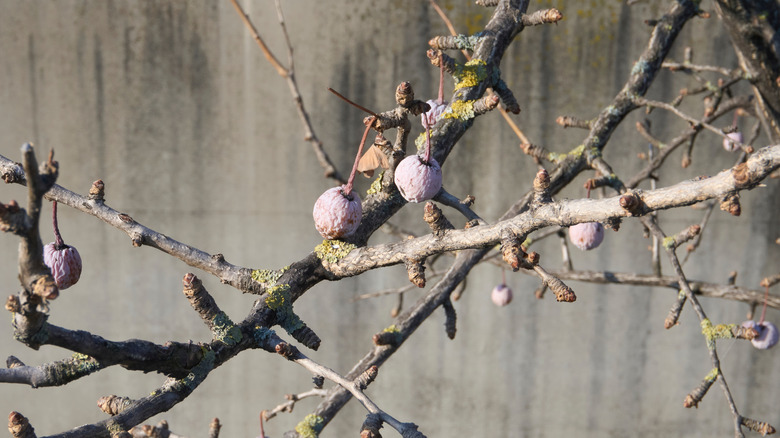
Ginkgo trees (Ginkgo biloba), also known as Maidenhair trees, can grow very tall and wide, leading some people to consider "topping" the tree to control its growth, but as with crape myrtles, this can be fatal to the tree. It's better to remove low-hanging branches to allow a clear passageway underneath, especially if the tree borders a sidewalk or roadway. You can also remove suckers at the base of the tree to promote the growth of the main stem. Late fall and winter are the best times to prune the tree, when it is dormant and producing little sap.
Oak trees
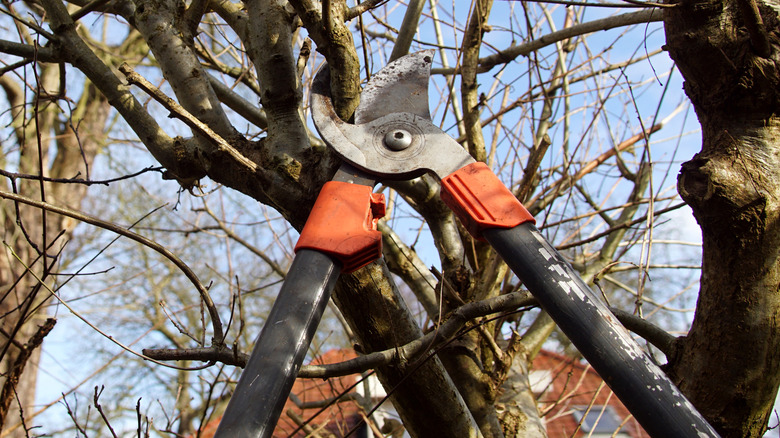
Younger oak trees (Quercus spp.) can benefit from the removal of crossed branches in January, while older oaks rarely need pruning except in cases of dying or dead branches, where removal can improve your and your home's safety. For taller trees and large branches, seek the services of a professional arborist. Oaks are one of the few trees where it's recommended to "paint" a recent cut with tree paint. For most trees, it's not recommended, but for oaks, painting the tree with a wound dressing can prevent oak wilt, a fungus that can kill oaks.
Apple trees
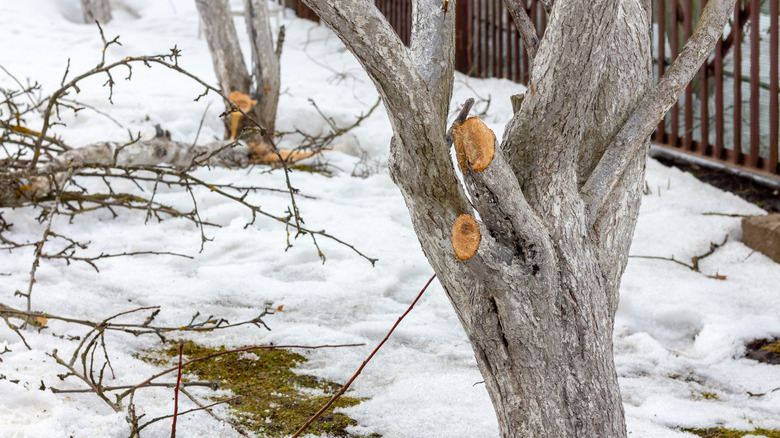
Since apple trees (Malus spp.) produce fruit on two-year-old wood, pruning older branches helps keep the tree productive. Like most fruit trees, apple trees need lots of light to produce flowers and then fruit. Pruning helps open up branches to light, leading to a better harvest. Pruning the tree into a Christmas tree shape can direct sunlight to the lower branches. Mid-January to mid-February is an excellent time to prune apple trees, as apple trees are very cold-hardy. Pruning any later than March can cause these fruit trees to produce branches and leaves rather than fruit.
Pear trees
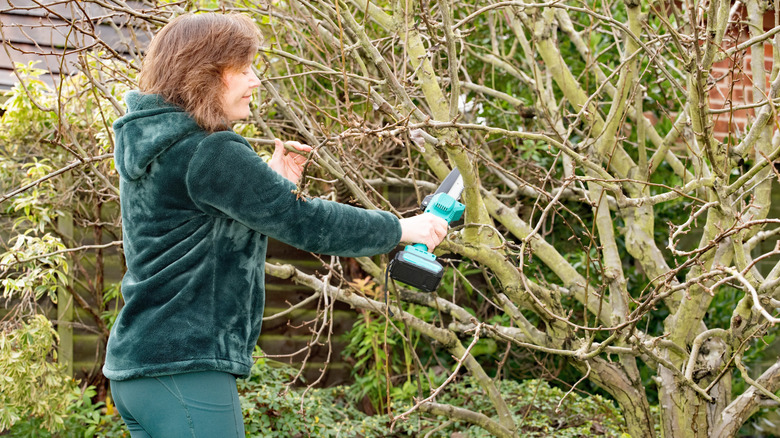
Like apple trees, pear trees (Pyrus communis) are pruned into a Christmas tree shape, where a central leader grows at the top of the tree while side branches spread out at wider angles as one moves from the top to the bottom of the tree. January to early April are key times to prune pear trees, while the tree is still dormant. Restrict pruning young trees to shaping the tree and removing suckers growing out of the tree's base. Older trees, however, will produce more fruit after they are vigorously pruned.
Highbush blueberries
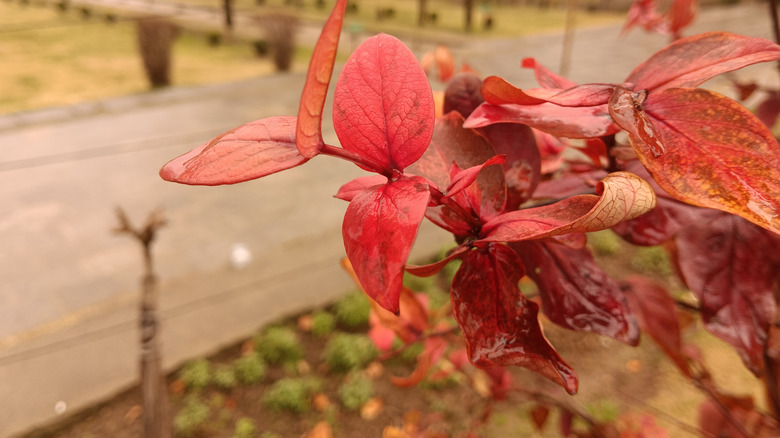
A light to moderate pruning of highbush blueberries (Vaccinium corymbosum) every year will increase fruit production and reduce the threat of disease by bringing more light and air into the plant, encouraging early ripening, and focusing the plant on its fruits, not its branches. In milder climates, prune blueberries starting in January, but highbush blueberries thrive in cold climates, where you can wait until late winter. Beyond dead or diseased canes, prune low-growing canes that won't get enough sunlight, as well as thicker canes older than six years old.
Raspberries and blackberries
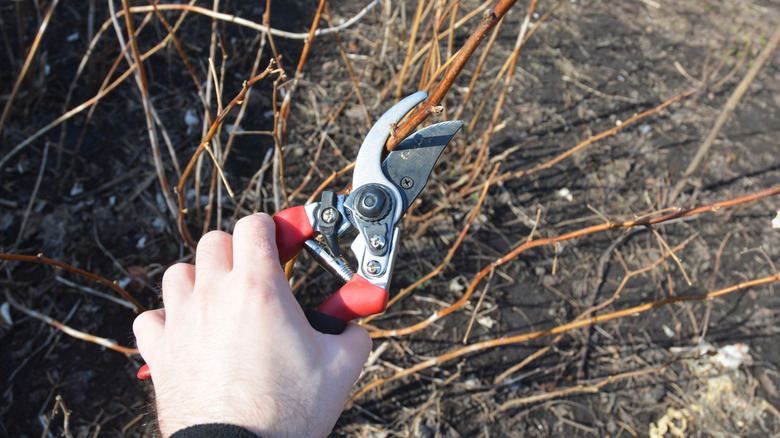
Raspberries (Rubus idaeus) and their closely related cousin, blackberries (Rubus fruticosus), both produce biennial canes that bear fruit in the second year, then die back to the ground, only to produce new canes from their roots the following year. Pruning controls disease, produces more fruit, and makes harvesting easier. As with blueberries, January is a prime time to prune raspberries and blackberries in milder climates, but wait until late winter or early spring in colder areas of the country.
Beech trees
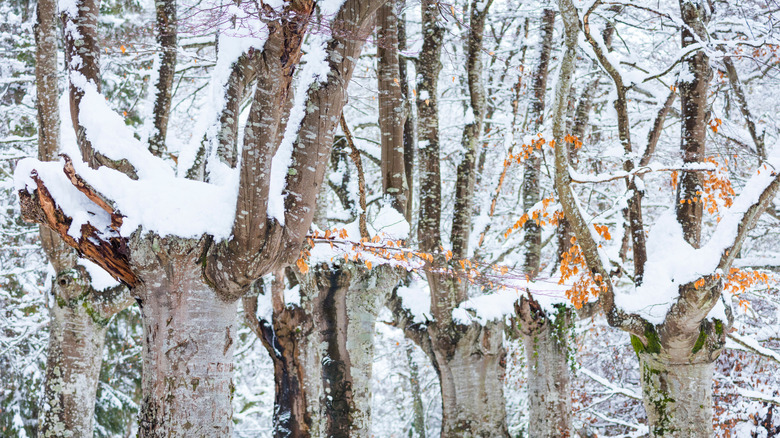
Beech trees (Fagus spp.) are "bleeder" trees that you shouldn't wait to prune until early spring, when their sap runs strongest. Instead, it's better to prune them in January. Many species of beech trees can withstand heavy pruning, which makes shaping the tree easier. The best method for pruning your beech tree is to start when it's young, as it can grow up to 80 feet tall. If you're late to the game, contact a professional arborist. Sadly, pruning of beeches only slows but does not prevent the spread of Beech leaf disease.