

The Old-School Cleaning Staple That Works Great And Is All Natural
We may receive a commission on purchases made from links.
Finding the best cleaning supplies can be overwhelming. Stores are filled with hundreds of options and there's no end to what online retailers can offer. But instead of getting frustrated, it might be time to go back to some old-school staples that are tried and true. Plus, a lot of the cleaners our grandparents used were everyday items they already had. For example, coarse salt is an effective cleaner without all the harsh chemicals found in so many modern products. It's also affordable, like these Sal Bahia Iodized Sea Salt Coarse Crystals that are little more than a dime an ounce. That could be why salt has remained a go-to cleaner spanning generations and economic ups and downs.
It's effective because it's made up of sodium chloride that can break down grime while the small salt granules help to scrub it away. There are many clever ways you can use salt when cleaning your home, no matter if you're using it on food prep surfaces in the kitchen or fighting stains in the laundry room. Plus, you can take comfort in the fact that it's all-natural.
Coarse salt can tackle your toughest messes
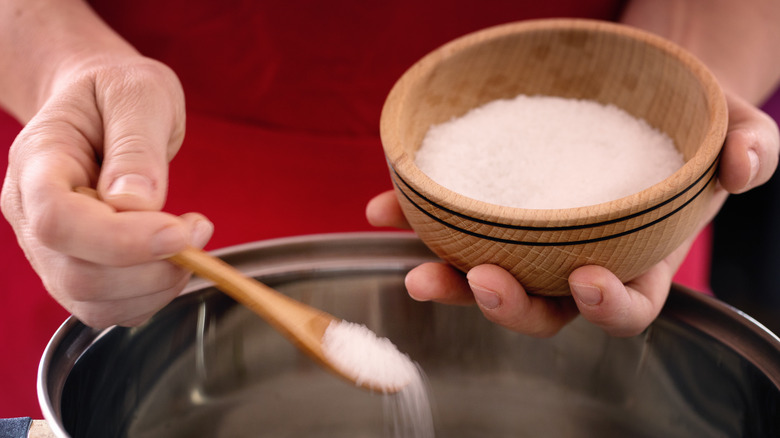
For laundry, salt's absorbent properties can help to lift stains out of fabrics before they set. This happens because salt is hygroscopic and has the ability to attract and hold water molecules. Once the salt has soaked up the liquid, brush or vacuum it away. Salt can also be used to get sweat stains out of clothes by throwing several tablespoons of salt into hot water and dabbing the stain with the solution.
In the bathroom, coarse salt is an easy cleaning hack to remove soap scum. This can be done by using a microfiber cloth to scrub salt into the affected area. Combining coarse salt and vinegar can be a one-two-punch for grime in toilet bowls. The acidity of the vinegar helps to break down particles and the coarse salt helps scrub them away. There's a potential for rust in bathrooms because metal is exposed to water. Surprisingly, coarse salt is one of the common kitchen ingredients that can tackle rust stains naturally. Try dissolving salt in water and then coating some balled up aluminum foil with it. Scrub the rusty metal with the foil ball to erase rust from the surface.
In the kitchen, keep harsh chemicals away from food surfaces by using salt to clean and deodorize. One way to do this is to scrub coarse salt into a wooden cutting board. The salt will absorb any odors and moisture from the board preventing bacteria growth from trapped moisture. A clogged kitchen sink can be cleared by mixing coarse salt with baking soda and vinegar. Put the mixture down the drain, let it fizz, and follow it with boiling water. The mixture should help to get build up off the pipes and break up clumps.
Use coarse salt carefully to prevent damage

Course salt granules live up to their name because they are abrasive by nature. But there are many surfaces in your home that could be permanently damaged or scratched by using an abrasive cleaner. For example, you may not want to aggressively scrub course salt onto a non-stick pan. Instead, create a cleansing brine. This can be done by allowing the salt granules to dissolve in a small amount of warm water then letting the solution sit overnight. This will break up the grease without scratches.
Don't use coarse salt on soft, stone surfaces like marble. Even if the salt is diluted, it could still scratch the delicate surface and that could be a costly mistake. Instead, use gentle cleaners specifically designed for stone, like this Weiman Disinfectant Granite Daily Clean & Shine. Salt can also seep into porous surfaces like concrete or brick. Because salt is absorbent, it can expand and contract when it gets wet or dries out causing stress on the material. Eventually, it could cause those porous surfaces to crack.
Lastly, while mixing some products with salt is okay, it doesn't work with everything. Mixing salt with bleach can create a chemical reaction that produces chlorine gas. This gas can be toxic and can cause irritation to eyes, nose, and throat, leading to respiratory issues. Plus, mixing coarse salt with other cleaning chemicals takes away from its safe and all-natural appeal.