

10 Things You Should Always Do When Washing Your Sheets
It's a dreaded but necessary task to strip your bed and wash your sheets and pillowcases. Even if you take a shower prior to jumping into your bed for a night's rest (or doom scroll), you should still wash or change your bedsheets once a week at a minimum to prevent dead skin cells, pet hair, your hair, and other nasties from accumulating on what should be a sacred sleeping ground. Simply throwing your dirty sheets into the washer and dryer can give them a thorough wash. However, there are many other things you can do when washing your bedsheets to keep them fresh and maintain their quality and softness, such as shaking them out first, using the correct temperature, and adding a dry towel to the dryer.
If you wash and change your sheets regularly, the constant wear and tear they may encounter in your washer and dryer can ultimately ruin the integrity of the fabric, forcing you to purchase a new set. If you don't enjoy splurging on new, cozy bedsheet sets or if you simply cannot sleep unless it's on a specific, well-loved sheet set, then using these tips when loading your bed linens into your laundry machines can help increase the longevity of your sheets while keeping them clean and fresh for many future uses. Some of these washing tips vary depending on what settings your machines are equipped with and whether you have front-loading or top-loading machines, so use them to best optimize the machines that you have.
Shake out your sheets to prevent in-wash tangling
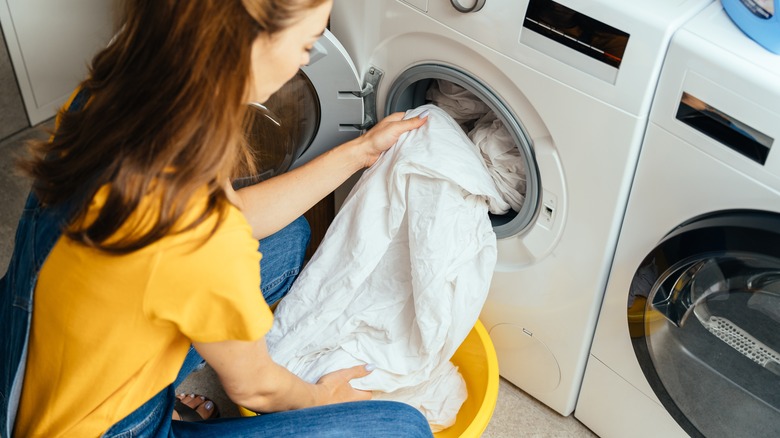
The first step to washing your sheets correctly is to make sure they're loaded into your washer properly. Instead of just dumping a basket full of sheets into the washer drum, load each piece individually, shaking it out before loading to prevent in-wash tangling. As sheets can be quite large, they can get knotted in each other or with the agitator of top-loading washing machines, which means they don't get as clean. As you load, provide ample, even space between each piece to prevent sheets — especially fitted ones — from swallowing pillowcases mid-wash.
Don't overload your washer or dryer
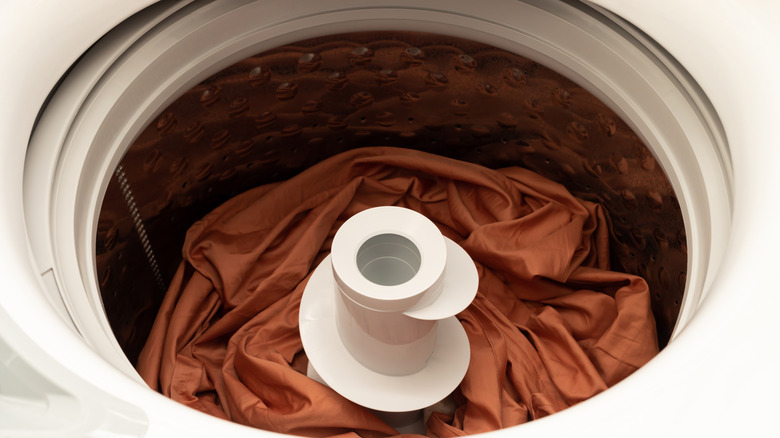
As tempting as it is to do a one-and-done load of pillowcases, fitted sheets, flat sheets, and comforters, it's best to leave a bit of room in your washer or dryer. Depending on the size of your linens, usually loading pillowcases, a flat sheet, and a fitted sheet can fill up your washer drum an adequate amount. Overloading your washer with bed linens can prevent each piece from being thoroughly cleansed, as the detergent won't have enough room to move about the drum to loosen dirt, grime, and other particles. Overloading your dryer can also prevent your sheets from drying completely.
Pay attention to the care instructions
Like with clothing items, it's important to follow the specific care instructions provided on the label for your sheet set's fabric type. While a regular wash cycle may suffice for everyday cotton or cotton-blend sheets, using the same settings and detergent for sheets composed of other fabrics like satin or linen can do more harm than good. Be mindful of the instructions for drying your sheets, too, as certain fabrics can do well in heated dry cycles while others are no-heat or line-dry only.
Utilize mesh bags for delicate fabrics
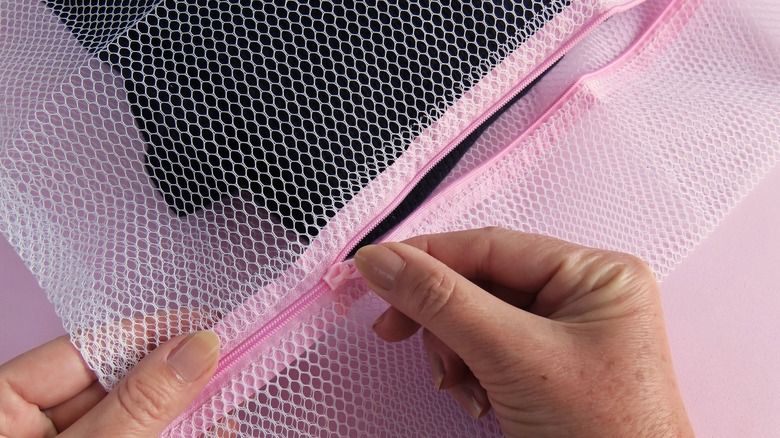
For more delicate sheet sets such as silk or satin, incorporate mesh laundry bags into your washing routine. Since these fabrics are not as sturdy as cotton, it's important to make sure they are properly protected during the wash cycle. Mesh bags can help preserve their integrity, leaving them less prone to snagging and tearing, especially in machines with an agitator. Use separate bags for each piece of the set to prevent tangling.
Limit how many times you use fabric softener
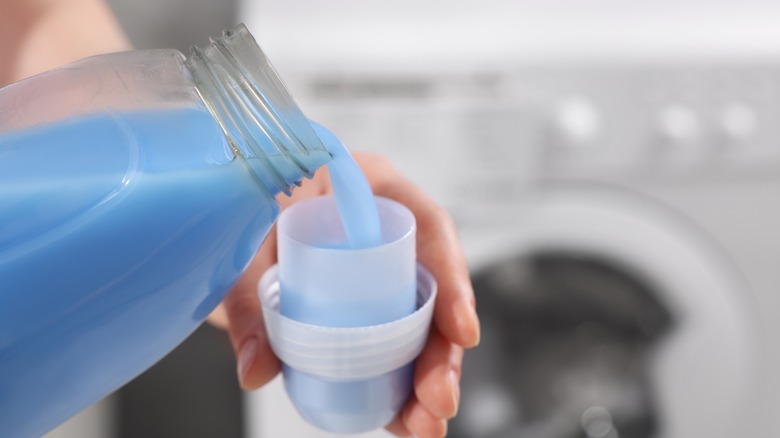
A common mistake you might be making with your bedsheets is using fabric softener with every wash. While fabric softener is typically used for what the name implies, adding it to every load can ruin the integrity of your sheets. Both liquid and sheet fabric softeners add a coating to fabrics that can make your sheets less porous and breathable over time. When added during a wash cycle, the additives can also linger in your washing machine, ultimately impacting the efficiency of your appliance. Limit fabric softener use to once every three washes, at most.
Ensure you're using the correct water temperature
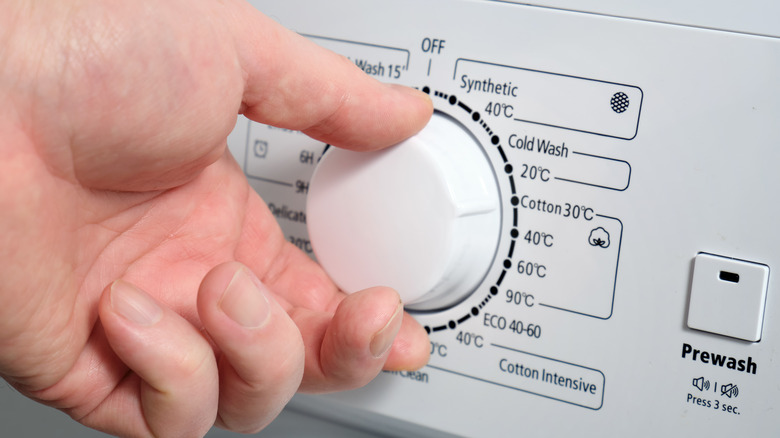
While cold water wash cycles are a pretty safe setting for most bedsheets, the frigid temperature is not always the best for every situation. Cold washes are not the best for removing stains, especially if they're not pre-treated prior to loading. Warm washes are more effective for stain removal and reducing germs. Avoid using hot water, though, as that may lead to quicker deterioration of your sheets, regardless of the fabric.
Add dryer balls or tennis balls for more thorough drying
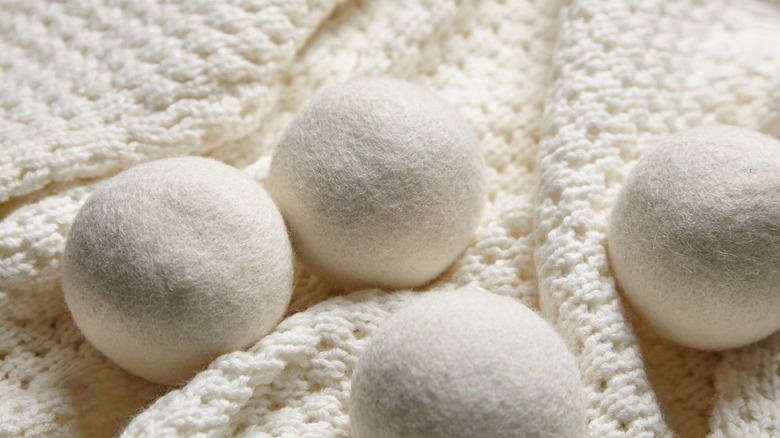
Dryer balls come in many materials and even fun little shapes. Adding one or two of these to the dryer with your bedding can reduce drying time and help prevent in-dryer tangling. Plastic or rubber dryer balls can do an adequate job, even helping further detangle sheets by separating them more if they come with nodules or bumps. Wool dryer balls have the added benefits of removing static, softening fabric, and even reducing wrinkles. Tennis balls can sub in as dryer balls when in a pinch, but be sure to use clean ones that don't transfer color.
Throw in a towel for faster drying
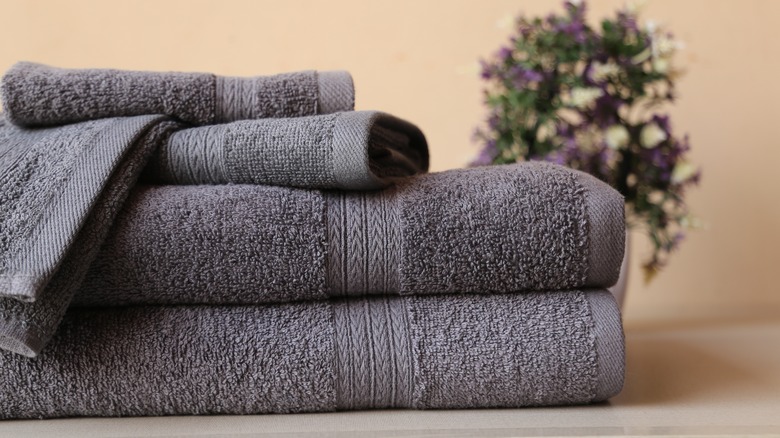
Just as a towel absorbs moisture from your skin, adding a fresh, dry towel to the dryer with your bed sheets can help ensure they come out dry and ready for use. One towel can typically suffice for a load of bed linens. It will help distribute the sheets more evenly in the dryer, as long as you haven't put too much in one load, allowing them to tumble more freely, preventing tangling and clumping. It will also absorb moisture from the bedsheets, quickening drying time.
Pause dry cycles halfway through
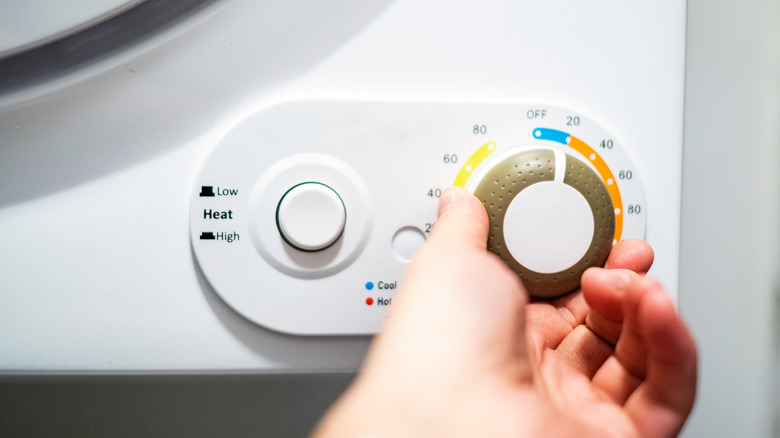
To ensure an adequate drying job, set your dry time to half of what you usually set it to. Once that timer goes off, remove your sheets from the dryer, shake them out, and put them back in the dryer. Set your timer to the remaining time of your usual dry cycle and remove sheets once finished. Doing this can help your sheets remain untangled and unclumped, prevent smaller bedding items from getting lost within a fitted sheet, and make sure your sheets are drying evenly.
Use hot water and bleach for white bedsheets
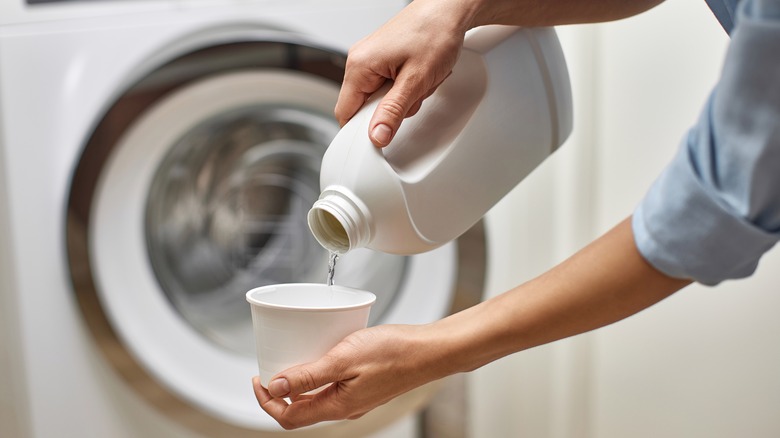
Want to maintain the white, crisp color of your white bedsheets? Incorporate bleach into your laundry load. Doing so will help guarantee your white sheets will come out stain-free, germ-free, and as crisp as they were when you bought them. Before adding bleach to your linen load, make sure you check the care label to see if the fabric can handle it. Cotton sheets, polyester, and poly-blend sheets are usually safe with bleach, but not delicate fabrics like silk and satin.