

The One DIY Trick That Makes Painting A French Door A Total Breeze
We may receive a commission on purchases made from links.
If you're looking to easily spruce up your home, painting offers endless possibilities on a budget. Painting can give shelves a brand new, colorful look, or it can make a room feel either more open or more intimate, depending on color and shade. Painting can also add texture to a closet makeover, and it can even give doors and windows a whole new aesthetic. However, as anyone who's tackled a painting DIY technique will know, the most annoying part of the whole endeavor is taping up borders and edges for a clean finish — something that's especially true when you're bringing new color to French doors, which often have multiple glass panes on each side.
Luckily, there is a time-saving trick that's simple to execute, and it makes painting French doors far less tedious. Rather than reaching for traditional masking tape, consider using a liquid version, like Masking Liquid H20, which also works to protect glass panels from paint.
While masking liquid is considerably more expensive than a roll of tape (each quart normally costs about $27 on Amazon), it can shave off half the time or more compared to using traditional masking tape. All you have to do is simply brush, spray, or roll the liquid onto the windows and let it dry, then paint away without worrying about color getting onto your glass. Once finished, score the liquid masking with an X-Acto knife or razor blade, then peel it off to reveal a clean, flawless finish.
How to use masking liquid on your French doors
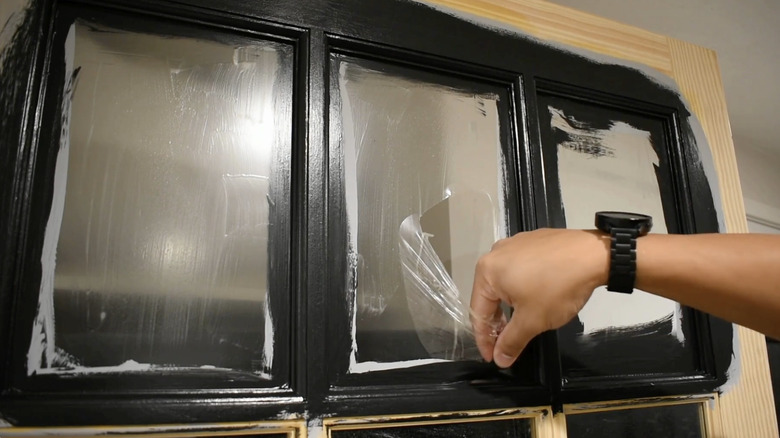
Liquid masking is a good option to protect windows when painting, and it's also great to use on French doors. Start by coating all of the glass panels with the liquid, which goes on white and dries clear. Don't worry about accidentally getting any on the door frame, as the formula doubles as a primer and will be covered by your paint. Once transparent, you can start painting your door. After the paint coat dries, simply peel off the liquid masking to reveal a polished result. Not only is this method faster but you'll notice there is no bleeding, like you might see with painter's tape.
Despite its ease of use, there are some tips to keep in mind for optimal results. For one, while it is possible to work on the French doors without removing them, this may cause dripping and pooling, especially if you are using an aerosol version of the liquid masking. For this reason, it's ideal to take the doors off their hinges and place them on a flat surface for painting. Next, remember to be patient and allow the liquid masking to dry fully before painting your door (about an hour). The most important tip, though, is to be liberal with how much liquid masking you apply. Many DIYers have found two coats to be ideal so that it's easier to remove. If the layer is too thin, it will peel off in small bits and pieces rather than all at once.