

13 Niche Renovations And Upgrades That Might Actually Hurt Your Home's Value
We may receive a commission on purchases made from links.
Renovating your home is equal parts exciting and tiresome. On the one hand, the anticipation of the "after" image might energize you more than coffee. But, on the other, you'll have to spend copious time and effort on planning and implementing the upgrades. Plus, you'll have to look for projects that yield the maximum return if you plan on selling your home in the near future. However, determining this can be difficult, since you'll have to comb through various online or offline sources to find the requisite data.
To save you the hard work, House Digest exclusively interviewed four experts. Their general consensus? Reno projects that involve tinkering with the home's structure can dissuade buyers from considering your house due to the loss of valuable living space. Changing spare bedrooms into specialty spaces, eliminating dining rooms for specialized kitchens, or upgrading basements into home theaters make for poor investments from a resale perspective. Similarly, passion projects entailing high maintenance, like built-in wine cellars, fish tanks, and indoor gyms are a bad investment. To save yourself some heartbreak and expensive repairs later, you may want to reconsider undertaking these 14 niche renovations and upgrades.
Converting a bedroom into a highly specialized hobby room with custom built-in features

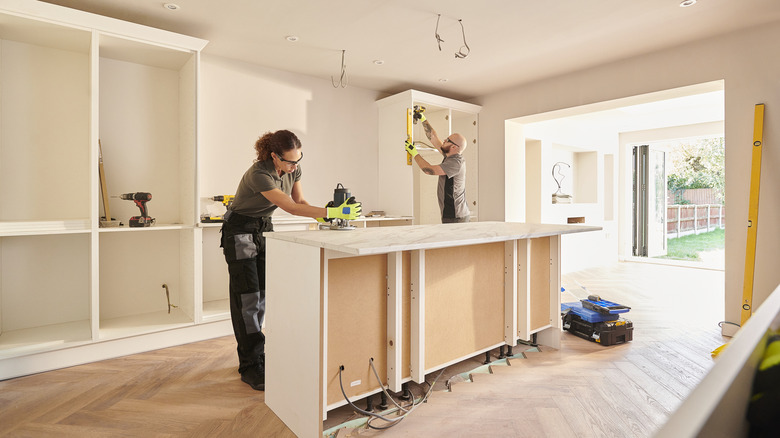
One of the biggest mistakes you can make when upgrading your home is sacrificing a spare bedroom for a highly customized hobby room, Ryan Fitzgerald, real estate expert and the owner of Raleigh Realty, tells House Digest in an exclusive interview. This is because buyers tend to value a home's bedroom count above all else, especially when expanding their family, and often view specialized equipment as more work. "When a whole bedroom is converted into a single-purpose hobby room with permanent fixtures, it often reduces the functional square footage and actually lowers the market value. Most buyers are put off because they don't want to pay to remove custom built-ins, patch walls, or reinstall traditional closets," he elaborates.
Don't lose heart, though; you can still accommodate your lifestyle needs without losing out on market value. Simply utilize temporary or modular furnishings instead. "Think of freestanding shelving, movable worktables, or closet systems that can be removed easily," suggests Fitzgerald. That way, your hobby room retains its "bedroom" status, while still meeting your needs.
Overly themed or custom bathrooms with luxury features like steam rooms or oversized bathtubs
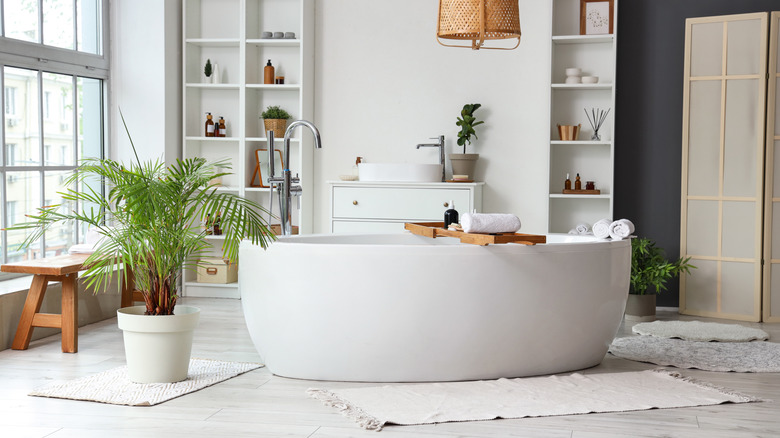
You may have your sights set on a spa-inspired bathroom, outfitted with an oversized, sculptural tub or luxurious shower heads with built-in LED lights. But such thematic bathroom remodeling can hurt your home's appraisal value because trends fade out fast, requiring costly replacements within a short time. "Certain trendy features can actually date a property more quickly, signaling to potential buyers that any major renovations required are likely to be expensive," agrees Fitzgerald. "Removing intricate tilework, custom plumbing, or oversized tubs can be quite costly, so it's not surprising that interested parties will often discount their offers accordingly."
So, splurge on everlasting, buyer-friendly features instead of indulging in current trends to raise your home's appeal. "Choose neutral finishes, timeless hardware, and stick to layouts that retain space for all the essentials, like a bath, shower, toilet, and sink, as well as functional storage," suggests Fitzgerald. But if you'd like to incorporate the latest themes, especially the spa aesthetic, ensure they're reversible in case they don't match the taste of your potential buyers. "Lighting fixtures that can be changed out, free-standing accessories, or portable sauna units" are some such options, shares Fitzgerald.
Knocking out walls between a dining room and a living room to create a single mega family room
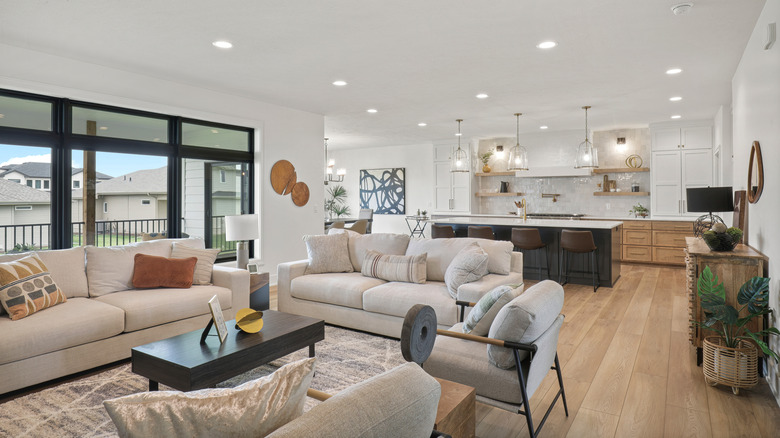
Up until very recently, open-floor plans were the modern go-to, with homeowners tearing down walls for a more connected, airy, and contemporary space. But, these renovations could actually push down your home price, especially where buyers prefer tailored spaces, do remote work, or are sensitive to utility costs. Since the pandemic, there has been some subtle shifts in sentiment around open concept living. Fitzgerald elaborates, "While open-concept layouts remain popular in family homes, I still see plenty of buyers in North Carolina who prefer having defined living zones. Removing entire rooms by knocking down walls can make a home feel somewhat unbalanced and limits how families use the space." In other words, removing the partition between the dining and living space for an oversized family room may not be the best idea. Moreover, "These types of renovations commonly create concerns about high energy costs," he says, explaining how many buyers worry about heating and cooling inefficiencies in oversized open spaces.
Luckily, there are plenty of ways to adjust your closed layout home for potential buyers. "Consider widening doorways, opting for half walls, or installing interior windows to create flow while also preserving dedicated living areas," recommends Fitzgerald. This will open up the space visually, without phasing out any rooms altogether — it's a happy medium.
Adding highly customized outdoor features like koi ponds, built-in fire pits, or oversized decks

Granted, well thought out outdoor additions like a bluestone patio or a front porch can make your home more appealing to prospective buyers. But when upgrades become overly complex, require high maintenance, are heavy on personalization, or are not in line with your neighborhood, such backyard features can hurt your home's real estate value, feels Fitzgerald. "In my experience, homes with complex outdoor features actually lower buyer interest, unless you're situated in a true luxury market," he says. "Large hardscaping installations can be very expensive to maintain, and you'll find they often raise liability concerns."
Instead, Fitzgerald observes that "buyers are usually more interested in open yard space that they can customize themselves to suit their lifestyle and vision. Whether that's for pets, children, or hobbies like gardening and hosting friends and family." So, ensure your backyard remodeling projects take simplicity and flexibility into account. Rather than going all out on a two-story deck or patio, keep the design modest. Opt for portable fire pits in place of built-ins in the hosting area. Similarly, rather than installing fancy koi ponds, make use of simple above-ground fish ponds that won't be as immovable. "These types of upgrades are more likely to boost value without limiting how future buyers can use the yard," Fitzgerald concludes.
Turning a basement into a highly specialized home theater
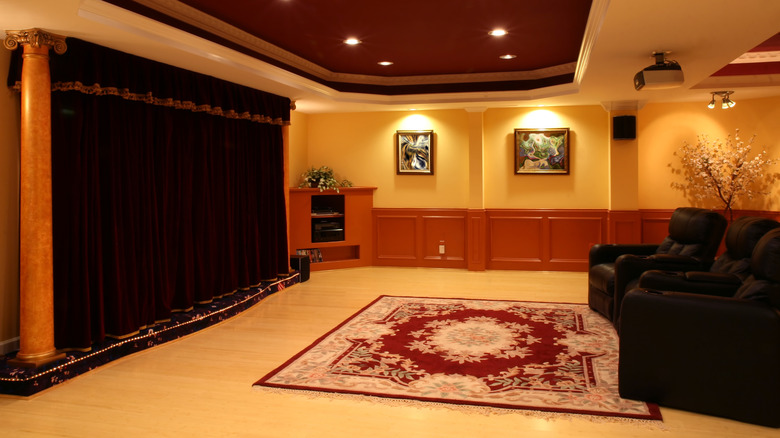
Catching the latest Hulu curation may be your favorite way to unwind post-work. But not many potential buyers are likely to share your sentiment, believes Marilyn Comiskey, a multi-award-winning San Diego real estate expert and team owner at The Comiskey Group. If anything, transforming your underground space into a home theater is one popular basement upgrade that's not worth the price. Explaining the reason behind this during an exclusive interview with House Digest, she says, "Fully customized home theaters ... can look really impressive, [but] they often limit resale appeal. Buyers who aren't interested in the upkeep will worry about the cost of removing the soundproofing, wiring, and permanent seating." This could be especially true if buyers are keen on turning the finished basement into an office area or a kid's playroom to extract more utility from square footage.
That being said, you don't have to let this put a permanent damper on your favorite pastime — simply keep the setup more flexible. "Opt for a projector screen, a wall-mounted sound system, and freestanding seating to create that cinematic experience without permanently altering the space," advises Comiskey. A couple of cozy recliners or a modular sectional will be both comfortable and movable.
Installing custom indoor gyms with heavy equipment and specialty flooring
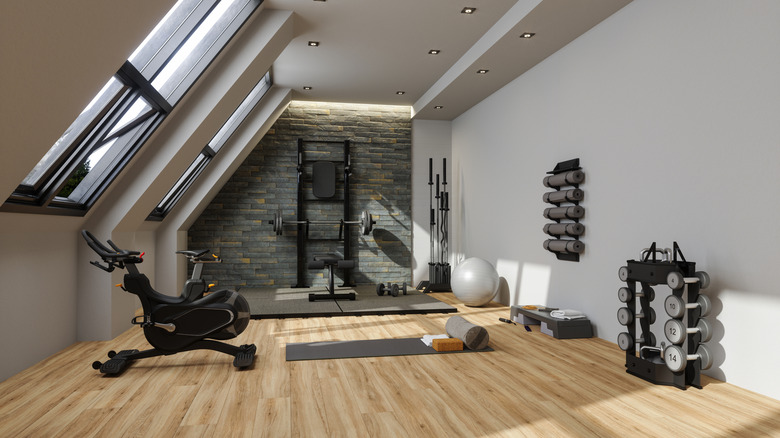
Indoor gyms come with a lot of pros. You won't have to queue up to use a machine, feel stifled in an overcrowded room, or worry about touching the sweat-soaked handles of shared equipment. But the more upgrades are attuned to your needs, the lower their mass appeal drops, hurting your home value. As Comiskey puts it, "While they can be seen as a really clever addition, custom gyms are often too niche for most people. In my experience, people struggle to imagine alternate uses for a space that's already filled with super-specific fixtures and built-in equipment."
In other words, unless you're lucky enough to sell to a fellow workout enthusiast, you're unlikely to recoup your investment on a home gym. Worse, you may lose out on buyers who don't require a dedicated workout area. So, until you're ready to sell, outfit the room with specific flooring and equipment that can be removed. This helps you customize your property, while still preserving the room's versatility. "At the end of the day, your home will be more marketable if the new owner doesn't have to picture the cost of uninstalling heavy equipment and elaborate flooring," states Comiskey.
Installing wall-to-wall built-in shelving or cabinetry in living rooms or offices
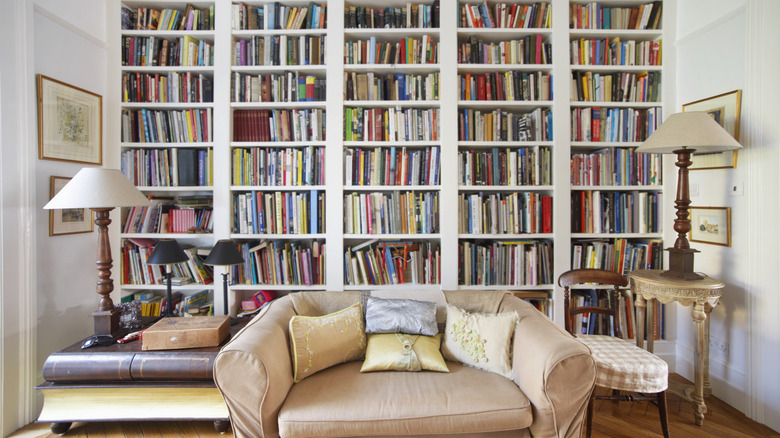
Yearning for a dreamy, home library-type space filled with built-in bookshelves? Surprisingly, Comiskey has noticed that such home upgrades don't always go over well with buyers. "Custom built-ins can be beautiful. They feel clean and minimalist. But it happens so often that during viewings, people view these permanent features as a limiting factor. This is mostly because built-ins can make the layout of certain rooms feel unchangeable." Unless the new buyers share a similar lifestyle, they may find such built-ins highly restrictive. She also cautions about the size of bespoke cabinetry, stating that "...overbuilt shelving can actually make a room feel smaller than it is." This can be especially problematic in offices and living rooms, where homeowners prize airiness.
To avoid overwhelming your living and working areas, "It's usually best to curate functional, freestanding bookshelves and storage units," recommends Comiskey. Such modular units still serve their purpose, without hindering your home's selling potential. And if they're executed well, you may even be able to resell them or take these timeless units to your next home.
Turning a primary closet into a glam room with salon stations and dramatic lighting
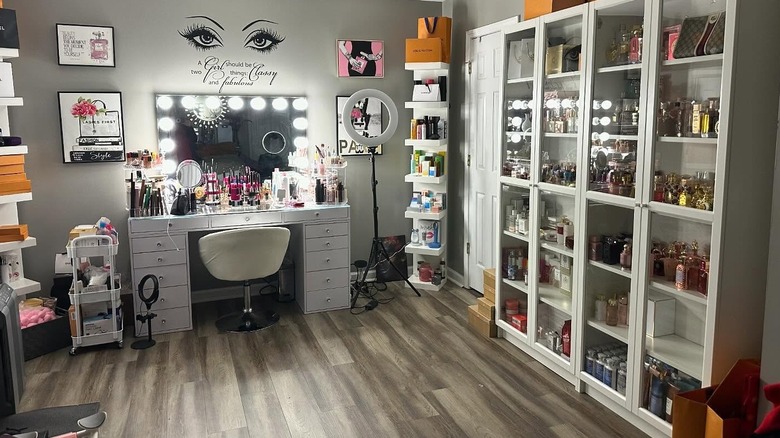
A common reason home buyers upsize is when their current dwelling can no longer house all their belongings. Massive closets can be a strong draw, as they promise ample storage space. But if you utilize the extra space as a glam room, you may face trouble receiving the right sale offer. Kristina Allan, realtor, real estate appraiser, mortgage broker, entrepreneur, business owner, and founder of KALLANLVRE, explains in an exclusive interview with House Digest: "A spacious primary closet is often a major selling point, but when a homeowner converts that space into a glam room with salon-style chairs, beauty counters, and dramatic light installations, buyers could see it as a hindrance."
Since most people are merely looking for a functional space, they treat these vanity installations as stuff to weed out, and "considering the cost to restore the original layout can lead buyers to discount their offers," Allan explains. Again, this is a place where the solution is to simply use vanities or organizer units that can be removed. Made from engineered wood, something like Haewon's Makeup Vanity Desk with Mirror, Lights, and Charging Station will likely work in most homes — and you can take it with you when you move.
Adding a casino-themed game room with built-in card tables and custom flooring

With the home design "specialty space" trend taking over new homes, you may think the sprawling game room, built to a casino theme, could help you extract a better sales price. But it could work against you, cautions Allan, as most people can't seem to work out how to make such themed game rooms work for them. "Permanent casino-themed rooms are highly niche, even in Las Vegas, where having built-in card tables, commercial carpeting, and neon lighting appeals to only a small segment of buyers. Most can't envision any other use for a room like this once they see it," she details.
But if you enjoy spending your weekends heartily collecting chips from your friends, there's a way to retain the casino theme without hurting your home value. "Invest in high-quality yet flexible furnishings such as a standalone poker table, removable flooring mats, and LED lighting that can be taken down easily," suggests Allan. So, when you know the potential buyer has little admiration for the casino aesthetic, you can strip out the installations or clarify that they're removable.
Converting a garage into a temperature-controlled wine cellar or tasting room
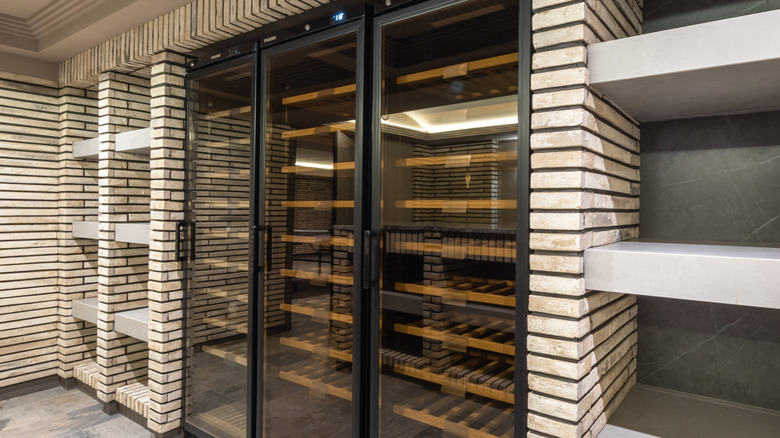
According to Robert Aumann, record-setting luxury real estate advisor, interior design expert, and founding partner of LuxurySoCalRealty, you're unlikely to earn any brownie points with home buyers by converting your garage's precious real estate into niche rooms like a wine cellar or a tasting room. The reason? Garages are highly versatile spaces. Even when not used to park cars, they offer expansive storage. Sometimes, they're even renovated into an accessory dwelling unit (ADU), further enhancing the living space, or office rooms. Thus, "Converting a garage into such a niche room essentially eliminates one of the property's most versatile spaces, which, at the end of the day, is going to reduce buyer interest," he explains exclusively to House Digest.
For this reason, Aumann advises making temporary updates to your garage to make it more amenable to your needs, rather than changing it altogether. "If you love wine and want a designated space to enjoy it, consider installing a climate-controlled cabinet and freestanding bar setup that fits within the existing garage." Even something modest, like this Wine Enthusiast 32-Bottle Dual Zone MAX Compressor Wine Cooler, could be an option to house and show off a small collection.
Installing built-in aquariums as architectural features
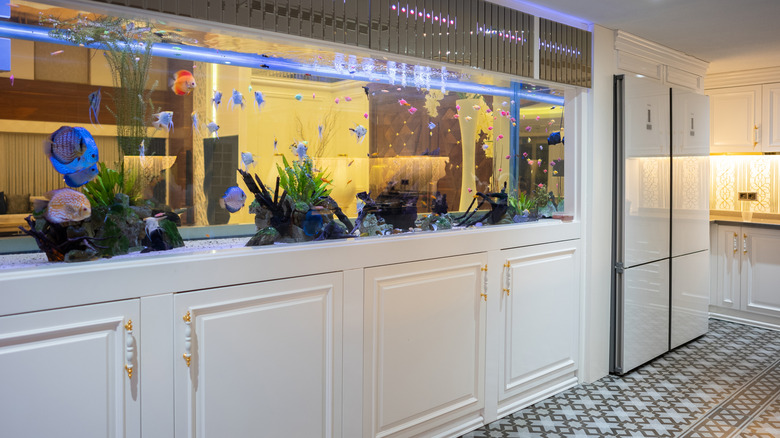
If you've ever wondered whether keeping an aquarium in a modern home boosts resale value, Aumann clarifies that it doesn't, and it may even diminish your buyer pool. That's because, apart from being a niche hobby, maintaining walled aquariums requires lots of work, which not many buyers would be onboard with. "Built-in aquariums can look really quite impressive, but these kinds of features rarely add actual value. Specialty plumbing, electrical setups, and structural reinforcement can be intimidating and raise maintenance concerns. Buyers will see the removal as costly and complicated." Besides, styling around such vast pools of water can seem daunting.
Rather than building an aquarium into the wall (and saddling yourself with the tough job to redo the wall to make a sale), Aumann suggests getting a stylish standalone aquarium. It'll be just as eye-catching and create a similar underwater retreat-like ambience when placed in your hallway or living room. "They'll be far easier to remove, which helps keep your home appealing to a broader audience," he adds.
Creating a full-home smart-tech ecosystem reliant on proprietary systems

Thoughtfully-integrated smart devices can boost your home, depending on your location. But overdoing it can work contrarily, especially when you've installed proprietary systems, as they deny buyers the right to shop around for better features. "Over-automation can create complications, and I've seen firsthand how buyers hesitate when homes rely on a single brand for everything from lighting and audio to HVAC and security. Factors like compatibility, subscription costs, and maintenance concerns will likely lead to lower offers," details Aumann.
So, when integrating smart technology into your home, "stick with widely supported, separate smart-home components like smart thermostats, app-controlled lighting, or plug-in hubs," advises Aumann. For instance, this Amazon Smart Thermostat integrates with both Alexa and Ring. "This way, you can enjoy all the convenience and modern functionality without scaring buyers off because they feel like they're going to be locked into a specific system," he adds.
Adding sports installations like putting greens and skate ramps to the backyard

Prospective buyers certainly take curb appeal into account when making their decision, which is why homeowners try to differentiate their property through landscaping changes. Sadly, unlike a beautifully manicured lawn or a tastefully designed flower garden, sports installations don't have as many takers, which can become problematic in a tight market. "Sports installations consume a lot of valuable yard space, which can seriously limit buyer appeal," says Aumann. This is especially a concern in small yards or for larger families with kids and pets that require an open area for recreation. "Niche setups like putting greens, batting cages, or skate ramps often require costly maintenance, and removal isn't easy," he adds.
So, if you have plans to resell your property in a couple of years, Aumann advises that "you should consider investing in portable or temporary equipment, such as removable nets, modular putting mats, or collapsible gym setups" instead. Such temporary arrangements will help you widen your buyer pool by enabling them to overlook these schematics, without depriving you of the joy of indulging in your hobbies.