

Popular Garden Ideas That People Later Regret
As a master gardener, I've seen plenty of garden trends come and go, and many homeowners latch onto what seem like a good ideas at the time. Then I've watched them start to regret their choices pretty rapidly. Some garden ideas look brilliant in photos, or they seem like they are solid shortcuts in theory — and may even do what they promise when you first install them. But a few seasons later, you'll find yourself stuck with extra work, stressed plants, poor soil, and a project that is an expensive headache to undo.
Many people come to regret their garden project choices, be it the selection of certain plants or landscape structure, because they simply didn't anticipate the continual maintenance required, or the long-term damage the project causes. The difficulty of repairing the damage, which can take years to fully correct, and the challenge and expense of actually undoing the project and putting something more suitable in its place, also makes people wish they'd chosen a different option to begin with.
Covering beds in landscape fabric that never really goes away
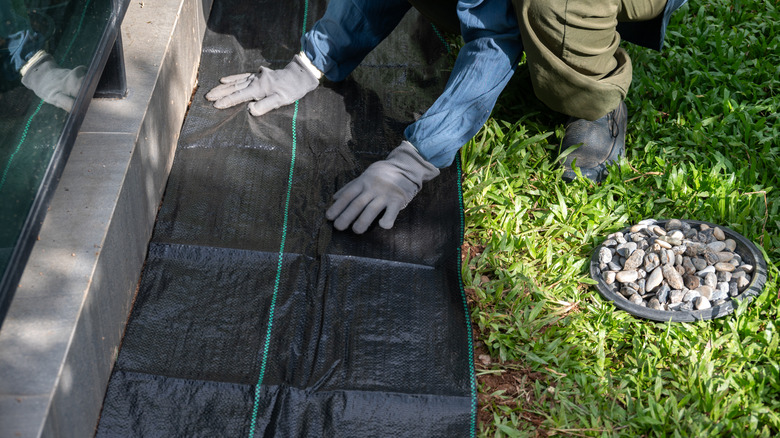
I do not like landscape fabric. Even with high-quality geotextiles, it's easy for homeowners to make mistakes with landscaping fabric. It's heavily marketed as being a no-maintenance, near-permanent weed-control solution. You can see the appeal. In theory, you roll this fabric out, lay mulch over the top, and you've got years of no-maintenance, weed-free garden joy. But wind-blown soil, decomposing mulch, leaves, and weed seeds all end up getting in there and creating a new layer where weeds can germinate. Plus, if you didn't thoroughly weed before laying the fabric, or you left gaps, weeds will just push up from below. And, over time, the fabric breaks down into a tangled, hideous mess that's bad for the environment and incredibly difficult and time-consuming to remove from the soil — especially once it's entangled by roots. It's bad for your soil, too, inhibiting natural soil processes.
An all-around better alternative is a 2-inch to 4-inch layer of organic mulch, like wood chips, shredded bark, or leaf mold. Dense planting of ground covers and beautiful hardy perennials also helps to block out weeds. Although, you'll still likely need to do a little hand weeding from time to time. But if you tackle it regularly, while weeds are still tiny and thin, it doesn't take long and isn't as back-breaking.
Replacing rich planting with rock mulch for easy care
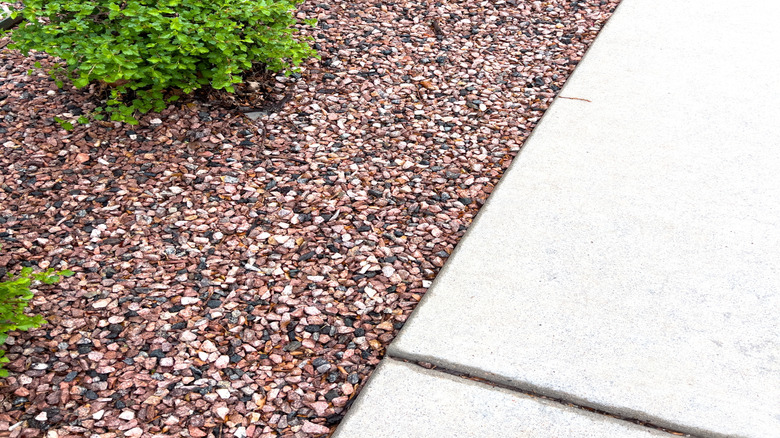
For many people, the idea of rock mulch is appealing, because when it's freshly installed, it looks chic and modern. And it should, theoretically, be low maintenance, because weeds don't grow on rocks. Which is true. But they do grow between rocks, as debris falls between and decomposes into lovely silty mulch and weeds soon take root. Very quickly, your uniform river of rocks becomes a difficult-to-weed mess. A lot of rock also changes the microclimate, because it reflects and absorbs heat, making the soil and the area around plants hotter. The soil beneath also becomes damaged and compacted due to the weight of the rocks above. This is an unhappy recipe for regret. Within just a few seasons, you'll see your plants start to struggle and show signs of significant stress.
If you've already got rocks and are regretting it, unfortunately, it is very labor-intensive to remove them, and even with lots of topdressing and organic matter, fixing compacted soil is a slow process. Whether you have to remove the rocks first or you're lucky enough not to put them down to begin with, use a gentler, healthier approach. You have a lot of mulch options to choose from. Use plenty of organic mulch like wood chips and a mix of plants suited to your area that will help minimize weeds.
Planting fast-growing privacy hedges that outgrow the space
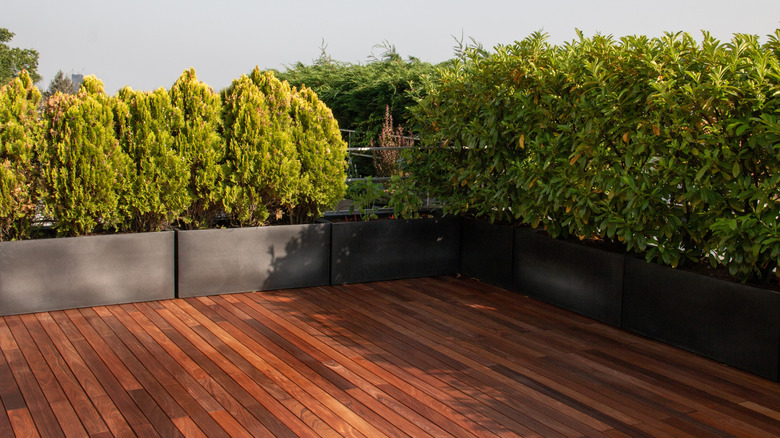
Most people, understandably, want privacy in their yard. So it seems like a great idea to buy fast-growing evergreens or other trees marketed as living privacy screens. It can be brilliant if you choose the right plants for your location. Fast-growing evergreens, in particular, give year-round privacy. Tall, dense species like conifers and laurels are popular, because of how quickly they become effective privacy givers. But many species grow several feet per year and can quickly take over a space. You should think twice about adding these evergreens to your yard, as they can overshoot fence height and need a lot of maintenance to keep them in check. They crowd out other plants and their roots can grow fast and damage nearby structures. And, of course, they can cause friction with neighbors if they encroach across property boundaries.
If you have a sprawling property with ample room to accommodate large screening trees, then absolutely go for it. If, however, you have a more modest yard, think twice before you get the fastest growing tree you can find at the nursery. Look at a species' mature height and spread, rather than just the fastest possible rate of growth. You can achieve an effective privacy screen pretty quickly by choosing size-appropriate specimens that grow slower. The trick is to layer them, with taller plants at the back, then a row of mid-sized plants, and a row of shorter ones. This staggered planting creates dense screening that doesn't easily get out of hand and, although the plants take longer to mature, they still provide a moderate level of privacy while they grow and merge.
Using aggressive ground covers and climbers that take over everything
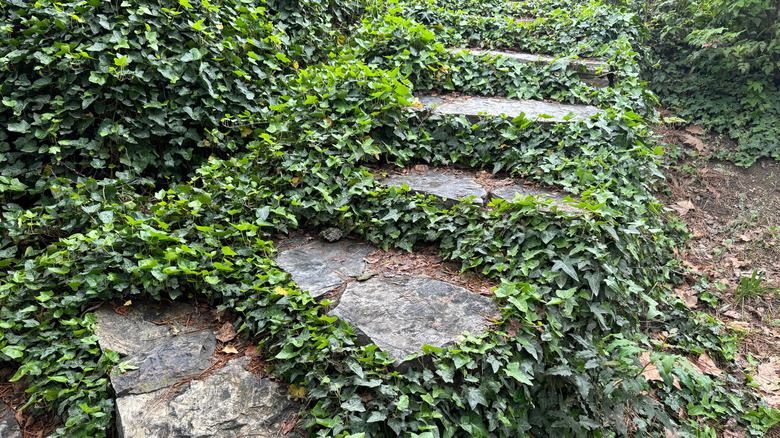
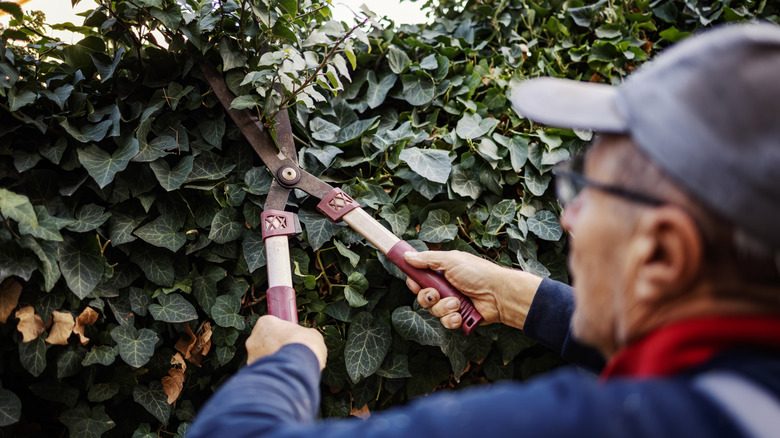
English ivy is a perfect example of a plant that looks lovely in a well-manicured photo, but is a nightmare in real life. This particular plant is an invasive ground cover in many areas. Even aggressive ground covers and climbers that aren't invasive should give you pause. Plants that spread rapidly by runner, stolons, rhizomes, and self-seeding are often recommended for problem areas or tough weedy spots. They generally do a good job of choking out weeds and growing on poor soil, too. But they tend to do it too well and quickly take over huge areas unless you constantly maintain and contain them. Some climb trees, most will choke out plants you actually want, and can run under fences and escape into neighboring gardens. Many of these species are also really difficult to get rid of once they're established, because every tiny piece of root you leave in the soil will produce a new plant. Herbicides often don't work, either, so removal is mostly repeated manual digging and pulling for many seasons.
Before going for any ground cover, check whether it's invasive in your state, and consider how the particular plant grows and where you plan to plant it. Lots of creeping ground covers are containable and manageable. Creeping thyme or phlox, for example, are pretty, spread fairly fast, but aren't aggressive, and are fairly easy to remove. Clumping perennials like periwinkle, stone crop, and hardy geraniums are also great alternatives that smother weeds and protect the soil without taking over your entire garden.
Planting trees and large shrubs too close to the house or each other
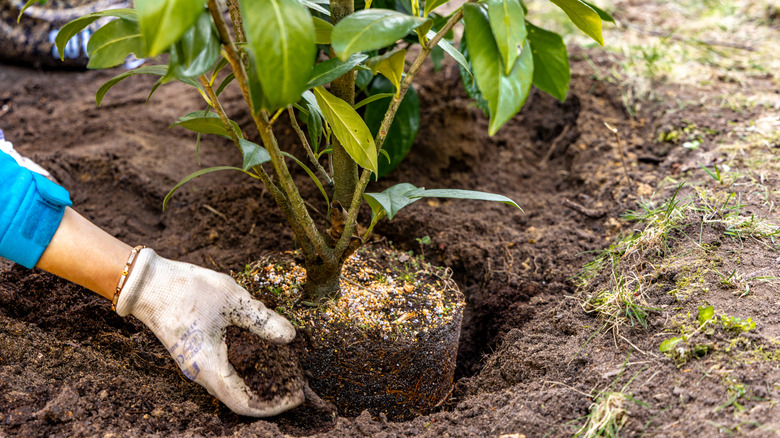
It's very easy to plant trees and shrubs too close together because you saw a trend on social media where the user made the very same mistake. And, simply because it's natural for us to only think about how big the plants currently are, and quite difficult to imagine how big they'll be once they mature. Plus, you hav to consider how much space there should be between mature plantings. It's not easy to visualize this when you're dealing with young saplings and small potted shrubs. That tender little tree in its 5-gallon pot might one day have a 25-foot canopy and root zone. If you plant too close to the house or another structure, you risk foundation damage as the roots grow, branches damaging siding, leaves clogging gutters, and thick canopies trapping humidity against the walls.
When planting, research the cultivars you're choosing, paying careful attention to their maximum size and the space they need between each plant when mature. Look at spread, not just height, as with shrubs and trees the width of the canopy, or the spread, tends to be the same size as the root zone. Remember to leave a generous amount of room between plants and houses, sheds, pathways, and patios. Plant with the idea of full, mature canopies in mind. You want to give them plenty of space to limit the risk of disease by maintaining good airflow.
Keeping everything as short-mown lawn instead of mixing in wild areas
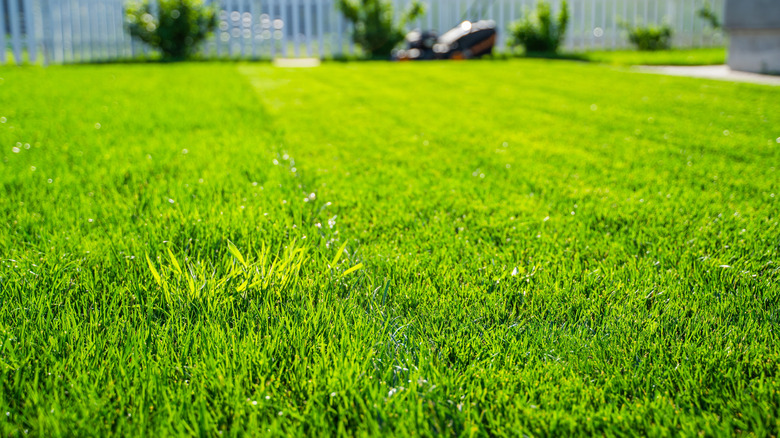
So many people obsess over having a neat, deep green lawn, endlessly mowing and fertilizing it, thinking it looks lush and "natural." In reality, those lawns are pretty much devoid of life. There's no biodiversity, no flowers for pollinators, no soil organisms thriving in healthy, aerated soil — just a sea of green grass blades and matted roots that need constant maintenance and nourishment. Lots of folks are starting to realize how dead their pretty green lawn actually is, and how damaging perfectly manicured lawns really are to the environment.
To bring life to your lawn, let it grow a little. You don't have to let it turn into a jungle, but do let the clover and the daisies flower to feed the pollinators. I also love the idea of keeping the lawn that you actually use for pets, kids, pathways, and seating, and then convert the rest to meadowscaping, filled with native grasses and wildflowers. Even if you feel you must keep your lawn as pristine as possible, you can still help the pollinators and your overall soil health by leaving small "no mow" patches where flowers can grow undisturbed. You can rotate which patches you leave to re-wild every other month or so.
Choosing native plants without matching them to the site
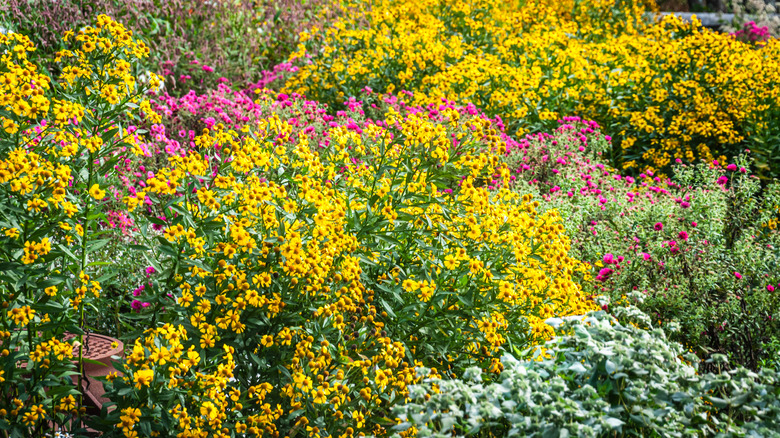
Native plants are brilliant. I love to see gardens filled to the brim with the plants that were always meant to grow there. But sometimes people take this trend and run with it without any thought to what native plants will work in their particular gardens. Native plants still have specific soil, water, and light needs that may not suit your garden, in which case they'll look fabulous and you'll feel amazing for a month or two, but if you chose the wrong plants, they'll quickly start to show signs of stress and be more prone to disease.
Just because something is native to your region, that doesn't automatically mean it'll work in your garden. Check what kind of soil a plant likes, how much sun or shade it can tolerate, whether it prefers wet or dry conditions, and how much exposure it can take. Native plants are amazing, low-maintenance, and one of the quickest and best ways to get a thriving garden, but you've got to choose the right plant for the right place to make it work.
Buying fruit trees on impulse without checking chill hours or pollination
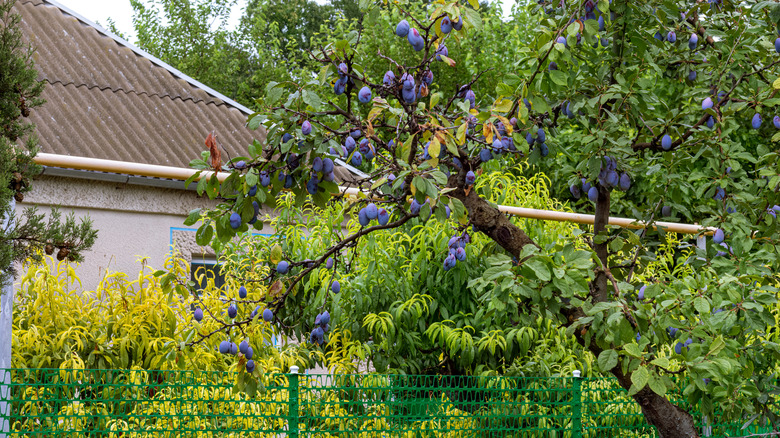
Gardeners who like the idea of edible landscaping or just having their own fruit in their garden are often swayed by good deals on fruit trees at the store. They picture blossom-laden apple or cherry trees, then trees with boughs bending under the weight of their ripening fruit. So they buy without knowing about chill hours, pollination requirements, or growing conditions. The regret comes in a season or two when no fruit appears and the tree is sad and listless. Chill hours refers to the number of hours of cool temperatures a tree needs to break winter dormancy. A medium chill apple tree needs 500 to 700 chill hours to grow juicy fruits. Choose the wrong variety that requires more chill hours than your climate allows, and your tree will bloom at strange times, if at all. And many people don't realize that a lot of fruit trees, even though they have both male and female parts of flowers, require a pollination partner tree to set fruit. This is particularly common with cherries.
To avoid this kind of disastrous waste of time and money, research the cultivar you're planning to buy. Choose one that matches with the number of cold hours your garden gets. Find out whether a lone tree self-pollinates, like morello cherries, or if you'll need to buy at least two trees to actually get any fruit. You also can't go wrong by talking to like-minded neighbors to see what varieties are performing well in their gardens, or which ones to avoid.
Building raised beds and borders from railroad ties or old treated timber
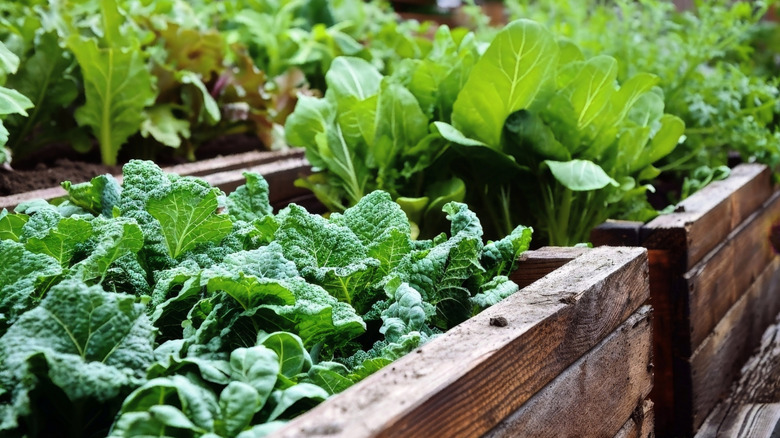
Building raised beds from railroad ties and reclaimed wood has been a popular trend for years. It's supposedly environmentally friendly, and the overall look is rustic and solid, but delightfully trendy and charming. Plus, it's touted as an affordable way to build raised beds or edge borders. The problem lies in old wood treated with preservatives like creosote, chromated copper arsenate, and pentachlorophenol. These substances are dangerous to humans and animals, and damaging to the environment. They can leach into the soil and pollute other areas, too, and should definitely be avoided in edible gardens and anywhere children or animals play.
Instead, use pressure-treated lumber rated for soil contact. You can also try naturally durable wood species that take longer to break down. Alternatives like masonry blocks, reclaimed brick, or metal edging make better beds and border edges.
Laying loose pea gravel on main paths and seating areas
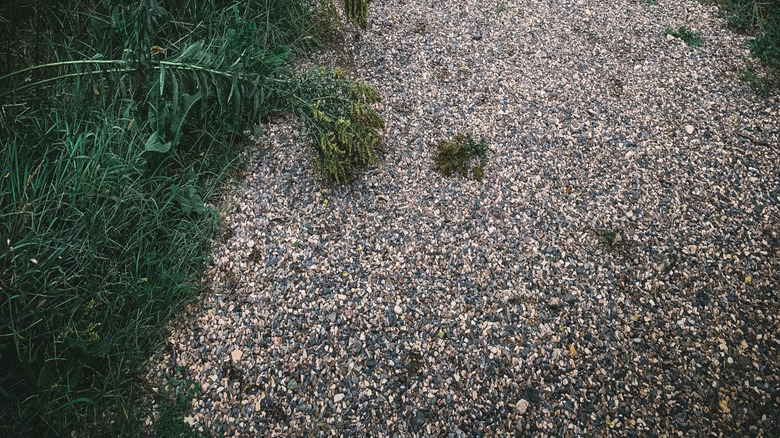
The allure of pea gravel is its soft-crunchy texture and the dreamy photos of beautifully laid out pathways and slick magazine-style graveled seating areas. It seems like a nice, affordable way to get a high-end garden look that's low-maintenance. And it is, if you do it right. But just laying it loosely is a disaster, because it travels. You'll get it on the lawn and damage your mower blades when you mow over it. It gets into flower beds, making digging more challenging. It's also an awkward surface to move a wheelbarrow across, and very challenging for people with mobility aids or issues, or people with wheelchairs to safely navigate.
You can use pea gravel if accessibility isn't an issue. But you need to contain it with edging that's higher than the gravel fill. You may also want to consider more accessible options like pavers, bricks, or slabs to make the area easier and safer to navigate for everyone.
Piling mulch into volcanoes around trunks instead of a flat ring
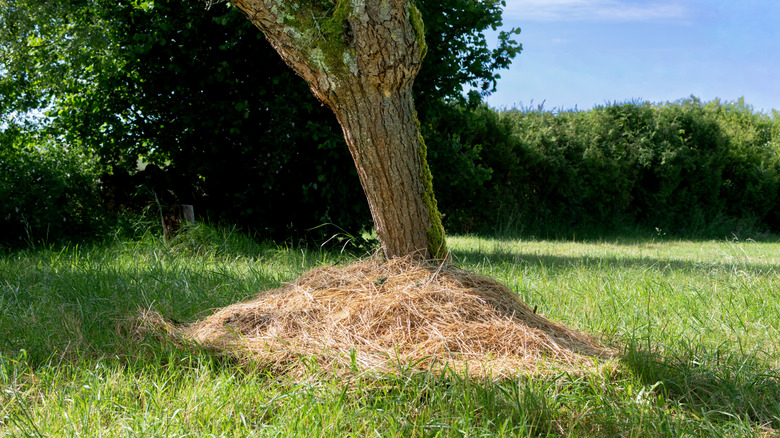
Mulch volcanoes are problematic for trees and shrubs, yet I see this mistake so often. Many gardeners think that are helping their trees by piling mulch right up against the trunk. In reality, they are trapping moisture, encouraging disease, and making a hiding spot for destructive pests. This practice also invites rot and results in girdling and root growth problems. Eventually, you'll notice a thinning canopy, leaning, dieback, and other signs of instability and disease.
Once you choose the best mulch for your garden, spread it in an even donut, covering the entire root zone. That's basically the same diameter as the tree canopy. But draw the mulch back around 4 inches from the trunk. This suppresses weeds, lets the tree trunk breathe, and feeds the roots properly.
Paving or decking over most of the garden
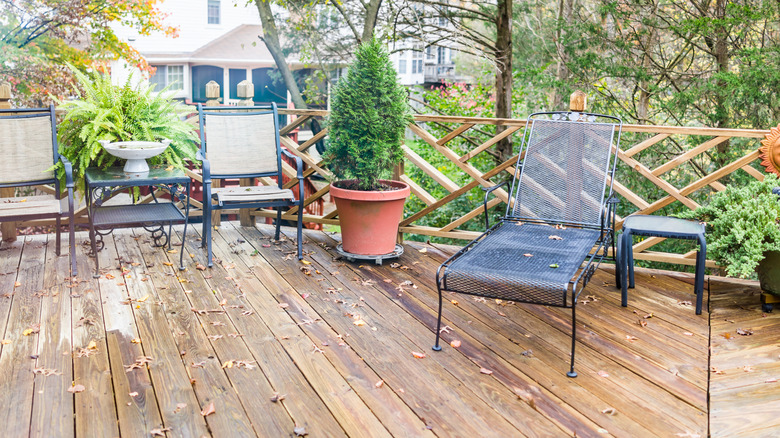
Paving or decking a huge area might seem like a good idea, because it looks slick on garden design sites and gives you a nice outdoor seating and dining area. It provides families a sense of turning the garden into an extra "room," and homeowners often see hardscaping as a way to reduce outdoor maintenance. But once the novelty of bringing the indoors outside wears off, people regret that they've turned their once-busy garden into a lifeless, barren hardscape. Heat buildup and reflected glare make surfaces uncomfortable and uninviting in the summer, and impermeable surfaces shed water too fast, causing runoff and drainage issues. Plus, there's little room for wildlife and important pollinators, and the garden loses its seasonality, too. And there is actually quite a bit of maintenance involved in keeping decking and paved areas clean and usable.
A more balanced approach is to only create the paved deck or patio area that you actually need. Somewhere to sit and eat, and maybe somewhere to fire up the barbecue, is enough for most homes. Turn the rest of your outdoor space over to a lawned area for play time for kids and pets, and the rest to beautiful, chaotic, cottage garden planting that brings in pollinators, gives you fantastic color, and doesn't require much maintenance.
Overcrowding beds for instant fullness instead of planting for growth
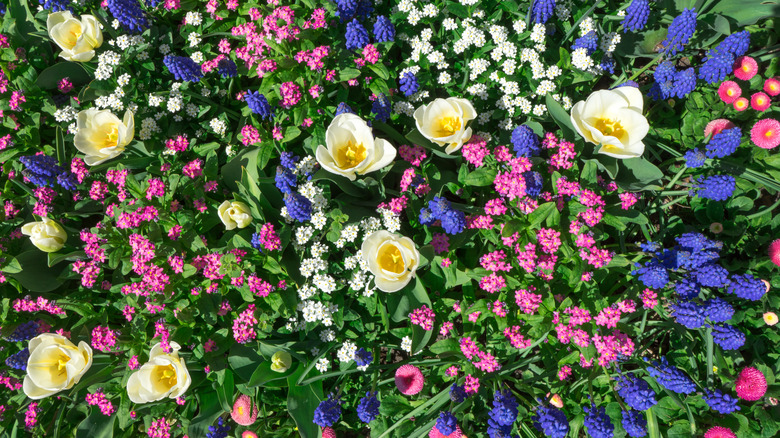
A common problem I see is people wanting to instantly have a full, social media-worthy border, packed full of beautiful flowering plants. So they ignore spacing recommendations and just cram plants together to get the illusion of fullness and an established planting. But perennials and shrubs need room to expand and a few seasons to fill out and mature. Overstuffed beds are rife with disease, because overly dense plantings have limited airflow and the plants are all competing for the same limited pocket of nutrition. Within just a season or two, gardeners who fall into this trap find they've got a sad, diseased border and they've wasted money on plants that aren't salvageable.
As with trees, keep the plant's mature size in mind, and pay close attention to how much space they actually need. While the bed might look a little sparse for a year or two, the payoff is, eventually, big, healthy plants that give you an amazing display of colorful blooms for years to come. Plus, it's super satisfying to watch your young plants grow and mature. And you can use quick-growing ground covers and mulch to fill the gaps while your plants establish themselves and fill out.