

The Prized Pyrex Set You Should Never Skip If You See It At The Thrift Store
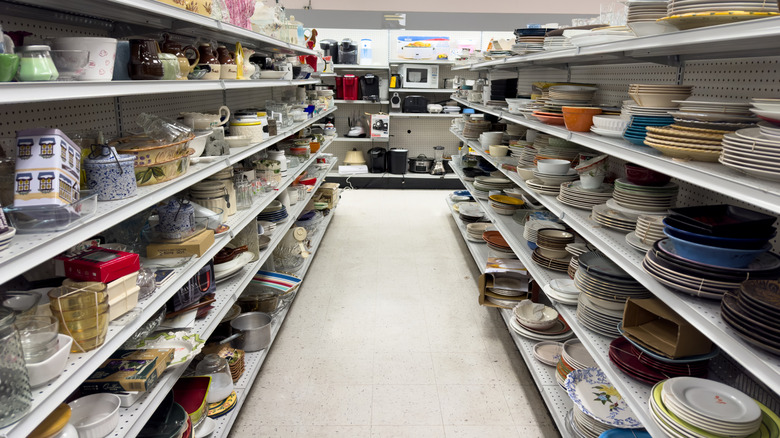
Sifting through thrift store shelves and distinguishing between trash and treasure can be difficult, but knowing some brands and items that are high-quality, rare, and valuable certainly helps. Among the vintage brands that are always worth buying at thrift stores, there is Pyrex. For over 100 years, Pyrex has been a household name in the United States, creating everything from bakeware to food storage containers. With such a long history, it's no surprise you can often find a variety of Pyrex items secondhand. However, there are some specialty patterns that are especially sought-after and can be worth hundreds. One such pattern is the pink Amish Butterprint.
Pyrex's pink Butterprint pattern was manufactured from 1959 to 1960. It features a farmer man and woman holding wheat, corn stalks, a rooster, and a harvest of wheat in a repeating pattern around the dish. Originally In turquoise, the Butterprint pattern appeared on a set of nesting bowls with handles and spouts, and casserole dishes, as well as refrigerator and freezer storage sets. In addition, promotional items and sets were created in both orange and pink Butterprint designs. However, the promotional pink Butterprint pattern (470) only appeared on the Cinderella casserole dish line, referred to as Bake, Serve, and Store. The line had three baking dishes: a 1-pint dish (471), a 1.5-pint dish (472), and a 1-quart dish (473), each with a glass lid.
Even if you love the adorable pattern, it may be hard to understand why a single pink Butterprint casserole dish can sell for over $250 online, and sets can range from $600 to $2,100, depending on condition. From the material and durability of vintage Pyrex to a sense of nostalgia for the fun and retro pattern, there are many reasons people desire a rare pink Amish Butterprint Pyrex dish today.
What makes pink Amish Butterprint Pyrex so valuable?
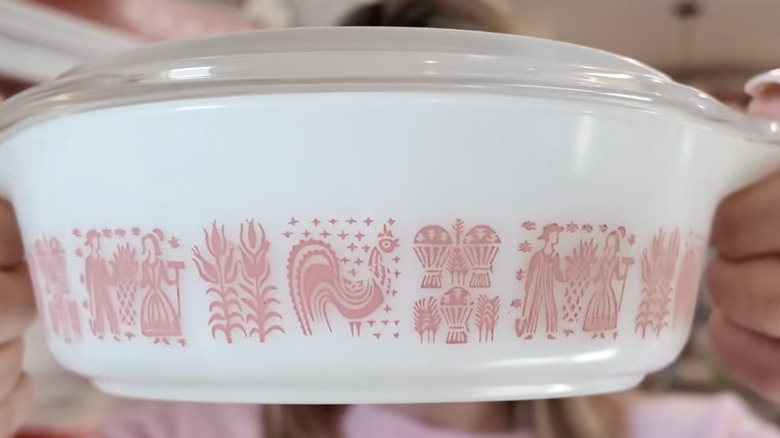
The pink Butterprint is so rare today because it was only available through Pyrex's trading stamp program. The stamp trade products had less marketing and distribution, making these adorable dishes rare and hard to find today, so lovers of vintage pink items and vintage Pyrex will pay good money for the collectible dishes. In good condition after all these years, and with the Pyrex name, dish size, trademark, and made in the U.S.A. marks, one could be worth hundreds.
The material used to manufacture vintage Pyrex dishes also contributes to the value of these products. Vintage Pyrex manufactured in the 1950s was made of borosilicate glass, an extremely durable glass that could tolerate major temperature changes. Today's pyrex is made of soda-lime glass, which is less resistant to sudden temperature changes but acceptable for the normal temperature ranges used in today's kitchens. However, many people still want the highly durable vintage Pyrex, which is why thrifters get excited when they score one of the most valuable vintage Pyrex pieces at thrift shops and estate sales.
There is also a growing trend for embracing retro accents in kitchens, and many people may remember Butterprint or similar designs in the kitchens of their parents or grandparents, and want these vintage pieces for their nostalgia value. So, whether you're looking to use it or sell it, if you strike gold and find one of these Pyrex dishes in a thrift store, it's definitely worth buying, especially if the price is affordable. Of course, while you're shopping, you'll also want to look out for other vintage kitchen dishware items that might hold similar value.