

Common Mistakes Everyone Makes When Defrosting A Frozen Door Lock
We may receive a commission on purchases made from links.
Returning home from work or a rejuvenating walk on a sub-zero day only to find that your front door lock is frozen is nothing short of frustrating. Even the best lock brands (according to Consumer Reports) aren't immune to freezing you out of the house. In the rush to get back inside where it's warm and cozy, some homeowners reach for quick fixes that end up doing more harm than good. They try to force the lock with the key or tools, assuming that a little muscle will break through the resistance, or they flush the lock with hot water. By trying to rush the process with brute force or by pouring water where it doesn't belong, homeowners end up turning what was a small delay into a potentially expensive repair problem.
Applying too much pressure to a lock usually results in a snapped key. You may even destroy the lock's sensitive internal parts. Likewise, while dunking the lock in hot water might melt the ice for a moment, the sudden blast of heat can cause damage. It can crack the metal housing or ruin your door's finish. Even worse, the water can get trapped inside the lock mechanism where it freezes into thicker, more stubborn ice. Many people also make the mistake of chipping away at any visible ice with a hard object, like a pocket knife or ice scraper. These improvisational tools are just far too clumsy. In fact, one wrong slip while aggressively scraping could damage the lock's housing or leave deep, unattractive scratches on the door.
Hair dryers and blowtorches won't release a frozen door lock either
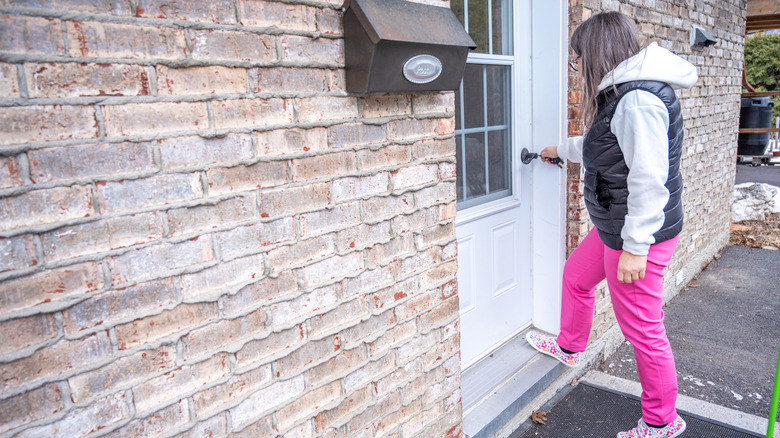
Even with easy ways to defrost a frozen door lock, like using MPD Cobalt Charm De-Icer Spray, many people still reach for heat. It's a potentially dangerous idea. Using an open flame from a lighter or blowtorch to melt the ice in a lock can blister paint, melt plastic weather-stripping, and cause other damage. Using a plug-in hair dryer or heat gun is also a bad idea. Dragging a non-waterproof extension cord through wet snow or standing on a wet porch while using an appliance risks electric shock. If you have a smart lock (and don't have your smartphone on you), that intense heat could fry the sensitive motors and sensors inside. That's a costly replacement.
These hacks, which seem like a good idea in a desperate moment, have the potential to strip protections from both the lock and the door. For example, burned, melted, or otherwise damaged seals leave the lock (or your home interior) open to moisture and salt intrusion. This causes pitting and rust, which in turn can lead to hardware replacement or even a new front door. While standing in the cold waiting for a lock to thaw or for a locksmith to arrive is never fun, it's important to remember that door hardware is built for security, not for surviving a torch. If you're tempted to try one of these common traps, pause and take a deep breath. Using safer methods or learning how to prevent your outdoor locks from freezing in the first place will save you stress and money.