

Surge Protectors Need To Be Replaced More Often Than Most People Realize
You likely don't think about how much technology is dotted around your home that's meant to improve your life or ensure your safety. However, it's important to be aware of every piece of tech that needs regular upkeep. Smoke alarms need to be replaced every 10 years or so, for example, and carbon monoxide alarms about every seven years. There are also plenty of tips you can follow to prolong the life of your HVAC system, too. In addition to that, a very important safety feature to keep track of in the modern era is surge protectors. These vital safety devices limit the amount of voltage that reaches sensitive electronics to eliminate voltage spikes. They do this by either blocking or shorting excess voltage to a grounding source. If you want this source of protection to keep working at maximum efficiency, surge protectors should be replaced more often than you might realize — every three to five years, or more frequently if they've degraded due to a huge surge (or repeated small surges).
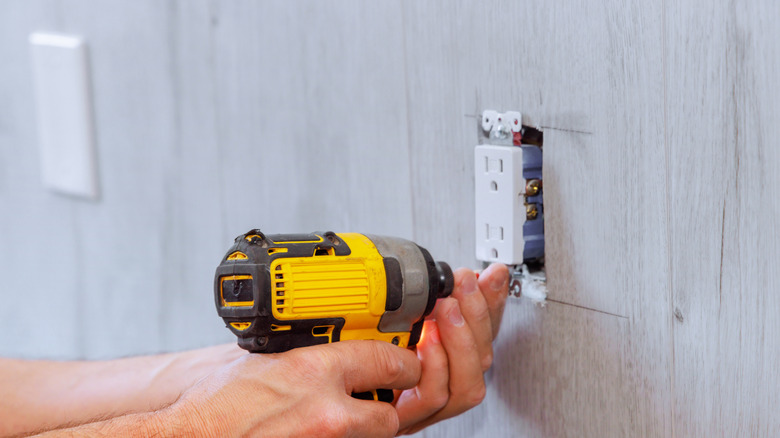
Electrical surges often cause damage because they're sudden and unexpected. For example, a change in flow that typically results from a larger appliance in the system turning on or off can cause a surge. Similarly, a direct lightning strike will have the same effect, but keep in mind that a surge protector probably won't protect your sensitive electronics if this happens, so you're better off unplugging them during a storm. Surge protectors can come in many forms, but you're most likely familiar with wall outlets that automatically shut off in the event of a surge, or the voltage-suppressing form of extension cord power strips. You should ideally look for devices that indicate their live status with LED lights –if the light fails, it's time replace the surge protector.
Different types of surge protectors last longer than others
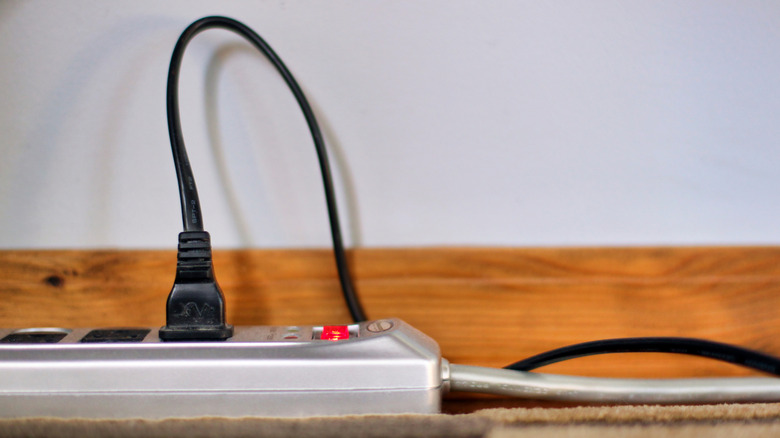
The aforementioned examples of surge protection are considered "point-of-use" devices because they only impact electricity flowing to appliances that are directly plugged into them. Although something like a surge protection extension cord is easy to set up anywhere, it's recommended that this be unplugged when not in use so as not to incur additional surge damage or overheating due to an overload of power, which would mean buying a new one more often. Other signs that you should replace your mobile surge protector immediately include frayed wires or mismatched prongs (never adapt from a three-prong grounded plug into a two-prong plug). Plus, you should only utilize point-of-use devices alongside ground-fault circuit interrupter (GFCI) outlets that shut off power at the first sign of an overflowing current.
However, there are also whole-home surge protection solutions that help fight off larger surges coming from the broader electric grid and last longer than point-of-use devices on average. Whole home surge protectors are recommended essential home upgrades by experts, like HGTV's Mike Holmes, as they can be installed in the main electrical panel or at the base of the electric meter. Installing a whole-home surge protector costs more up-front than buying an extension cord, generally requiring a few hundred dollars for the device itself on top of the cost to hire a qualified electrician. Given that this system adds another layer of protection against surges hitting your individual devices, it will likely save you time and money down the line because replacement would be less frequent compared to point-of-use surge protectors.