

It's Not Too Soon - Plant This Popular Veggie Now For A Delicious Summer Harvest
We may receive a commission on purchases made from links.
By and large, winter is considered a time to hang up the gardening gloves and rest until springtime. However, with the right know-how, gardening never has to end. Tasks for the dead of winter mostly center around preparing your garden for the next growing season. From plotting out new garden beds and ordering seeds to cleaning gardening tools, a savvy backyard grower is always thinking ahead and staying prepared. Did you know you can actually do a little bit of planting at this time of year, too? There is an array of vegetable seeds you can sow indoors even as early as January. The bonuses include better growth and earlier harvests. In fact, doing so can be vital in the case of slow-maturing species. Leeks (Allium ampeloprasum var. porrum) fit neatly into this plants-to-start-in-winter category.
Leeks are notoriously slow growers. These large, tall vegetables in the onion family take up to 120 to 150 days to reach maturity. If you wait too long to put your seedlings in the ground, you can count out an early growing season harvest. In fact, you'll be lucky if you can harvest them in late summer or even fall. Leek seedlings are started indoors or in a plant-starting greenhouse in winter. Once they're between 10 to 15 weeks old (and no older), you can harden them outside for five to seven days — ideally in a cold frame. After that, they should be strong enough to transplant outside, so long as outdoor temperatures remain consistently above 45 degrees Fahrenheit during the day. There are some special considerations to take when sowing leek seeds and tending to them during the growing season.
How to plant leeks in winter
If you start your seeds in late winter, the best time to harvest leeks will be in late summer. However, you can harvest your leeks in early summer or even late spring (depending on the cultivar) if you get your seedlings into the ground around March. In order to make this happen, you need to sow your leek seeds in January or early February. If you source high-quality seeds of fast-maturing leek cultivars, like 'Varna,' 'King Richard,' 'Columbus,' or 'Rival,' you're almost guaranteed an early harvest. Once you've secured your seeds, plant them in your seed trays indoors, burying them about ¼ inch deep into Midwest Hearth Seed Starter Natural Potting Soil or a similar seed-starting medium. They should germinate in five to seven days.
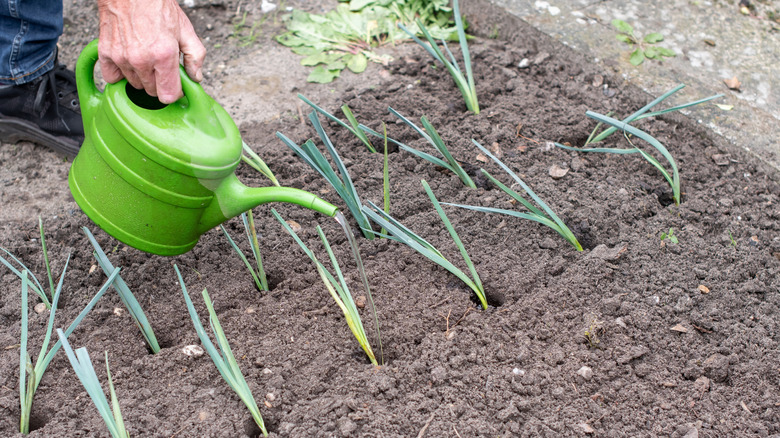
Once your seedlings reach the 10 to 15 week mark, they're ready to transplant. First, make sure the garden bed you plan to plant them into is diggable and has well-draining, nutrient-rich soil. It should be in a location that receives at least eight hours of full sun daily — prune back overhanging shrubs or tree branches if needed. Plant your seedlings two to six inches apart with at least 12 inches between rows. Leeks, like many alliums, are heavy feeders when actively developing. They require at least two dressings of high-nitrogen fertilizer throughout the growing season. As your leeks get bigger, diligently pile soil around them to conceal the tender white stem. This planting trick makes leeks taste sweeter. Your leeks are ready to harvest once the stems reach at least ½ inch in diameter.