

Stop Non-Native Honeysuckle At The Source: Here's How
We may receive a commission on purchases made from links.
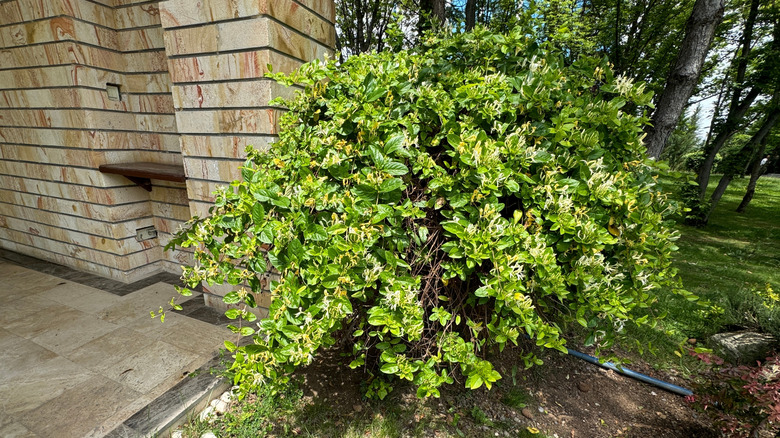
Honeysuckle has a seemingly good reputation with home gardeners as a fragrant pollinator magnet. However, when it comes to the invasive, non-native honeysuckle species, that's about all they have to offer. These vining plants have two tactics — fast growth and profuse seed production. They can grow up to 14 feet tall, quickly overtaking woodlands — so much so that people can't even walk through them anymore. The growth of trees overshadowed by non-native honeysuckle can decline by up to 40%. By leafing out one to two weeks earlier than native species, they shade out slower sprouting endemic plants and hog all the moisture and nutrients. In addition, non‑native honeysuckles sometimes emit allelochemicals into the soil that keep nearby plants from sprouting.
In short, these nefariously successful plants need to be stopped at the source. For home gardeners, that's best done using a combination of mechanical, chemical, and, sometimes, biological methods — primarily hand-pulling, solarization, trimming, various herbicides, and goats. Invasive honeysuckle species include Japanese honeysuckle (Lonicera japonica) and five bush species: Morrow's honeysuckle (Lonicera morrowii), Tatarian honeysuckle (Lonicera tatarica), Bell's honeysuckle (Lonicera × bella), fragrant honeysuckle (Lonicera fragrantissima), and Amur honeysuckle (Lonicera maackii). The last species listed is also a mosquito-attracting shrub to avoid growing in your garden at all costs. You can tell if the honeysuckle in your yard is native or invasive by comparing the leaves, twigs, fruit, and fragrance of different species. Correct identification is vital since you don't want to yank out an endemic vine.
Start with manual controls for non-native honeysuckle
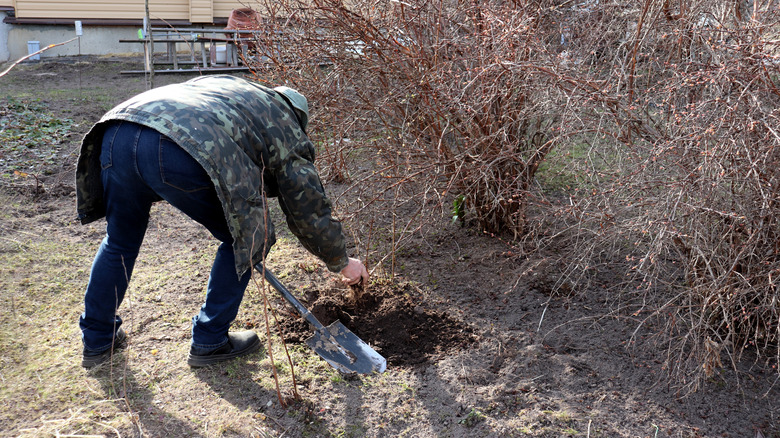
Mechanical control methods work well for invasive honeysuckle seedlings because they have very short roots. You can just yank them out of the ground or dig them up well before they get large enough to bear fruit. You can use a Machotsl Heavy-Duty Sapling Puller Tool, also called a honeysuckle popper, to pry out small to medium-sized plants. Just make sure you remove the entire root system. Removing seedlings and plants by hand — with or without a gardening tool — is easier if the soil is soft and moist. Pulled plants reroot easily, so remove them from the area immediately after plucking them from the ground. Send them to an industrial composter or throw them in the trash for landfilling or incineration. Home composts rarely get hot enough to kill the plants and their seeds.
If you're dealing with larger plants and have a lot of patience, try basal pruning, where you repeatedly cut back the branches of a honeysuckle vine down to the stump. Without its leaves, the plant can't photosynthesize and will eventually die. Solarization is another mechanical option for larger plants that also works by interrupting photosynthesis. Cut the plant back to about a foot from the ground and wrap it tightly in black plastic, starving the plant of much-needed light. After a few months, when the plant has died, you can remove the stump. Burning actively growing invasive honeysuckles is usually a temporary or partial solution. Charred invasive honeysuckle plants frequently regrow from their roots.
Combine chemical and mechanical methods to remove invasive honeysuckle for good
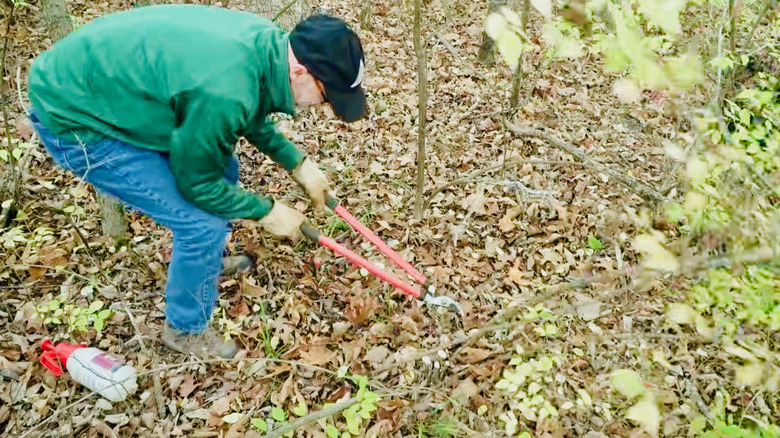
Controlling invasive honeysuckle at the source using mechanical means, like hand-pulling, pruning, or solarization, isn't always successful. To ensure these plants are gone from your garden for good, pair these methods with chemical controls — that is, herbicides. In the fall, cut large invasive honeysuckle vines or shrubs down to the ground with loppers, a brush cutter, a chainsaw or a lawn mower, and immediately apply a 20% glyphosate solution to the stump. A 16-ounce bottle of Compare-N-Save 41% Glyphosate Grass and Weed Killer costs about $11. Follow the manufacturer's label instructions (something that's vital with any herbicide) to dilute it to the correct percentage. Then spray it on the plant's remains or apply it with a sponge.
If you don't have hefty enough pruning tools, you can go the chemical-only route. Apply 2% to 4% glyphosate solution to the entire vine as a foliar spray. Again, fall is the ideal time because honeysuckle retains its leaves longer than most other shrubs, making it easy to identify. You don't want to accidentally kill plants you actually want in your garden. There's just one biological control method that shows promise for this hard-to-control vine: letting goats eat the plant. While this method is eco-friendly, hosting goats in your backyard doesn't come without downsides. These ravenous herbivores will devour desirable plants alongside the invasive honeysuckle, and nibbled rather than ravaged vines will regrow. If whatever method you choose is successful, repopulate the area with plants that replace invasive honeysuckle for a garden that's easier to maintain.