

8 Types Of Kitchen Floor Plans Explained Before You Fully Remodel

Whether you're redesigning an existing kitchen or creating one from scratch for a new build, you have the opportunity to make the space as efficient as it is aesthetically pleasing. If you have limited counter space but enough square footage, put in an island. If the stove in your current kitchen is too far from the sink, there's nothing stopping you from moving things around. To save money and time, it's important to have a firm idea of how your kitchen should look before you get started. That means learning about different types of kitchen floor plans you could install. Knowing the difference between an L-shaped, G-shaped, or U-shaped layout, or a galley, single-walled, or open-concept kitchen, can mean the difference between efficiency and wasted space.
The objective is to optimize every inch of your kitchen floor plan. You want to be able to move around easily while preparing meals, right? And how about creating some room for family members or guests to sit and chat while admiring your culinary skills? You can make design choices to improve your kitchen aesthetically and functionally — think cabinet door colors, lighting fixtures, and appliances. However, the shape and size of the room will ultimately dictate the floor plan. Take measurements of the space and sketch out a bird's eye view blueprint, either digitally or on paper, of how you want your kitchen to look. If you hire an architect or interior designer, take an active role in the process. You're more likely to be satisfied with the final product.
L-shaped kitchen
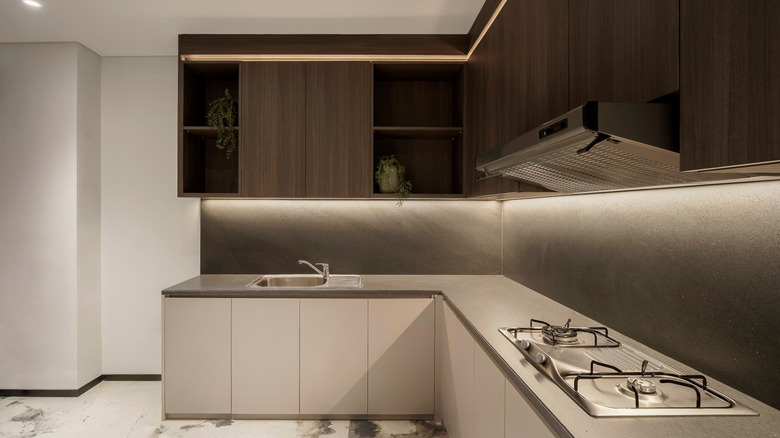
L-shaped floor plans work well for when you only have limited walls to work with that open up to a living room or dining area. Line the two walls with your kitchen cabinets, sink, dishwasher, oven, and refrigerator. This type of open-plan design makes your kitchen easy to move around in and more of a social space. Whoever is cooking can watch TV or engage with family members and friends in nearby areas. L-shaped layouts are also great for small kitchens. Or you can incorporate an island to increase the counter space in larger rooms.
Galley kitchen
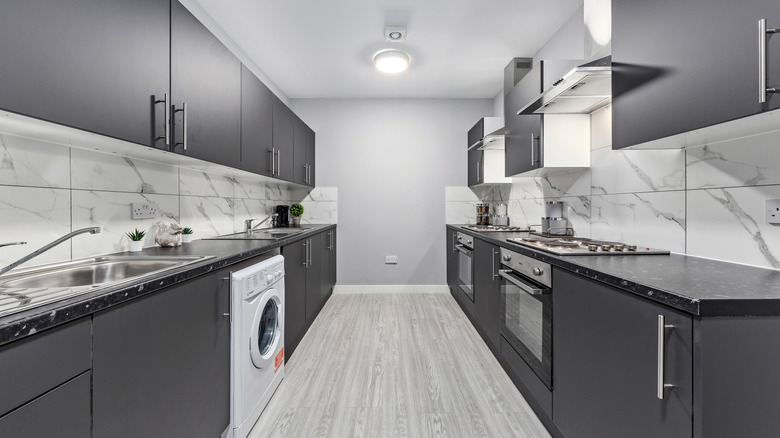
If your home only has a small, narrow room to fit the kitchen into, your best bet is a galley floor plan. Cabinets, countertops, and appliances line walls opposite one another and you move around in the space between. This allows the person cooking to maneuver between the stove, sink, and fridge simply by turning around. There is often a window at the end of the galley, opposite the entrance to the kitchen, to let in natural light. Apartment and condo dwellers are most likely to benefit from this floor plan.
Single-wall kitchen
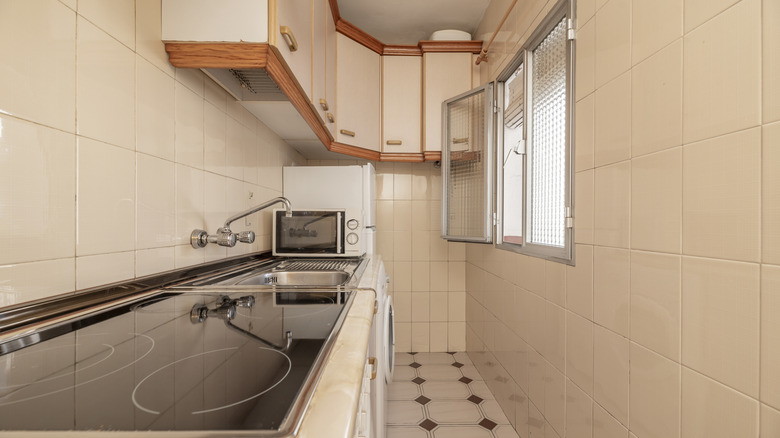
Like the galley kitchen, the single-wall floor plan is common in apartments and condos. It works in even the snuggest of spaces — as long as the room is at least 8 feet wide. You can definitely prepare a decent meal in a single-wall kitchen, whether it's a few eggs and a couple pieces of bacon for breakfast or a Thanksgiving dinner. However, there's unlikely to be enough room for anything too fancy. You should be able to fit a fridge, a sink, an oven, and a few feet of counter space.
Open-concept kitchen and dining
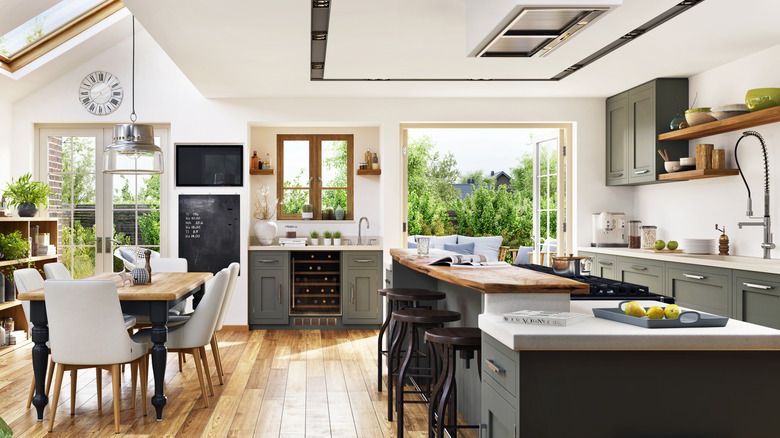
The No. 1 rule of an open-concept kitchen floor plan is that there are no rules. You situate your cabinets against whichever wall you wish and plop a huge island in the center. It's a luxury layout for anyone who has the space. It's important, however, that all your appliances match your home's broader design aesthetic — they'll be highly visible in this floor plan. The cabinetry finishes should also be reflected in the island. Have a diminutive home? You should try an open layout for your small kitchen.
U-shaped kitchen
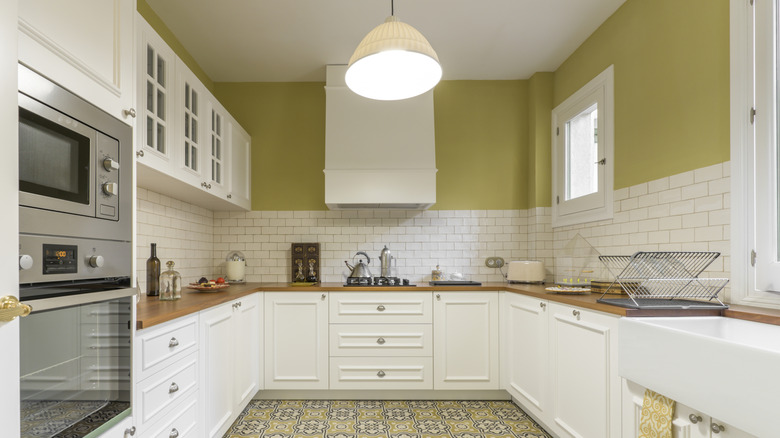
A U-shaped kitchen is designed around three walls; the top of the U is the entrance. You have three main work areas: a stove with counter space, a sink, and an additional area of empty countertop. You're unlikely to squeeze a U-shaped floor plan into a small room (the cabinetry takes up too much floor space). However, it can work perfectly in medium-to-large footprints. You might even be able to fit an island or push one side of the U into the living or dining area. Then anyone preparing meals can interact with the rest of the family.
G-shaped kitchen
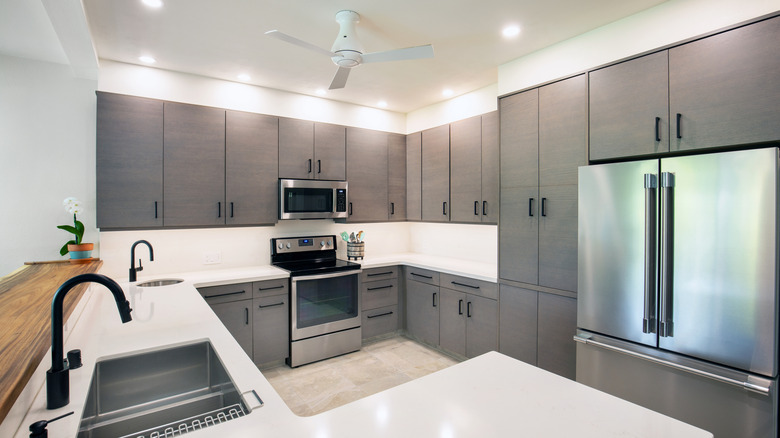
A G-shaped kitchen floor plan is similar to a U-shaped floor plan with one addition: a fourth, shorter countertop. How to know if a G-shaped kitchen is right for your home? This floor plan only works in large footprints; all that cabinetry takes up a lot of room. While many homeowners don't need that much counter space, few will turn down ample storage space. If you have a lot of pots, crockery, or kitchen gadgets, all those cabinets and worktops will help. If the mildly closed-off layout feels isolating, add tall stools to the fourth countertop.
Peninsula kitchen
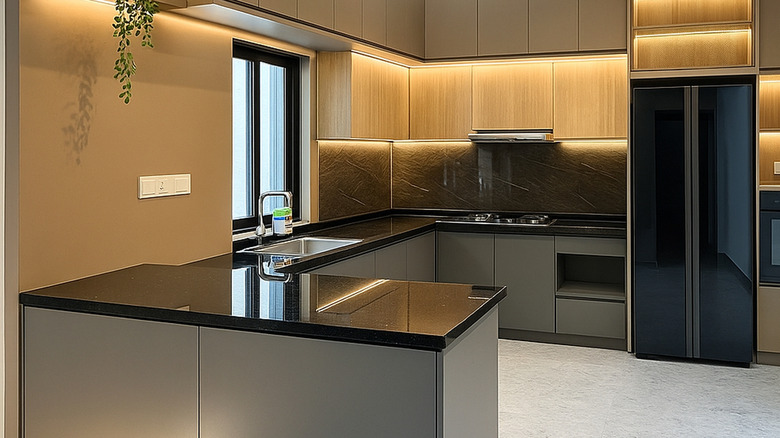
In a peninsula kitchen, the cabinets and appliances form a J-shape. This floor plan resembles an L-shaped kitchen, but boasts a little more cabinet and counter space — and, bonus, more storage. You'll have two corners to play with, so you get to choose where you want your sink and stove and work out the most convenient layout for jumping between prep and cooking areas. One downside of this design is that the peninsula blocks the flow of traffic in and out of the kitchen — though that's something those who prefer separation between living and cooking may prefer.
Closed floor plan
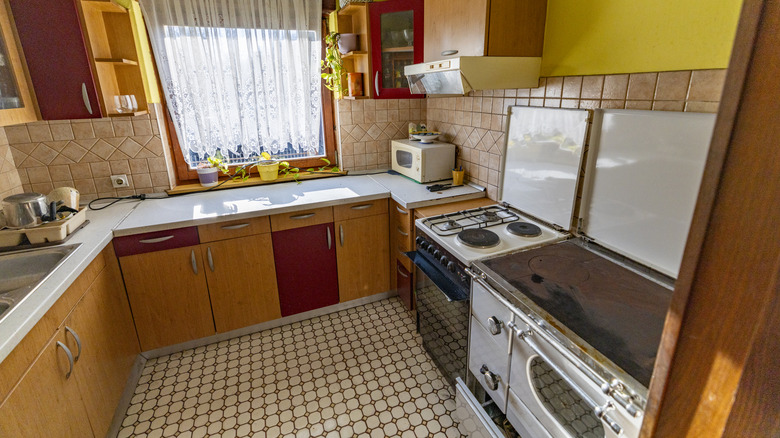
In a closed floor plan, the kitchen is its own room. You enter the space via a doorway. This once-loathed design trend is making a comeback to replace open kitchens, particularly among people who value cooking as a craft. When we think of closed floor plan kitchens, we often imagine a 1950s housewife washing dishes in seclusion, but the design remains relevant today. The four complete walls and closable door contain smells and muffle noises. The home cook can concentrate. Closed floor plans are usually outfitted with galley or L-shaped kitchen designs.