

13 Clear Signs That Your Tropical Indoor Plants Have Draft Damage
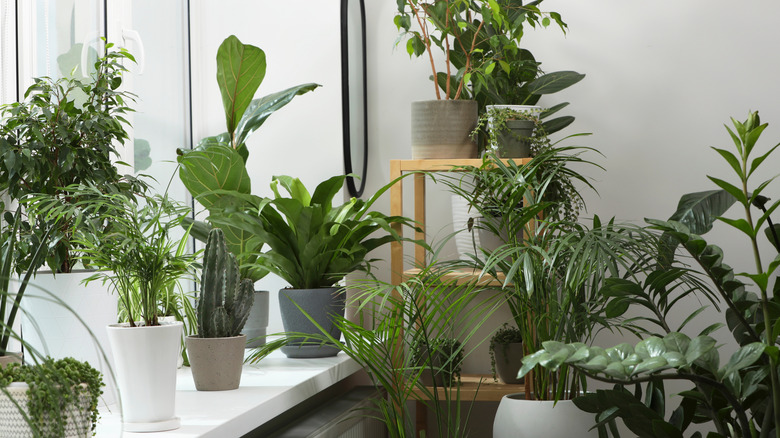
If you're struggling to keep houseplants alive, your window may be the culprit. Whether you have a south-facing window that's perfect for those sun-lovers or a dimmer window filled with indirect light, choosing the right window can be essential for having healthy, happy houseplants. However, as your windows age and components like their seals and insulation break down, you may be left with a draft that exposes your houseplant to harmful cold drafts.
A large majority of plants that are commonly grown indoors originate from either tropical or subtropical regions in the world. This means that your prized plant likely loves warm, humid conditions. As a result, when a draft leaves your plants in the cold, it can take its toll, even leading to results as severe as plant death.
Identifying the early signs that your tropical indoor plants have draft damage can help you stay ahead of the process, quickly relocating your plants to a warmer area while targeting the reason behind the draft. Fortunately, while other problems can cause similar symptoms, the effects of cold on your houseplants can often be recognized by signs like leaf discoloration and damage, poor growth, and structural damage.
Drooping leaves
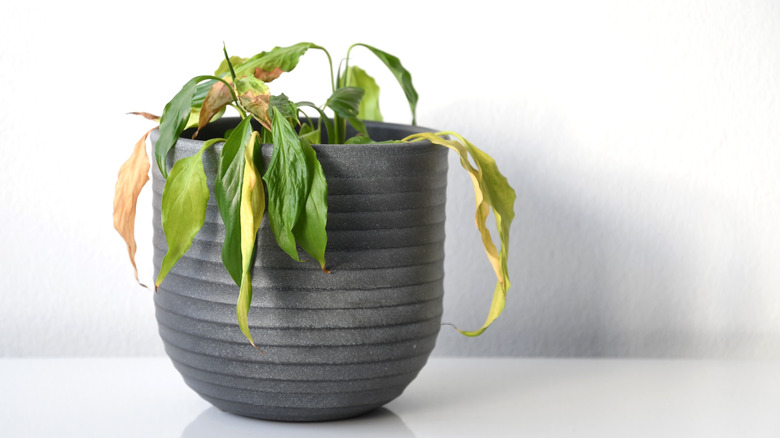
One of the first signs that your tropical indoor plants may be unhappy with their current living situation is drooping leaves. Your plant's leaves can droop for a variety of reasons — once eye-catching foliage now appearing lackluster and limp despite not changing your routine. Many times, you may see this happen when your plant is thirsty, and, because cold can reduce water intake, drooping can occur with draft damage as well. So long as the damage is mild, moving your plant can often restore its appearance.
Yellowing or whitening
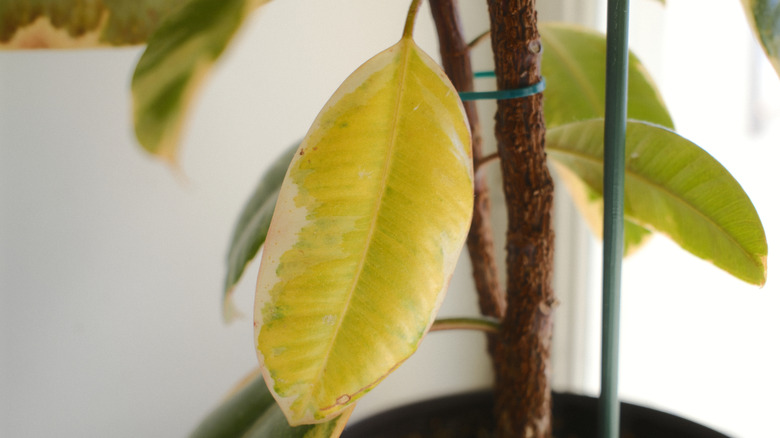
The color of your plant's leaves can tell you a lot about how its health is doing. As a result, spotting leaves that are turning yellow or even white can raise red flags. Yellowing or whitening can be a key indicator that something is wrong with your plant's placement. When the temperature's right, it may be a sign that your plant needs more sunlight. However, if you're sure that your plant is getting enough light each day, it may be worthwhile to check for drafts near its sunny spot in your window.
Buds that don't open

Did your plant sprout new buds hiding eye-catching flowers just to drop off? If that sounds a lot like your plant, then you may have draft damage. During warmer weather, your plant may progress and grow properly, producing those highly-anticipated flower buds. However, when a draft sneaks in and causes damage, it can halt those buds in their steps, keeping them from opening.
Root damage
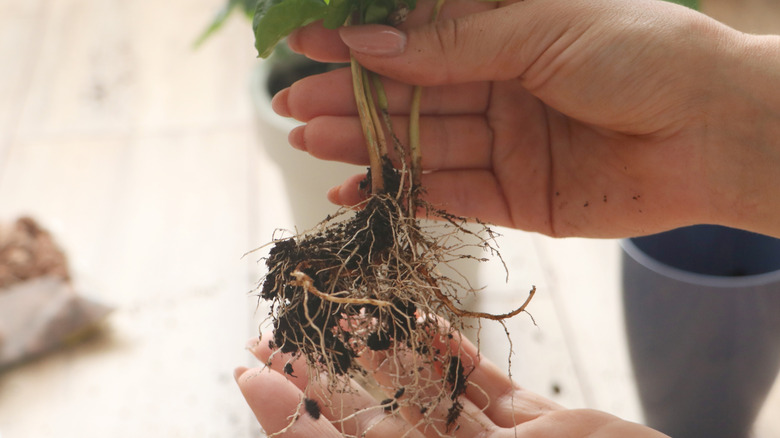
When it comes to tropical houseplants that are too cold, the signs typically first show up on the surface. This is especially true with drafts, which may only damage a specific area. However, if the draft persists and your plants are left in the cold air over a longer period of time, damage can begin to affect the roots. Once the signs that your tropical indoor plants have draft damage reach the roots, it's important that you move your plant to a new location and start working to heal the problems as soon as possible.
Wilting
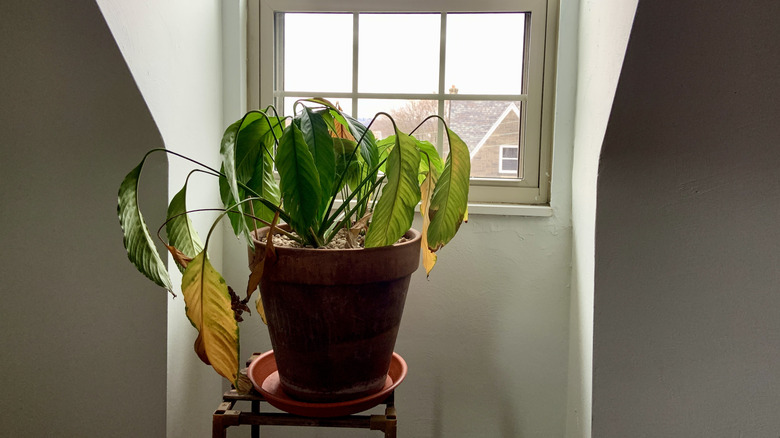
If your tropical indoor plants are looking a little under the weather, your windows may be the culprit. As well as causing your plant's leaves to drop or even develop discoloration, a steady draft can also lead to wilting. However, wilting can also arise from other common indoor gardening mistakes, like choosing a spot with too little light or overwatering. As a result, you may want to keep an eye out for other signs of draft damage, especially if this problem continues after relocating your plant to a warmer spot in your home.
Smaller plant size
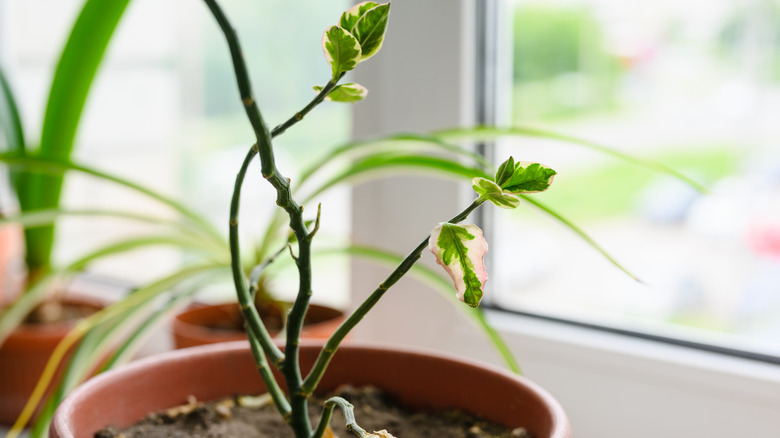
Have you noticed that the tropical houseplant in your window is a smaller size than other plants around your home? While the species will play a large role in size, having a tropical indoor plant that appears like its growth is slow or stunted altogether can be the result of draft damage. As cold air creeps into your window and damages your plant, it can prevent healthy growth, making this a key sign that your plant needs a new spot around your home.
Curled leaves
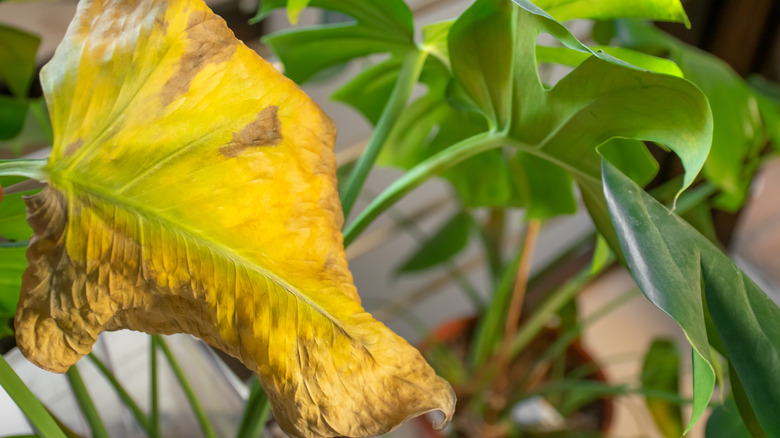
For plants, leaves are solar panels, sapping up all the environmental nutrients they need for healthy growth. However, when your plant undergoes stress, its leaves may curl as it tries to protect itself. This can occur for many reasons, whether as a response to temperature fluctuations or even pests. If your tropical houseplant's leaves are curling, it may be worthwhile to check from drafts, especially if they're located in a windowsill or near a door. Tropical plants thrive in warm temperatures, and a cold spell sneaking in your home may be enough for curled leaves to show up.
Condensation
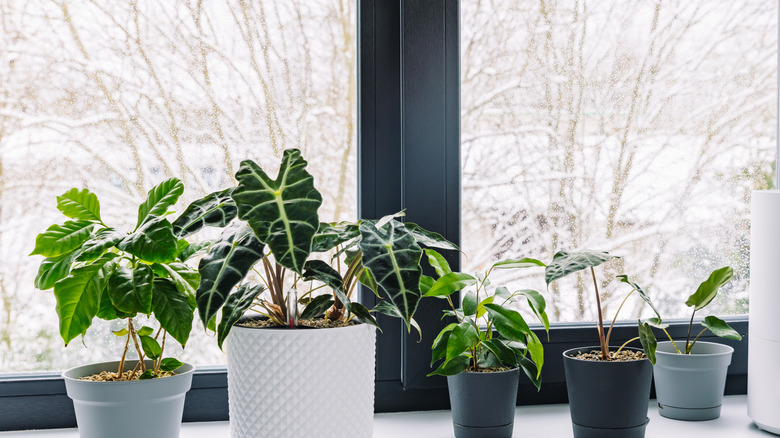
Many tropical plants love humidity, especially those that are found native in high-moisture areas. However, not all moisture is a good sign when it comes to tropical indoor plants, and seeing condensation collecting on your plant's pots may indicate a draft problem. Humidity helps you determine how much water vapor is in the air, and when those gaseous molecules cool, they turn back into liquid water. As a result, condensation on your plant's pots may be a sign that they're staying too cold.
Leaves that are easily broken
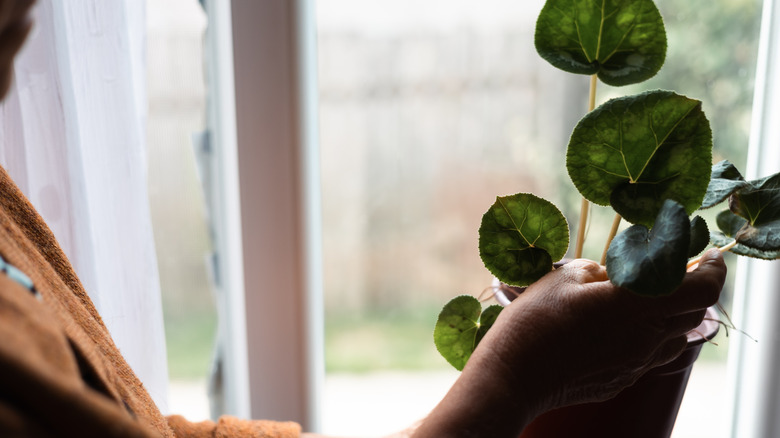
Think about your skin during the winter. Without proper moisture each day, you may find that your skin is brittle and cracked. However, you aren't the only one susceptible to winter dryness. If your tropical houseplant is exposed to frequent cold temperatures due to a draft, you may notice that its leaves become brittle and break easily. This is because of the cold's impact on how your plant is able to absorb moisture. Depending on the severity and cause, you may find that leaf damage opens the door to other issues, like disease or pests.
Soft stems and roots
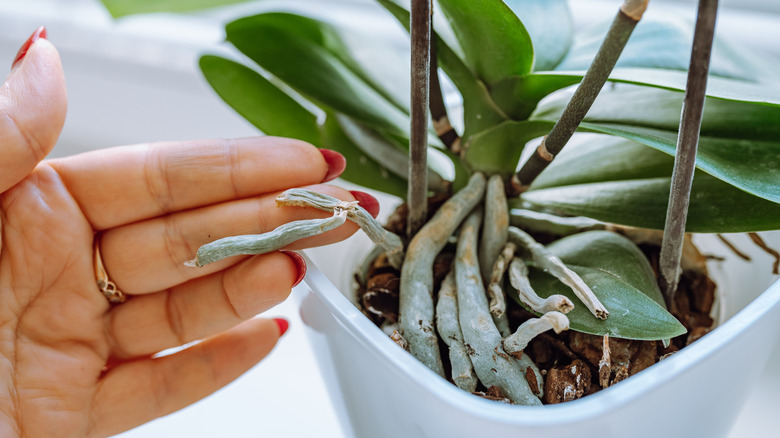
If you think that your houseplant may have been damaged by a draft, feel its stem and roots. Plants with tissue that is soft or mushy have often undergone cold temperatures that damaged the wall of their cells, breaking down their structure. In severe cases, the damage may also be visible. This is because those mushy stems can lead to a limp, lackluster appearance as your plant loses its internal support beams. For plants with soft, mushy roots, recovery may not be possible, and you may be left finding new ways to use your dying houseplant.
Leaf shedding

There's few sights that can frighten an avid indoor gardener like seeing their prized plant suddenly dropping its leaves. With some plants, the shift may be subtle, a leaf here or there serving as the only sign something is wrong. For some plants, however, leaf drop can be drastic, with a majority of their leaves shed within hours. A leaf's main purpose is to absorb the sunlight needed for successful photosynthesis, and so the last thing you want is for your houseplant to be suddenly left bare due to a draft.
Signs of leaf death
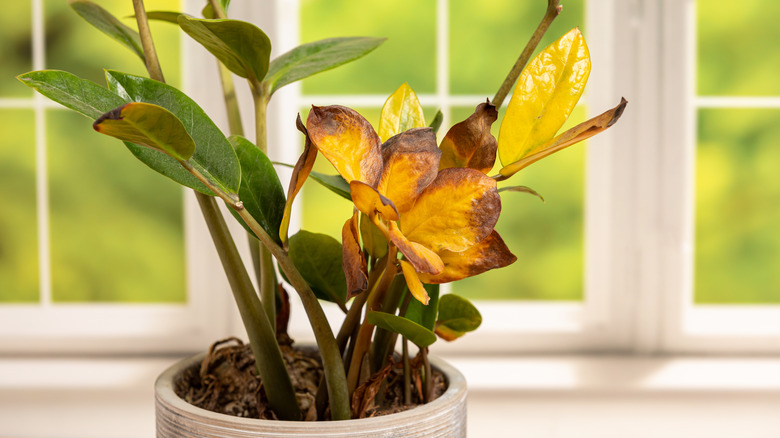
When a draft is leading to issues due to the cold, you may also notice that any leaves that remain on your plant develop a sickly appearance. Leaf death can appear in many forms, such as blackening or dead patches spreading over the surface of your leaf. Often, if a draft is the problem, this will only occur on the affected side, such as the portion of your plant that's nearest to the window.
Lack of new growth
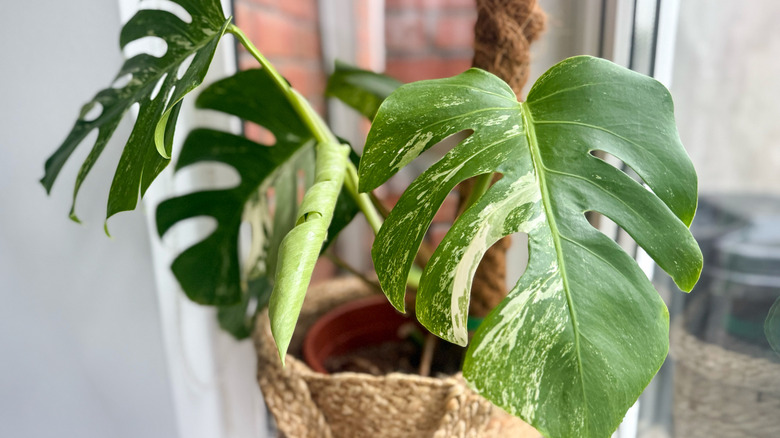
Above, you learned draft damage can sometimes manifest in your tropical indoor plants as stunted growth. However, it can also impact your plant's new growth. In cases where your tropical houseplant may be too cold due to a draft, you may notice that your plant is failing to produce new flowers or leaves. In the winter, a brief period of dormancy can be expected for many species, but persistent issues may be a sign that low temperatures may be impacting your plant's growth. Learning the difference between a plant that's dead versus dormant can help here.