

The Coffee Ground Hack To Try Outside Doors And Windows
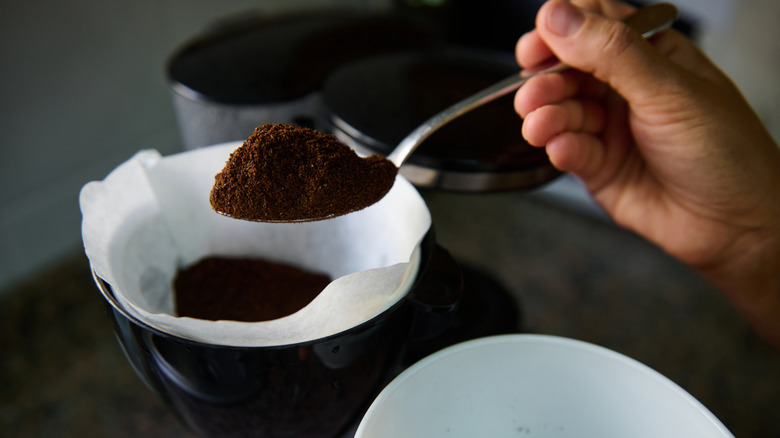
Coffee lovers often praise the restorative qualities of their preferred morning beverage, claiming that it's not just a pick-me-up, but it can also help with headaches, enhance their mood, and reduce the risk of stroke. But what about the grounds that are left over after the beverage is gone? Gardeners often add coffee grounds to compost or soil in the belief that they'll add nutrients and help control the slug population. Some swear they're an excellent exfoliant for the skin and can reduce bags under the eyes.
Homeowners with pest problems that range from cockroaches to mosquitoes swear by them as an insect repellent both inside and outside. However, coffee grounds are not a universal solution for all pest problems; many common yard pests ignore coffee grounds. While slugs and snails usually stay outdoors, ants can become a persistent indoor problem that coffee grounds may help address.
Treated coffee grounds can be effective against ants and slugs, but it's not as simple as scattering your used grounds on your doors and windows. Ants invade your house in search of food and shelter, and once one has made a foray inside, others follow its scent trail. Basic remedies like keeping food sources in sealed containers, washing away scent trails with soapy water, and plugging holes and cracks that ants may be using to enter your house are effective means of control. If ants persist despite these steps, using coffee grounds can also help disrupt scent trails before turning to chemical pesticides.
Using coffee grounds to repel pests

The method you use to brew your initial cup of coffee doesn't matter for this eco-friendly hack. After brewing it, re-brew the used grounds as if you were making a second pot. Spread the wet grounds on a baking sheet and dry them in a low-temperature oven. You can also air-dry them on waxed paper or paper towels, though slow drying can allow mold to form. Let the grounds cool and sprinkle them on windowsills and around doorways. If you have extra, store the grounds in an airtight container until you need them again. If you're not a coffee drinker, you might be able to get free used grounds at your local coffee shop.
Coffee grounds are sometimes promoted as a mosquito deterrent as well, though studies have shown that the evidence is limited and species-specific. Some research suggests Arabica coffee can kill the larvae of Aedes aegypti, also known as the yellow fever mosquito. This dangerous mosquito is a vector for other deadly diseases like Dengue fever and the Zika virus, but in the United States, it's rarely found outside the Southeast. The Southeast is also home to biting fire ants. However, there is no evidence that coffee grounds deter fire ants.