

The Neutral Fertilizer That Will Help Your Growing Asparagus Plants Thrive
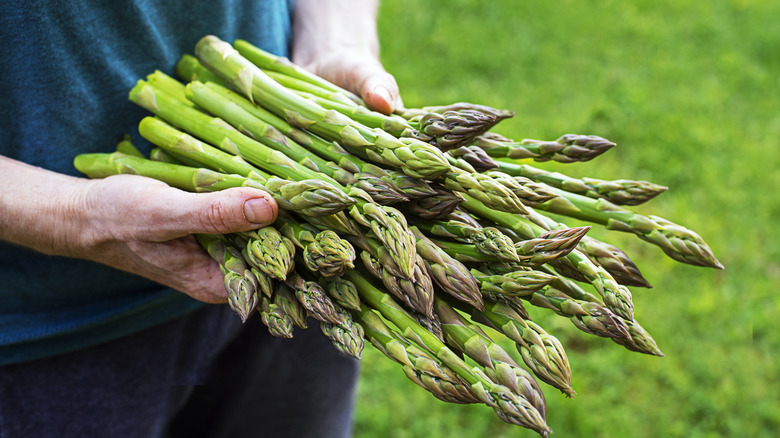
Your fireplace has a hidden treasure that can transform a struggling garden bed into flourishing plants and a wonderful harvest. Wood ash acts as an organic supplement for Asparagus officinalis, the common garden asparagus, because it has the nutrients these perennials need to thrive year after year. While many people think of the ash that collects in the bottom of their fireplace as waste, it's actually a concentrated source of calcium and potassium. Some things you should know before growing asparagus are that it grows well in USDA Hardiness Zones 2 through 9, and it stays in the same spot for decades. Because it grows in the same location for so long, the plant eventually depletes many of the nutrients in the soil. Adding wood ash mimics a natural forest cycle, returning essential elements to the soil and feeding the root system without the harsh chemicals found in some commercial alternatives.
This supplement is effective for asparagus because the plant is a heavy feeder that requires consistent access to micronutrients over its long lifespan. Wood ash also contains trace elements like magnesium, iron, and boron, which support the cellular strength of the growing stalks. These minerals help the plant build a defense against common environmental stressors like late frosts, extremely acidic soil, or drought. Ash from commonly burned, aged woods like spruce, poplar, birch, or pine has a dense nutrient profile. Using this natural material also encourages the activity of beneficial soil bacteria that help break down organic matter. This keeps the soil structure from becoming too compacted over the many years an asparagus bed remains active.
Wood ash corrects the acidity in garden soil
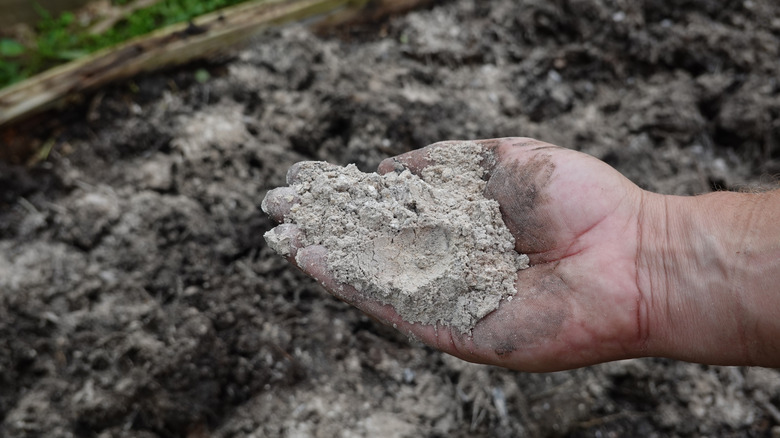
Asparagus plants have very specific tastes when it comes to their environment, specifically requiring a pH level that stays close to neutral. If the soil becomes too acidic, the crowns won't produce thick spears and eventually will wither away. One common mistake when growing asparagus is not testing the soil, which can harm the plants over time. Wood ash acts as a natural buffer because it has high levels of calcium carbonate, which works similarly to garden lime to neutralize sour soil. One advantage of using ash is how fast it works. The fine powder dissolves and begins working much faster than traditional crushed limestone. It also provides a healthy dose of phosphorus, which supports the root system where the plant stores all the energy it needs to push up the first stalks in the spring.
Using wood ash also helps manage other nutrients that are already in the soil. When the pH level sits at the right neutral level, the plant can more easily absorb molybdenum and copper, which are often trapped in high-acid soils. Proper pH levels also prevent aluminum toxicity, a condition that occurs in sour soils and can stunt the development of asparagus roots. The salt content in wood ash can also suppress the growth of certain weeds that prefer more acidic conditions. This lets the asparagus crowns have more space without competing for water.
The best way to apply wood ash to your asparagus
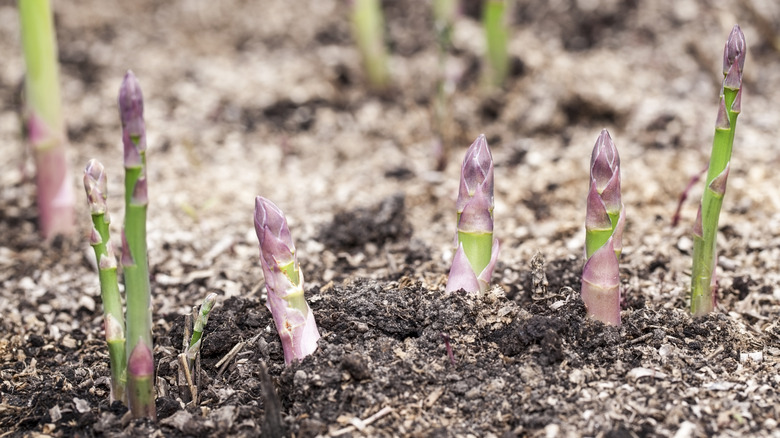
Success with this fertilizer depends on moderation and timing to keep the garden bed in good condition. A heavy layer can shock plants, so it is best to apply a light dusting of about 15 to 20 pounds of ash for every 1,000 square feet of space. The most effective time to scatter the ash is during the winter or very early spring, before the new tips start to poke through the ground. This timing allows the shifting weather and rain to carry the nutrients deep into the soil where the roots can reach them.
Asparagus is one of the plants that love wood ash, but applying it the right way is needed for the best results. Make sure the ashes are fully extinguished and dry, since moisture can wash away the most beneficial minerals before they hit the soil. Spreading the powder evenly across the entire bed prevents hot spots that could damage the plants beneath the soil. Keeping an eye on the soil with an occasional test kit can help you decide if your asparagus needs another round of ash or if the levels are just right.