

How To Support Wildlife In Your Garden During The Coldest Seasons
We may receive a commission on purchases made from links.
As a master gardener who practices permaculture techniques, I work hard to support wildlife year-round. Pollinators, decomposers, predatory beasties, small mammals, reptiles, and birds are all important to a healthy, biodiverse environment and a bountiful garden. Winter is one of the hardest times of year for garden wildlife. During this chilly season, food is scarce, water freezes, shelter is limited, and exposure to extreme cold can be life-threatening — especially in very tidy suburban yards.
You don't have to do too much or spend money to do your bit to help the small creatures that share our gardens. Mostly, you just need to resist the urge to tidy too much, and let Mother Nature do her thing. Supporting wildlife through the winter involves providing food, water, and an undisturbed shelter. In return, you get a healthier, more biodiverse outdoor space all year, with more robust plants and plenty of blooms.
Keep a reliable course of unfrozen water available

When the world outside freezes, water can be harder to find than food for many creatures. I recommend you keep a shallow bird bath or shallow ground-level bowl of water available year-round, but in winter, very carefully pour some near-boiling water in it every day to make sure it stays liquid. You can also float a ball in the water so it never freezes over completely, or at least delays fully freezing. But you'll still need to refresh it daily.
You'll also want to clean the bath or container regularly to remove droppings and minimize spreading disease between animals. Please also remember to add stones or a sloping surface of some kind so anything small that falls in can escape without drowning. Just keeping it frost-free in deep cold by adding plenty of hot water is one of the easiest ways to support wildlife over winter. You can, however, also get or make a gently heated bird bath or chicken waterer, like the Lilyang 3-gallon Heated Chicken Waterer, that keeps itself frost-free and serves many different animals.
Top up feeders with with high-energy winter foods
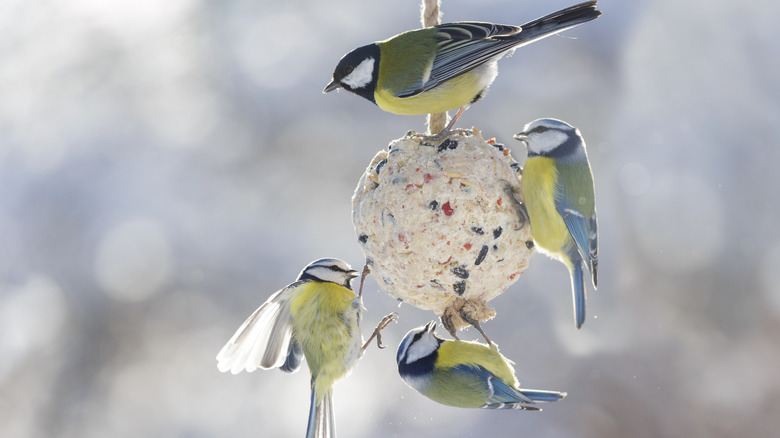
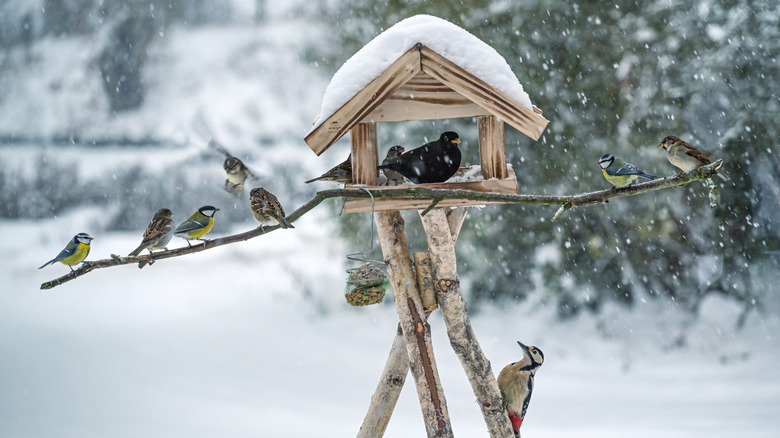
In winter, wildlife burns considerably more calories just to stay warm. And that means they need more food, or more calories, to stay alive, which can be challenging when food is naturally scarcer. You can help by supplying high-energy foods like sunflower hearts, winter seed mixes, unsalted peanuts, suet, and fat blocks. These are all great ways to attract more birds to your yard.
You can even save money by making your own fat balls and suet blocks very easily. It can also be a fun activity to do with the kids. Whatever you choose to feed, just make sure that you don't give anything salty or that's old or moldy, as these can be very dangerous to many creatures. Also avoid anything wrapped in plastic mesh, as this can tangle feet and can cause other problems if it degrades, falls, and gets loose into the environment. Additionally, one of the biggest mistakes you can make with suet balls is positioning them so the birds land on them with their feet. Instead, confine them to feeders, and hang them close to natural cover so anything enjoying a high-energy snack can dive for cover if a hawk, neighborhood cat, or other predator appears.
And, instead of overfilling feeders, top them up little and often so the food doesn't go sour, moldy, or clumpy. I don't recommend using squirrel-proof feeders for birds, because the squirrels need fuel for winter, too, so I really don't mind if they pop along and help themselves. I have a resident squirrel who lives in a tree in my front yard. The poor thing only has a little stump where her tail should be, but she is full of life, fun to watch, and doesn't cause me any problems. She deserves to eat and survive the winter in peace, just like the rest of us.
Grow or keep berry-bearing shrubs and trees for natural winter forage
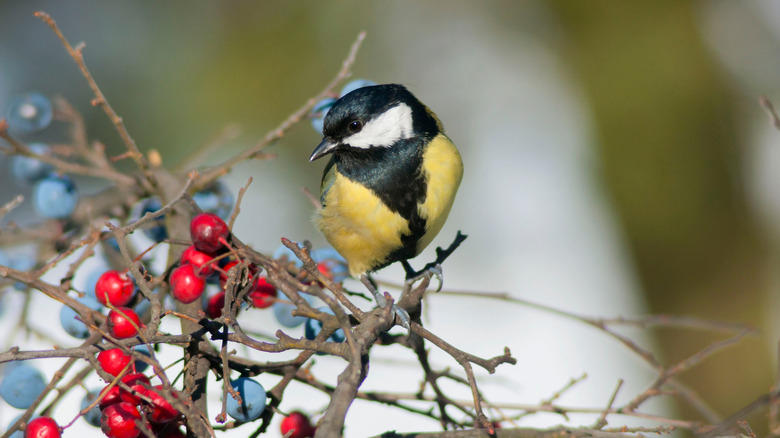
There are plenty of native shrubs that produce berries that'll stay on the branches through most of winter, like hawthorn, sloes, crabapples, hollies, and dogwoods. Planting these types of shrubs and trees is a super low-effort way to help wild things through the winter. Just remember that some, like holly berries, are toxic to dogs, so if you have dogs, avoid plants like these and be careful with your choices. Hawthorn and crabapple are both safe in small amounts, if your dog is a forager. But still, don't let them gorge themselves.
These plants offer a mix of natural nutrition, cover, and habitat, all of which are vital to survival for the small mammals and birds that visit our gardens. Plus, the fruit tends to retain quite a lot of moisture, helping with hydration and lack of available fresh water. Having these plants in your garden also helps to spread feeding instead of concentrating it on just one or two artificial feeders, reducing competition and risk of disease. If you've already got these plants, don't prune them in fall, wait until late winter or early spring, when the berries have been eaten and other food sources are starting to become available.
Provide dense hedges and evergreen cover as weatherproof shelter

Dense hedges and evergreen cover are really important for so many creatures. In freezing temperatures and strong winds, wild things need shelter where the air stays fairly still, so temperatures remain more consistent, and where snow doesn't easily penetrate. Evergreen shrubs and mixed hedges are important here. You have to consider tall protection all the way down to ground coverage to support a full range of wildlife.
Ideally, you want cover at ground level, as well as higher up. There are many ground-nesting birds, as well as insects and mammals that need protection on the ground from weather and predators. The best way to achieve this naturally is to plant a layered hedgerow. Mix tall evergreens that act as a windbreak and shelter with berry-bearing trees and shrubs for food and hydration. But don't neglect the lower level. Add evergreen ground cover and low-growing shrubs and perennials for extra shelter for those creatures that spend most of their time on the ground. As well as being an important shelter and pantry for wildlife, this layered planting protects your garden from harsh, scouring winds and creates a slightly milder, more temperate microclimate, and adds more winter interest to your gardenscape. The tall evergreens also give you an effective privacy screen.
Leave fallen leaves in key areas instead of clearing everything
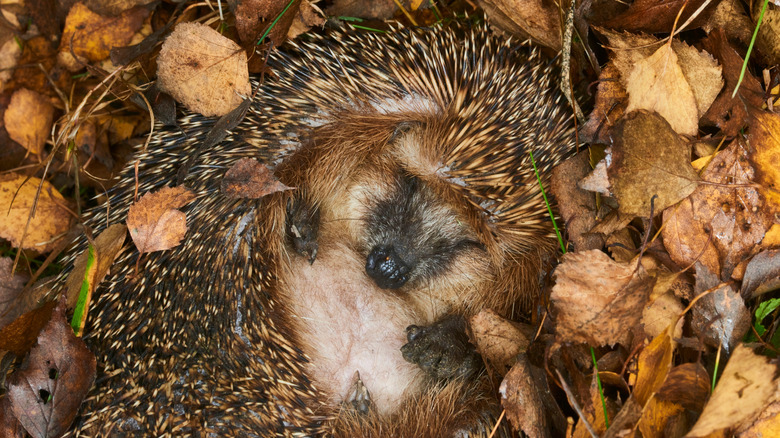
Resist tidying up the garden in fall and winter. Raking up every leaf isn't a good move, because leaf litter is more than just mess — it's actually really important to the health of your garden and to overwintering wildlife. Leaf litter insulates soil and gives a home to insects, spiders, amphibians, and small mammals. Many beneficial insects, including pollinators, like some butterflies and moths, tuck their eggs, larvae, or chrysalises into leaf piles or leaf mold to safely overwinter.
Yes, you can still do a general tidy and move large quantities of leaves off your garden. Or, even better, shred them, spread them in a thin layer over your lawn, and use the leaves as a free nutrient-rich lawn mulch or fertilizer. And sweep them off pathways where they end up looking horrid and getting slippery. But leave them around your garden beds. Decomposing leaves act as a mulch, keeping temperatures consistent and protecting the soil from exposure, runoff, and weeds.
Keep dead stems and seed heads standing until spring

Similar to leaving the leaves where they fall, resisting the human need to control our surroundings by clearing away the "dead" stuff really matters to countless species of beneficial insects. They overwinter in tall, hollow stems. Plus, seed heads provide a critical source of high-energy food for birds and mammals. Your purple cone flowers might look dead to you, but those pretty conical seed heads are an energy-packed food source for birds, and the hollow stems make the perfect cozy winter dormancy spot for solitary bees and other important insects.
This one is really simple to achieve. Simply don't scalp your garden when it starts to die back in fall. Mother Nature knows what she's doing. Those stems offer shelter, the seed heads give food, even when there's a thick layer of snow and other food sources are unreachable. And as an added bonus, those tall stems and seed heads catch snow and falling leaves, giving your perennials a free layer of very effective insulation against bad weather.
Build log, rock, or brush piles as safe hiding spots
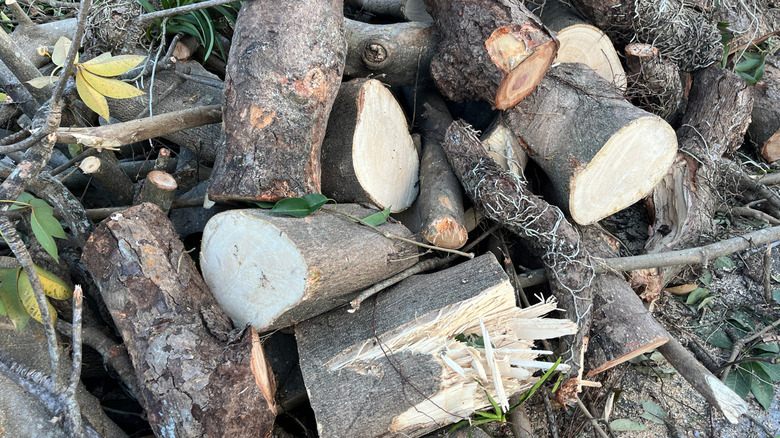
Loose brush piles from old prunings and even little rock gardens make great safe hiding spots for any number of small animals, spiders, and insects. The same goes for stumperies, which are really just piles of logs, particularly when surrounding an old tree stump. All of these places make exceptionally valuable refuges for little wild things. Just don't put them too close to your house, as you don't want to tempt critters like mice into your nice, warm home.
Stack branches and logs loosely, rather than squeezing them together as tight as possible. The loose structure lets air pass through and makes sure there's room for the small things to get in and hunker down through the worst of the bad weather, and stay safe from predators. Over time, the log and brush piles also become home to a range of useful and nutritious fungi and decomposers that are great for your garden, and also provide food for animals higher up the food chain. Don't burn off brush piles in winter in case wild things are hibernating inside. Leave them be and only get rid of the pile if you need to once spring arrives and the garden is coming back to life.
Make your pond or water feature winter-friendly for wildlife
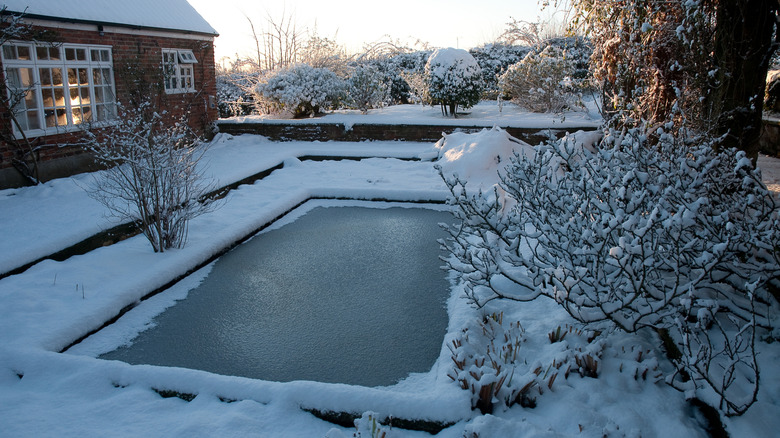
A small garden pond can be a lifeline in winter if you keep at least part of it clear of ice, so wildlife can still get hydrated. But even a wildlife pond needs some winter preparation. Use a pond heater or an old soccer ball to keep some ice-free surface zones (the floating soccer ball creates movement on the surface, making freezing more difficult). Don't smash the surface with a rock though, as you'll shock any fish or amphibians living in the water. A wildlife pond or heated water feature is super valuable, but only if it's safe. I'd also recommend keeping a pump running so the water stays healthy and oxygenated, rather than going stagnant and becoming a breeding ground for algae and bacteria.
Remember to add a sloping edge or an escape ramp for clumsy hedgehogs, mammals, and insects to get out again if they fall in while trying to drink. You don't want to accidentally drown wildlife you're trying to help. It's also a good idea to leave some submerged and marginal plants in place through the winter. It helps keep parts of the pond thawed and gives frogs, newts, and aquatic insects somewhere to shelter.
Put up nest boxes, roosting pockets, and wildlife shelters

Artificial nest boxes can double as winter roosts when natural safe spaces are scarce. It's fairly common for small birds to crowd together into nest boxes on freezing nights to share body heat. Especially if the box is sheltered from exposure to prevailing winds. Bat boxes, hedgehog houses, and special bug boxes or insect houses also do the same job, but for species other than birds.
This is an easy wildlife-friendly project and decorating the outside of the boxes with non-toxic materials can also be a fun family activity. Position the boxes out of direct midday sun and the worst of the winds. Leave them alone over winter, but once spring rolls around, take down the boxes and clean the inside with something gentle like Castile soap. Cleaning removes parasites and bacteria that can affect any new birds that want to nest in the box during the new season.
Create wildlife-friendly boundaries and small corridors between spaces

In winter, wildlife has to travel further to find enough food and water to survive. Solid walls and fences aren't navigable for many smaller beasties, so they end up isolated and trapped without the resources they need. But leaving small gaps under fences or cutting little wildlife doorways in fence panels lets ground-dwelling creatures roam as much as they need.
While doing it yourself is great, it's even better if you can convince a few of your neighbors to get involved and create a communal wildlife highway. Another solution is to plant mixed hedges instead of using solid fence panels, so you provide a divider for your yard and passage for the animals simultaneously.
Reduce or avoid pesticides and poisons when wildlife is already stressed

I never use chemicals anyway, so for me, this is a no-brainer. But it's especially important in winter, when wildlife has fewer food sources. If you use chemical pesticides and poisons when wildlife is already struggling to access food, you are further reducing the food that's available to them. Plus, of course, if they eat the affected plants, there's a strong chance they'll die. And then there are rodenticides and insecticides. These don't just impact the target species, because anything else that consumes the poison will also likely die. Plus, predators and scavengers that eat the remains of the poisoned creature also get a dose of poison. Slug pellets and broad-spectrum bug sprays also remove a valuable food source for birds and some small mammals, or worse, poison them, when they eat an affected bug or slug.
Cut back on chemical controls unless you really need them. Instead, be kinder to the environment and the creatures we share our planet with, and use barriers, trapping, companion planting, deterrents, and habitat management to keep the garden's food web healthy through winter and into spring. I also cannot overstate how dangerous slug pellets, rodenticides, and other poisons are to pets and children.
Manage bird feeders to minimize disease and window strikes
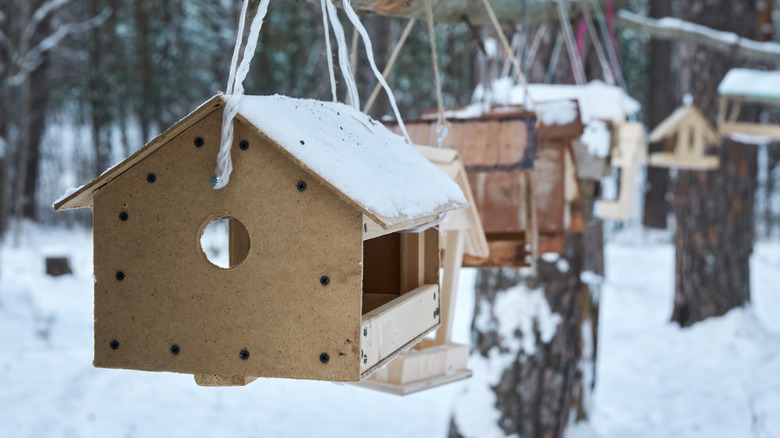
Once the birds figure out you've got a bird feeder with lots of high-energy food in it, they'll flock to it, often in large numbers. This can cause the spread of diseases between birds, like salmonellosis and trichomoniasis. You don't want to contribute to this, particularly in winter when birds are already stressed by the conditions, so sicknesses can have a greater impact.
If you can, add multiple feeders spread around your garden, so there's more space and less competition. Rotating feeding spots about once a month is also useful as there's less chance of bacteria buildup in a specific spot. Wash feeders with a weak sanitizing solution, then rinse and dry thoroughly, every time you refill them, or do it when you rotate feeding locations. To avoid window strikes, make sure feeders are either within a foot or two of windows or much further away. This helps make sure birds don't collide with your windows during a startled takeoff.
Keep cats and dogs from hunting visiting wildlife
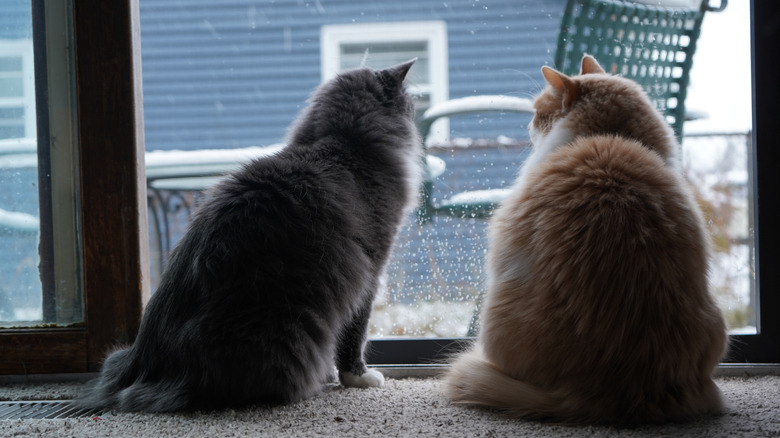
I love my cats and dogs, but they like hunting the wildlife in my garden way too much. There's little point attracting wildlife to your yard just for your pets to predate them. And they're easier prey in winter, because cover is more scarce, and the animals are stressed from finding food and expending more energy to stay warm.
One of the best ways to achieve this is to keep your cats indoors when birds are most active: at dawn and dusk. And, when they do go out, make sure they're wearing quick-release collars (for their safety) with bells. BirdsBeSafe Break Away Cat Collar with Bell is a popular choice. The bells give prey a little extra warning time, so they can flee. Block off brush piles and ponds from your curious dogs if you think animals may be overwintering or regularly using those spots. Managing your pets protects them as much as it protects the wild things.
Use softer, wildlife-friendly lighting on winter nights

Brilliant white security floodlights seem like a good home security move, and they are. But they're also massively disruptive to the habits of nocturnal wildlife. They disturb the way these animals feed, navigate, and evade predators. Plus, the brighter the light, the more likely insects are to be drawn in and eventually die from exhaustion or being eaten.
Swap always-on bright white floodlights for motion-activated warm-white security lights. Also direct the light downwards, rather than straight out. This helps reduce glare, still provides security and deterrence to human trespassers, and keeps paths illuminated and safe while you're outside using them. Leave some areas of the garden that aren't at risk from human invaders in darkness, or at least somewhat darker, so that nocturnal critters have some pockets of relative safety.