

Avoid Salting Your Neighbor's Driveway Without Their Permission. Here's Why
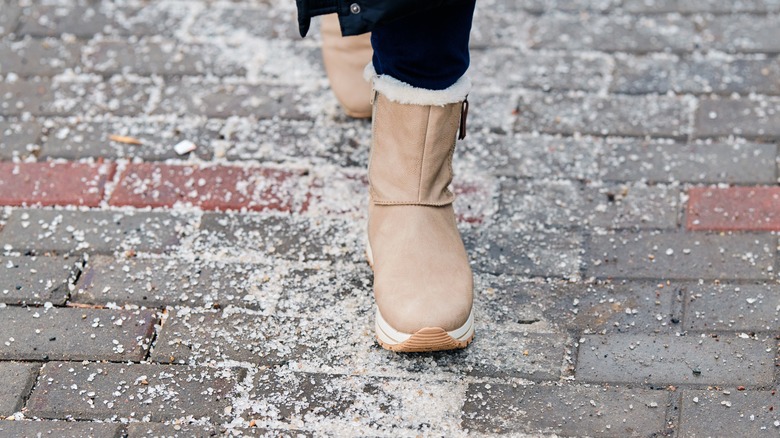
When it comes to curb appeal, driveways are one of the most overlooked features of a home. They don't always get the same level of appreciation as front entrances and landscaping, but they are an important part of creating a good first impression. They also play major roles in the functionality and safety of your home, but when winter arrives, they can create dangerous situations that lead to slips and falls. There are a lot of ways to get rid of the ice in your driveway and make winter trips and tumbles a thing of the past. One thing to note, though, is that if you're salting your driveway and have the notion that your neighbor's driveway could use some, don't do it without their permission. There are several reasons for this, including the possibility of causing property damage or harming pets.
According to Mario Serralta (via Tom's Guide), a founding lawyer with Abogado Mario/Mario Serralta & Associates, there's an even better reason to avoid salting your neighbor's driveway than causing damage. He says that, "It may seem neighborly to salt a sidewalk or driveway of the house next door without being asked, but legally it can depend on the surface and the circumstances." He adds, "A private driveway is personal property, and a person can create exposure if they put salt or de-icing chemicals on it without permission and thereby damage the surface or if someone later slips."
Discover more information about why to avoid salting your neighbor's icy driveway
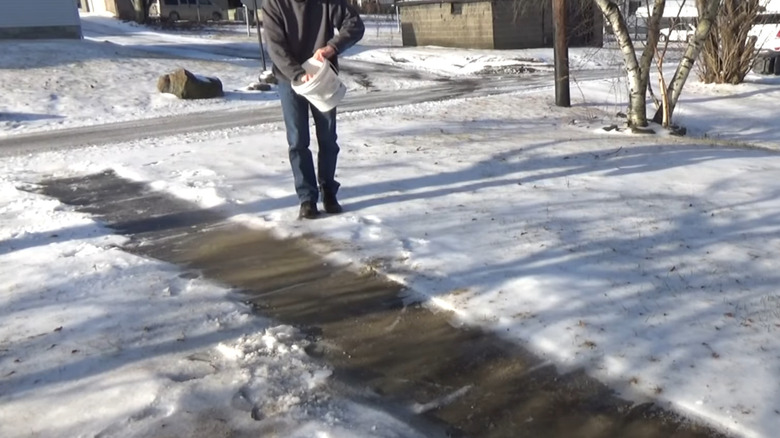
If you've selected salt over sand as the best material to melt ice on your driveway, you're not alone. Many people use various types of salt for de-icing their sidewalks and driveways. However, each type has pros and cons; for example, potassium chloride is considered safer for pets, while sodium chloride, also known as rock salt, is unhealthy for pets and plants and causes damage to concrete, bricks, and metal surfaces.
Many homeowners enjoy being neighborly, but if damage occurred to your neighbor's property after you put corrosive salt on their driveway, you could be liable for the damages. If you still want to help your neighbor, talk to them and make a suggestion to ditch the ice and defrost your driveway with an affordable solution made from kitchen essentials like isopropyl alcohol and dish soap. You could also ask them about using alternatives like sand or kitty litter that won't damage their yard and hurt their pets.