

12 Outdoor Repairs You Can Get Done In The Winter To Be Ready For Spring
We may receive a commission on purchases made from links.
Winter isn't anybody's favorite time to tackle outdoor chores. It's cold, daylight is short, your hands don't work quite as well, and you'd rather be tucked up indoors in the warm. But winter storms and heavy rain can expose problems you didn't know you had, or at least make it easier to identify weak spots in paths, decks, drainage, and walls.
Sure, you could identify the problems in winter and leave the fixes until spring, but some are outright hazards. Plus, of course, spring is the busiest time of year in the garden. It's packed with landscaping, lawn care, planting, and weeding, and your DIY projects will just get pushed off. Wintery conditions like ice, saturated soil, snow, and high winds put extra strain on pathways, railings, decks, fences, and retaining walls. Things deteriorate quickly, so it makes sense to fix at least those that pose a safety risk, like a weak, wobbly handrail or a rotten deck board, as soon as you find them.
Repair cracked paths and steps before ice makes them hazardous
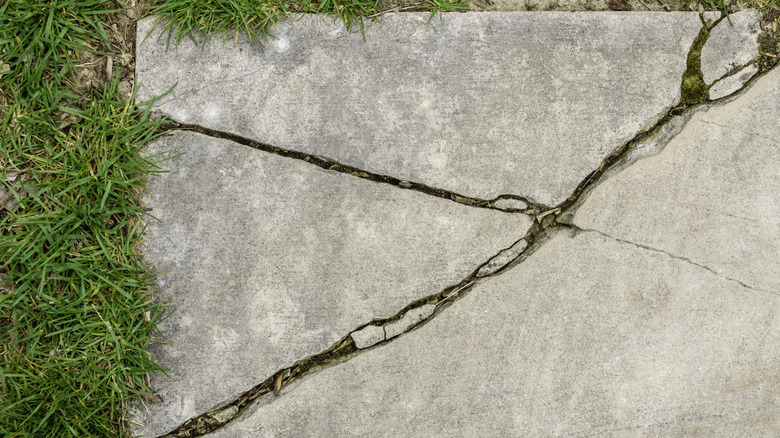
Cracked, frost-heaved, or uneven paths and steps are a serious hazard in winter. Ice, snow, wet leaves, and even just a wet, mossy step pose a risk of falls or trips. The same goes for sunken pavers or a randomly raised patio slab edge. Particularly on steps and pathways you use frequently.
After a storm or a mid-winter thaw, walk all of the main pathways and patio areas around your property, slowly. Look for things like tilted or cracked pavers, sunken areas, puddling water, and icy patches. Basically, anything that can trip you up or make you slip or fall. Mark every area with a flag, stake, or similar, and then get to work. You might want to grind down protruding concrete lips that are catching your toe, and you should lift and replace broken pavers, too. This is especially important near entryways that get a lot of use, like your front stoop. If it's not too cold, winter is also a good time to make minor repairs or patches to concrete. If you seal gaps and fill small spalls and chips, you prevent the problem from getting worse as winter progresses.
Improve yard drainage where water regularly pools
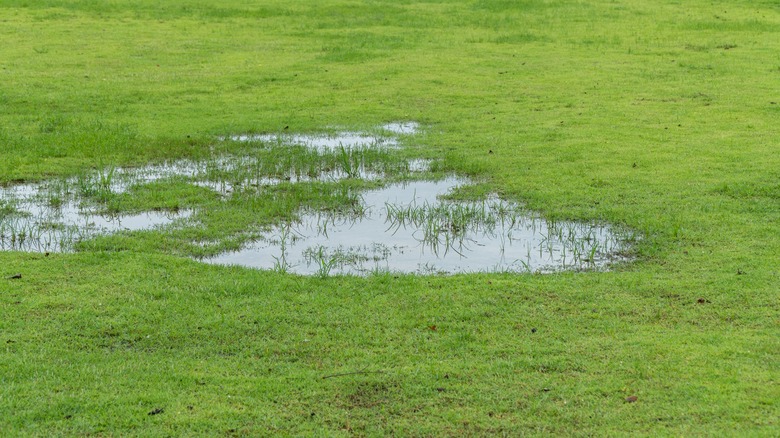
Winter is the best time to spot significant drainage problems. Repeated rain and snowmelt show you where water collects instead of draining away. If you pay attention, you'll see which parts of your lawn stay boggy long after the rest has adequately dried out. You'll also see how close pooling water gets to the house and whether you've got depressions that cause water to run toward the house's foundation instead of away from it. All of these issues, if not corrected promptly, can create expensive mold and moisture problems, stressed plants, struggling lawns, or a high mosquito burden.
During the next wet spell, watch how the water moves. Take note of where it flows, pools, which direction it moves, and where drainage is fast or slow. Mark problem spots with stakes and take photos, too, so you can find and fix the areas even when they've dried up. You can't necessarily do a lot of significant drainage improvement in winter, because you don't want to overwork the winter soil. However, you can still reshape shallow swales, adding a French drain to divert water away from the house where it can drain freely. If you have a lot of storm runoff issues, then installing a rain garden is a very useful tactic, as it collects the runoff, sequesters a lot of the pollutants in it, and lets the water slowly drain away without damaging the rest of your yard. For heavy digging, wait until a mild, dry spell, but do as much as you can as soon as you can so those chaotic spring storms cause less damage.
Clean and repair gutters and downspouts so water moves away
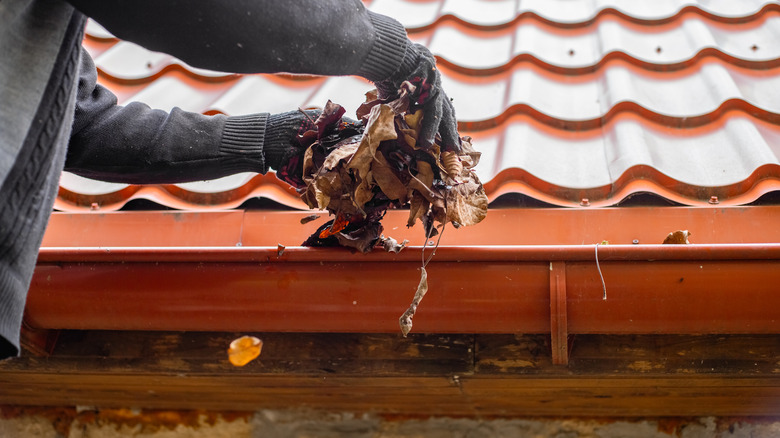
Cleaning and repairing your gutters is closely related to water drainage. If your gutters get clogged with debris or the joints get leaky, rain and roof runoff spill over the edge or between the dodgy joints and run straight down your home's walls to the foundation. You end up with saturated siding and soaked soil. Extra water sitting at the foundation for prolonged periods is asking for expensive trouble in the form of mold and damp issues, and significant structural issues long term.
Prevention is always better than cure, so keeping on top of guttering and downspouts should be a non-negotiable part of your regular home maintenance schedule. Get a ladder and manually clear gutters of leaves and debris, and do the same for your downspout if it's accessible. You can also hire a pro if the downspout is too blocked up. Once they are clear, one of the best ways to keep your gutters clean is to install gutter guards, like Raptor stainless steel gutter guards, that let water in but exclude leaves and other debris. This is ideal during the winter when trees are bare, and leaves are few and far between. For sagging guttering, look for missing or broken hangers that you can easily replace. Check that downspouts are firmly connected and anchored to the wall, and if you find the water discharge isn't running away from your house, add French drains or at least install a temporary extender, such as the Hahome flexible downspout extension, to direct water properly until you can regrade.
Tighten up loose steps, railings, and handrails
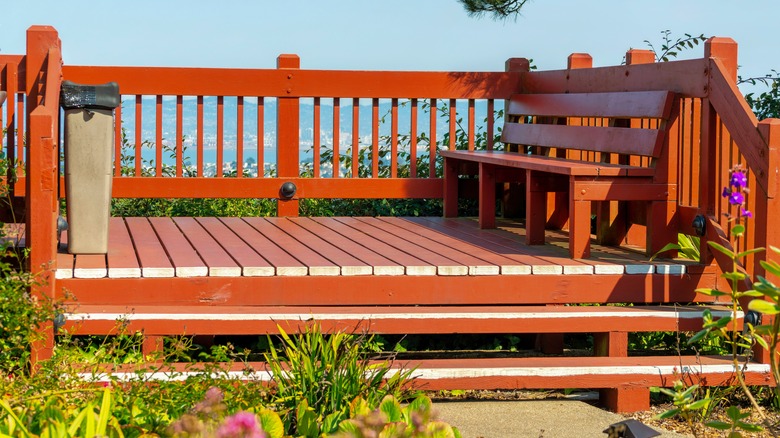
If you really think about it, winter is when you rely on handrails, railings, and solid steps the most. If you slip on an icy patch, you reach out and grab the nearest railing. If someone in your home has mobility issues, you likely have grab bars outside the front door so they can steady themselves as they navigate the front step. If those rails and bars or the steps themselves are wobbly or unsafe, a simple trip could turn into a really nasty accident with significant injuries.
Ideally, you already took care of this stuff in the fall when the weather was better, but if you simply got behind on your chores list or the problems didn't present themselves until winter, you need to fix them as soon as possible. It's not a good idea to put off such serious safety issues until better weather rolls around. Instead of waiting for someone to have an accident, be proactive and check all the railings, handrails, grab bars, and steps on the outside of your property. See if any steps are uneven or shift when you step on one side, and give any grab rail a wobble to see if it's loose. If you spot any of these issues, fix them right away if you can. If not, let your household know to take extra care with the unsafe thing until you can fix it. Tightening or replacing screws, adding proper, stable brackets, replacing rotten sections of handrails, and even resitting or replacing a stringer shouldn't be that difficult or time-consuming.
Inspect and repair deck boards, rails, and connections
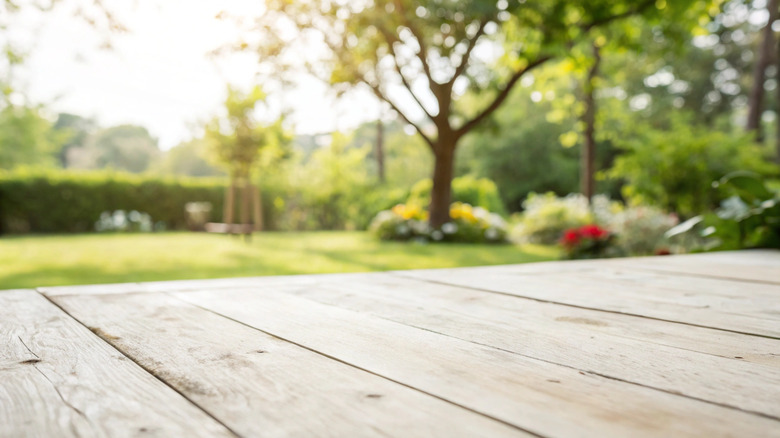
Don't neglect your deck. Even though winter is when your decking gets the least amount of regular use, it's actually the time when problems are the most obvious. Snow, rain, and ice all soak into weak spots in the wood and will show up as spongy boards and rusting fasteners. You'll also notice decking rails that feel wobbly or have too much "give".
Walk over your deck slowly after a long wet spell and check every board for sponginess. Look at fasteners to see if they're rusting or loose. Check railings for infirmity, too. And be cautious. If you haven't cleaned the deck and it's got an algae or moss buildup, it can be extremely slippery and dangerous when wet. If you can, check underneath, too, for rusted joist hangers, weak joists, obvious damp spots or water pooling, and loose or rusted hardware. You can't replace your whole deck in the middle of winter, but you can, at least, zone off dangerous parts if the damage is extensive. And, if the damage is localized, you can replace a few fasteners, boards, edging, and railings without too much trouble. If it's extra slippery, you may want to have the deck cleaned thoroughly during dry, milder weather, too. You can add anti-slip tape, like Trazon heavy-duty anti-slip tape, or rubber matting as an interim safety measure.
Fix or replace rotting fence posts and damaged panels
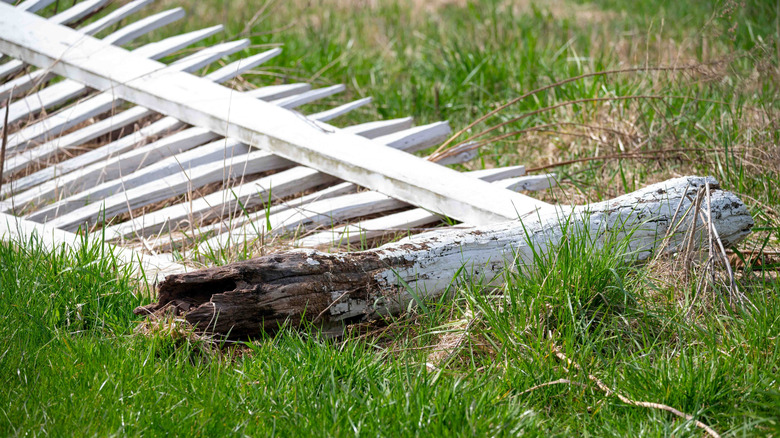
Winter weather is extra-tough on fences. Saturated soil, scouring winds, frost penetration and heave, and stormy conditions all put extra stress on fence posts and panels. You may have checked your fencing in the fall and thought it seemed absolutely fine, but winter can quickly make any existing weakness worse. If a post, for example, was already starting to deteriorate below the soil level but seemed sturdy enough when you gave it a shove back in the autumn, constantly wet soil can cause rot to speed up, and then a strong wind can cause the post to break.
It's a good idea to check the fence line after every round of bad winter weather. Push posts gently to test whether they feel spongy or have too much give. Check for signs of decay where posts and panels meet the ground and look for loose panels, cracked rails, and leaning sections. You don't want to tackle a brand new fence installation in the middle of winter, obviously. However, you can still replace individual rotted posts with new, properly set ones. And you can repair or replace single broken rails and panels. Winter will also show you where you've got water pooling along the fence line, so you can take the opportunity to improve drainage around always-wet post bases by digging and then backfilling with gravel.
Seal small cracks in concrete driveways and patios

Winter conditions accelerate damage in concrete driveways and patios the same as they do for fencing and decking. If you've got hairline cracks, they probably don't look terribly dramatic, and the driveway still securely holds your car, and the patio still serves as a place to walk and sit. But water seeps into those tiny gaps and, as it freezes, it expands. Over time, with repeated freezing and thawing, those small cracks can grow into spalls, chips, and much wider and more problematic cracks. They can also eventually be trip hazards. But you do have options for sealing driveway cracks, even in winter.
Inspect your driveway or patio during dry weather, looking for small cracks, chipped corners, and low spots where water tends to collect. Pay particular attention to damage on front walks, garage aprons, patio doors, and anywhere where safe footing is important. To make repairs to small areas, you'll need to wait until the ambient temperature is within the sealant manufacturer's recommended range and the surfaces are dry. Then you can clean out loose material and fill minor cracks with concrete caulk or a filler kit. It's also a good idea to apply a concrete sealer on top and on any other vulnerable surfaces to help shed water and prevent penetration and ice expansion.
Patch and repaint damaged siding and exterior trim
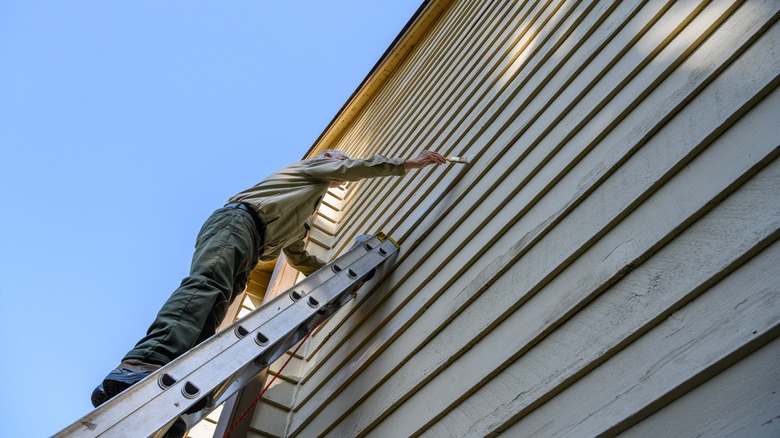
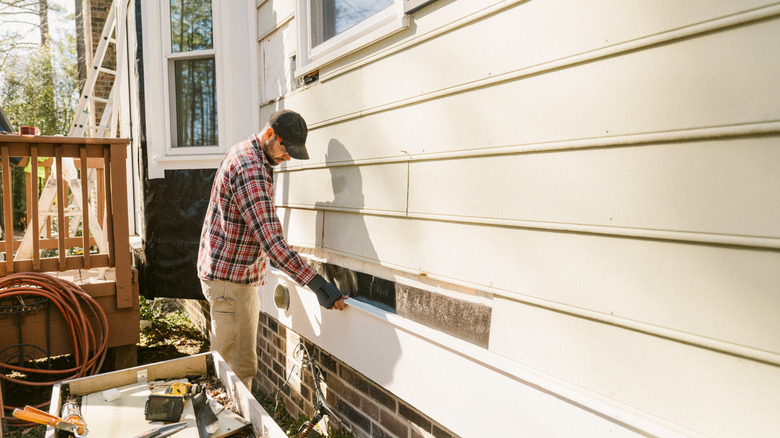
If you've got damaged siding and exterior trim, or gaps around windows and doors, they'll just get worse over winter. Peeling paint, soft fascia boards, cracked siding, missing caulk, and trim around windows and doors all let water into the frame of the building. And when it freezes, the water expands and forces the gaps wider, exposing more of the wood to decay and speeding up rot. These are all jobs that lots of people tend to put off, so if that's you, know that you're causing yourself bigger headaches by waiting.
Do an exterior check: Look for bare, spongy wood, blistered and peeling paint, swollen siding, cracked caulk joints, missing weather stripping, and anywhere that water spills down. You can even gently use a screwdriver to check for softness on suspicious areas. Winter weather isn't terribly predictable, though, and it's not generally the best conditions for painting siding, so you'll need to pick a dry day to tackle any of these and stick to fixing or patching one thing at a time, or you'll risk exposing multiple half-finished jobs to the next rain or snow squall. Scrape loose paint, clean and sand the area, and repaint. If the temperature is within the recommended range, you can also recaulk exterior window and door frames to seal gaps and reduce energy loss. If there's missing weatherstripping, winter is a great time to replace it. Patch small holes with exterior filler and spot-prime base wood. Leave larger repainting jobs for when the weather improves and temperatures are consistently above freezing. But patching during winter, even if it looks a bit messy, stops the damage from getting worse until you can complete the job in the spring.
Service irrigation lines and sprinkler heads while the system is off
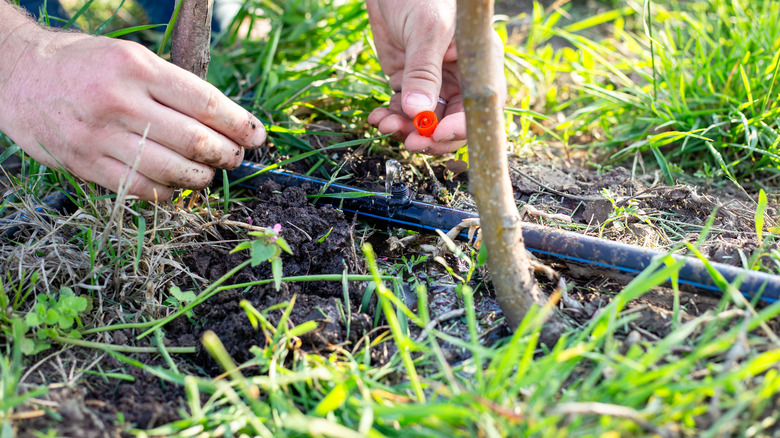
Over the winter, your irrigation lines and sprinkler heads can develop issues if you've not winterized them. If there's water still lurking in there, it'll expand when it freezes, which can cause cracks in lines and leaks at joints and around fittings. Servicing your system in winter makes sense. It stops any damage from getting worse and, because the garden tends to be a little barer, with less foliage to get in the way, you can spot issues more easily.
Check over the entire irrigation system for leaks and weak spots. Make sure lines are in good condition, sprinkler heads are intact and aren't tilting, and that risers aren't cracked. Valve boxes should be free of standing water, and there shouldn't be any corroded connections. Straighten and reset any off-kilter heads, replace damaged nozzles, tighten visible or loose threaded joints, and replace any damaged sections of hose. Even if you have to replace a single head or a valve, that's still less expensive than the typical cost of repairing a sprinkler system.
Repair or upgrade outdoor lighting for safety and security

With daylight length at its shortest, good outside lighting is super-important in winter. Broken bulbs, poorly aimed light fixtures, and darkness around steps and pathways are all problematic and potentially unsafe. Plus, not having good exterior lighting is a safety concern for many people.
As soon as you notice a burned-out bulb, replace it. Go outside in the dark and look at exactly where your exterior lights illuminate, and think about whether there's light missing from pathways, steps, and entryways. You might just be able to adjust the angle of your existing lights. But if that's not possible and you don't want to add extra security lights, you can also choose from plenty of other outdoor lighting options. Maybe add solar or LED pathway lighting, such as Rirz wired LED 32" pathway lighting, to illuminate the main path to your front and back doors. Even string lights can add a playful but useful illumination option. And you can improve safety and the look of your entryway by adding a pair of sconce lights that flank the doorway.
Prune back dead or risky branches near structures

When plants go dormant, it's the best time to deal with problematic branches. Not all trees and shrubs should be heavily pruned in winter, but if a branch is diseased, damaged, or poses a risk to your home, you should take care of it as soon as you spot the problem. But don't bite off more than you can safely chew. If a branch is big, the tree is tall, or you're not sure how to remove it safely, call in a professional to handle it for you. Using a tree surgeon is far less expensive than repairing a huge hole in your roof.
You're checking for deadwood, which has brittle twigs with no trace of green inside, has no buds, or has obvious rot, fungi, and peeling bark. If you do spot fungi, decay has most likely already set in. Crossing limbs, especially where they're too close to the house, can be problematic, as they rub against each other and cause damage to themselves. And take a good look at which branches are too close to structures and powerlines. Even if they are healthy, if they get hit by a storm, they could potentially cause real damage and should probably be removed as a preventative measure. Recheck trees and large shrubs after every storm or heavy snowfall so you can spot and remove damaged limbs ASAP.
Inspect foundations and masonry for early signs of trouble
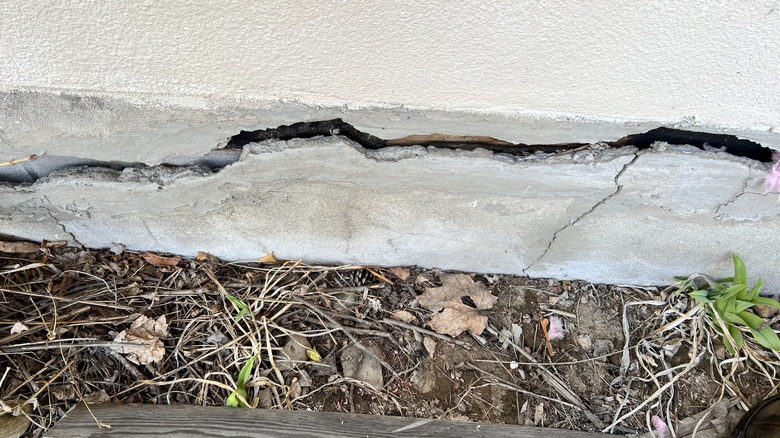
Foundations and masonry can suffer a lot during winter weather. In very cold weather, or with time and subtle shifting, concrete foundations can start to crack. Moisture gets in, temperatures drop, the water freezes and expands, and the gaps get wider. Once it thaws, more water gets into the widened gap, the temperature drops, it freezes, and the cycle continues. Over time, this can cause serious damage to the foundation and can also cause mold and damp issues inside the property.
Make sure discharge from downspouts flows away from the foundation. If it's pooling close to the house, get a flexible extender to direct it further away from the house. You also want to clear snow away from the foundation instead of letting it build up. While snow is an effective insulator, once it starts to melt, it increases moisture pressure right against the foundation, so keep the perimeter of your home as snow-free as possible. Throughout the winter, especially after a period of bad weather, check the exterior for signs of bad foundations and water ingress, like new cracks and crumbling masonry. You can tackle minor cracks yourself when temperatures are high enough to allow the sealant to cure. But more significant issues need professional help before they get out of hand and become super-expensive.