

This Vintage Planter You Can Find At The Thrift Store Is More Dangerous Than It Looks
If thrifting is your favorite weekend activity, you know that finding something you didn't know you had to have is part of the game. You may peruse the clothing racks for a too cheap to pass up Ralph Lauren original, or check the furniture aisles for a vintage island you have to try in your kitchen, but never think to check the garden department. A valuable addition to your landscape design might be hiding there. Planters made by Swiss designer Willy Guhl, treasured by designers for indoor or outdoor use, add instant interest and can also fetch top dollar. Unfortunately, these planters come with a major warning. The material Guhl used to create his planters contains asbestos, a dangerous product that can cause lung cancer and mesothelioma.
The most famous Guhl piece, dubbed Diablo, is a geometrical hourglass shape that looks like two martini glasses joined at their bottoms. Other designs resemble a chalice with a jaunty tilted top, a large half-clamshell, and a simple box. The squatty Marmite planters have a round body with three short legs that taper before widening again at the top. Geometrical handles stretch from the lip to the belly, resembling arms akimbo. Guhl designs are fairly easy to spot because they stand out among the more mundane pots and planters in the garden section of a thrift store. Guhl's minimalist style, typical of mid-century modern design, combined with the durability and weather resistance of the material, makes them a prized find for garden enthusiasts who may or may not know they contain asbestos. Unlike a thrift store lamp with a frayed electrical cord, the danger posed by the Diablo planter isn't obvious.
The danger associated with Willy Guhl planters
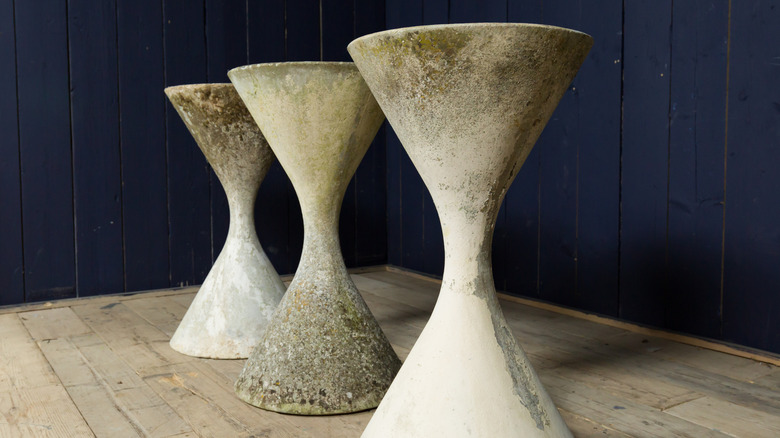
Designer Willy Guhl, born in 1915, specialized in sculptural garden pieces. He began his career as a cabinetmaker, but didn't limit himself to garden design when he shifted his focus away from cabinetry. He is best known for using the material called Eternit, a fiber cement containing asbestos that's both lightweight and durable, in his outdoor furniture and planters. He created most of his planters in the 1950s and 1960s, and they are now cherished by landscape and interior designers looking for a planter for a houseplant that's perfect for a mid-century modern home. Retail prices for Diablo planters can reach into the thousands of dollars if they're originals and are in excellent condition.
Asbestos is most dangerous when the tiny fibers in it are inhaled. Experts agree that products that contain asbestos, like linoleum floors, can be safe as long as they're contained and remain undisturbed. If you own or unwittingly bought a Willy Guhl planter made from Eternit, check for damage that might lead to asbestos fibers being released into the air. If your planter is undamaged, and you're certain that it will remain so, it should be safe. As an added protection, consider coating it with a durable product like polyurethane if you decide to keep it. Just remember to wear a breathing apparatus, gloves, eye protection, and long sleeves while you're doing this. Damaged planters should be disposed of properly, but before you get rid of an undamaged planter, call a local museum or gallery and ask if you can donate your piece.