

New Furnace Law Passed In Colorado That May Raise Prices: Is Your State Set To Follow?
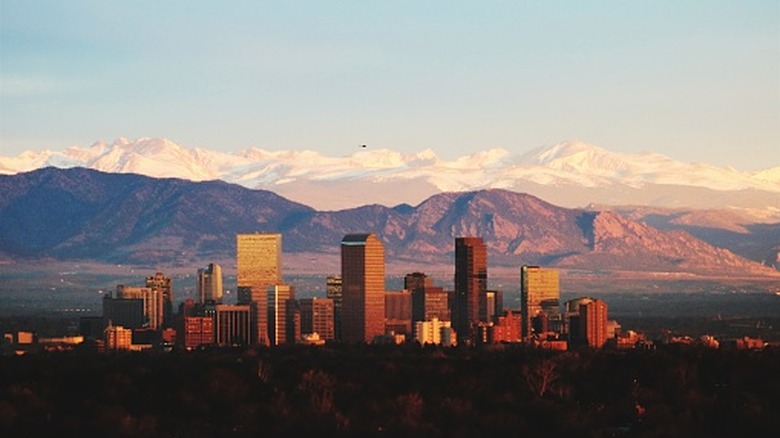
Colorado homeowners are experiencing a shift in their heating choices and budgetary planning after Colorado House Bill 23-1161 went into effect on Jan. 1 of this year. Aimed at controlling air pollution, improving visibility, mitigating climate change, and ensuring compliance with the Federal Ozone National Ambient Air Quality Standards, the law regulates manufacturing, leasing, installation, and replacement of gas-fired, fan-type central furnaces. Going forward, contractors must install equipment that either meets ultra-low nitrogen oxide (NOx) emission standards or the latest Energy Star Program requirements, unless homeowners are switching over to electric heat pumps.
As newer, high-efficiency models are priced higher than existing models, Colorado homeowners can expect to spend an additional 40% to 200% (depending on the model) whenever they're in the market for a new heating unit or replacement. Although regulators believe that higher efficiency levels will drive down utility costs, which should help recoup the higher upfront costs, such savings would vary across usage levels.
Colorado is not acting alone. States such as California, Washington D.C., and New York already have similar appliance efficiency standards, with some outright phasing out gas furnaces in new home builds in the coming years. Other states, including Maryland, are actively working on their energy mandates and may announce them in the near future.
Why Colorado enacted the new furnace law, and how it affects you
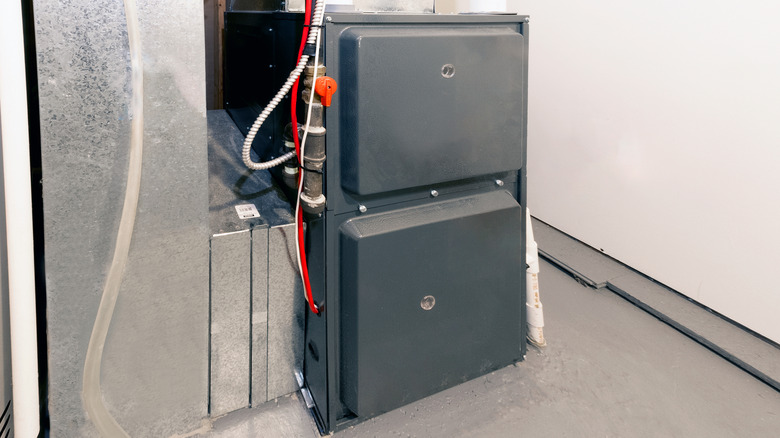
Colorado is targeting nitrogen oxides (NOx), byproducts of burning fossil fuels, that contribute to ground-level ozone and smog formation. High NOx emissions have drastically reduced air quality, aggravating asthma, cardiovascular ailments, and respiratory issues, with low-income households affected disproportionately. The new law requires new furnaces to emit less than 14 nanograms of NOx per joule of energy — a reduction of about 85% compared to existing equipment. This should also help put a lid on ground-level ozone formation, enabling the state to meet the EPA (Environmental Protection Agency) standards and decarbonization goals.
But because ultra-low NOx equipment has steep pricing, upwards of $8,000 in most cases, and has limited availability until manufacturers ramp up production, the Colorado law also permits the use of the latest Energy Star labelled appliances. They aren't as expensive, are up to 4% more efficient, and reduce annual utility bills by about $70. Although homeowners aren't expected to replace their existing units, they must plan for higher replacement costs down the road. Typically, furnaces can last between 15 and 20 years. So, if your unit is approaching the end of its useful life or has required significant repairs in previous years, you might consider replacing it now. Since the furnace law allows manufacturers to sell their old inventory until it's exhausted, you can still snag new units at a lower price. Or, you could make use of rebate offers when it's time to replace your furnace or switch to electric units.
Where other states stand on furnace laws
Apart from Colorado, many other states on the West and East Coast have adopted or are planning to adopt stricter furnace emissions standards. In fact, California was the trailblazer, having announced a complete phase-out of all gas-driven furnaces and water heaters in 2022 for zero-emission units, including heat pumps. These rules will likely be implemented in 2030, though in the San Francisco Bay area, they start as early as 2027.
However, with California air-quality regulators recently rejecting these rules in their 2025 review, it remains to be seen how soon (if ever) homeowners are expected to cough up higher prices for heating. Washington, D.C., similarly expects new residential buildings to completely switch over to electric heating by 2026, though they're allowed to retain a gas-driven system as a backup. New York, too, banned the use of gas hookups in new single or two-family homes and townhouses after Dec. 31, 2025. However, with the All-Electric Buildings Act under legal dispute, the implementation has been paused until the ruling.
Maryland is actively considering adopting a zero-emission heating equipment standard (ZEHES), along with nine other states. Although it has yet to propose regulations, it plans on eliminating gas furnaces by 2035. Other states including Maine, Rhode Island, Massachusetts, New Jersey, and Oregon, having come together through NESCAUM (Northeast States for Coordinated Air Use Management), plan to accelerate the adoption of heat pumps by 2030, and could issue new rules accordingly.