

The Evergreen Shrub You Should Prune Before January Is Over
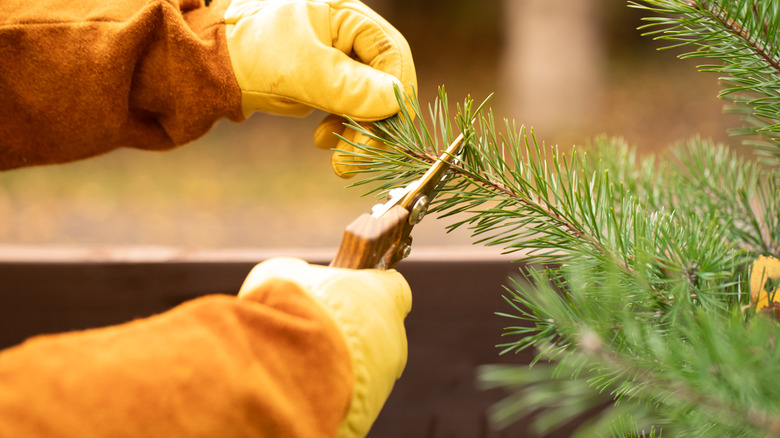
Not all evergreens require pruning — being low-maintenance is part of their appeal — but some can benefit from it. One example? Arborvitae (Thuja spp.), a lush, fast-growing conifer native to North America and Asia. This plant is widely beloved for its durability and versatility in a range of regions, and it's one of those evergreens that can give you privacy year-round. In the U.S., American arborvitae (Thuja occidentalis) and Western red cedar (Thuja plicata) are two of the most common varieties. Its hardiness varies, but the aforementioned subspecies fare well in USDA Zones 2 through 7 and 5 through 7, respectively.
Though trimming isn't necessary to get arborvitae to grow, it's important for maintaining its desired appearance. Luckily, January is one of the best months of the year to prune arborvitae. Since this plant is dormant in the colder months, it's not actively growing any larger, which makes this a prime window to crop it to your preferred shape and size. Keep reading to learn more about the do's and don'ts for trimming arborvitae before January is over, including the proper method for your landscape design preferences.
The correct way to prune arborvitae in the winter
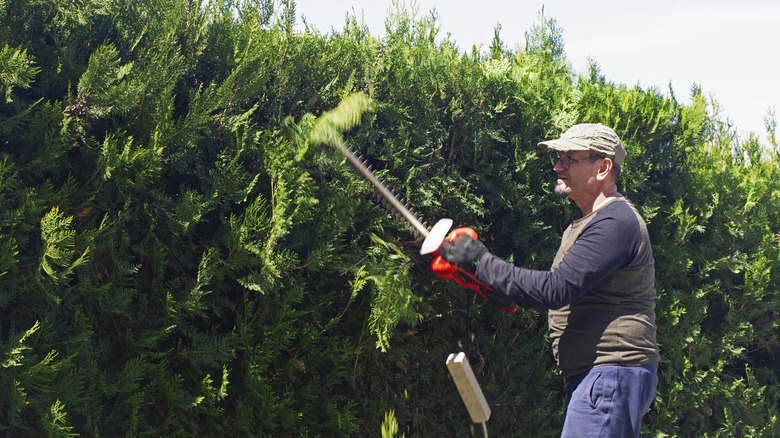
When pruning arborvitae, take care to preserve its natural conical shape. This evergreen shrub grows densely, and over-trimming it can result an unnatural, excessively manicured look. You'll also want to wait until it's established and at least two years old before pruning it substantially. Begin by getting rid of any dead or visibly diseased branches — those aren't helping the plant. Then, lightly shape it, trimming slowly and methodically to ensure that you don't go overboard and create gaps. You can use a hedge trimmer, but pruning shears are best for precision.
Has your arborvitae grown too tall or too wide for your tastes? In the first scenario, using pruning shears to trim the tallest branches can help reduce its overall height. The latter scenario is a bit more complicated. In general, arborvitae isn't tolerant of heavy pruning. You never want to remove more than a third of this plant's existing foliage. With that potential pitfall in mind, it's important to be cognizant of how much you're chipping into the plant. Selectively removing a few of its longest, most unwieldy branches is a great place to start. Early spring is the best time to fertilize arborvitae, so keep that mind, too. And if you're on the fence about planting arborvitae in your yard? Give it some more thought. Prioritizing evergreens over perennials is an easy-to-maintain trend that can make your garden more lush in 2026.