

How Often You Should Really Be Disinfecting Your Mop And Broom
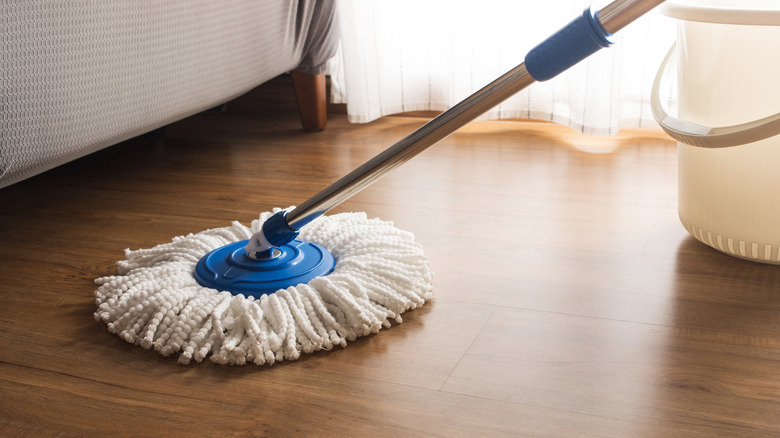
Sure, cleaning tools such as mops, brooms, sponges, brushes, and rags help us to keep our homes sparkling clean. But if you can't remember the last time you deep-cleaned your cleaning tools, then chances are your chore days aren't as effective as they could be. In fact, cleaning your home and belongings with dirty, infected tools such as mops and brooms is not only ineffective, but it can be harmful to your house and your health. While the last thing we want to do is add another chore to our chart, this one might be the most important. Without clean tools, your house will not be clean.
You may have heard the age-old tip that you should replace your kitchen sponge weekly. Believe it or not, your mop head's lifespan is not much longer than that. In fact, if you own a string mop head, you should not only be regularly cleaning it, but you should be replacing it every two to three months. Microfiber mops will last longer and should be replaced every 500 washes. You should also clean your mop head after every single use, either with soap and water or by tossing it into the washing machine. Brooms, on the other hand, can last a bit longer, typically requiring replacement every one to two years, as long as you clean them regularly.
How to properly disinfect your mop
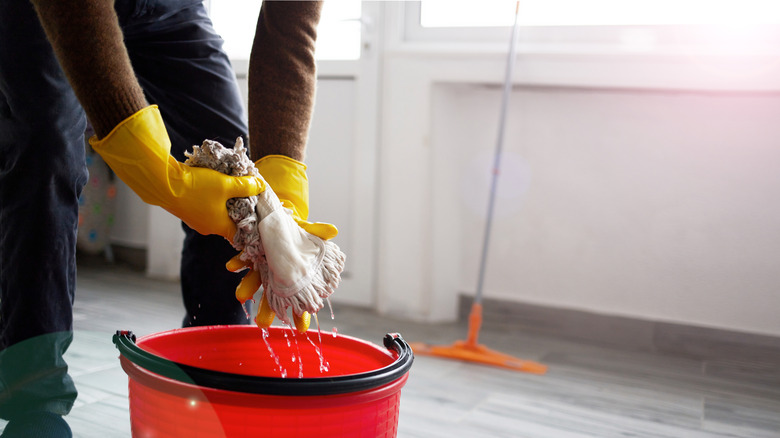
Some of you may have a Swiffer mop, which notably uses single-use mopping pads, practically eliminating the mop-cleaning process. However, if you own a string head mop, you will need to clean it after every use, as well as deep clean it every three to four uses to disinfect it. Trying to clean a dirty floor with a dirty mop head is like trying to wash a dirty dish with a dirty sponge. In the end, you'll just be moving dirt around as opposed to actually getting rid of it. After you've mopped your floors, you should take a few extra minutes to wash the mop head, which will not only help your next chore session be a breeze, but it will keep your home smelling fresh and clean.
To sanitize your mop head the right way, you can either clean your mop in the washing machine or grab a few simple ingredients: a bucket, water, and dish soap. For the latter method, first rinse your dirty mop head with clean water to get rid of any large pieces of gunk and dirt. Next, add a few drops of dish soap to your mop bucket and top it off with water. Add your mop head and swirl it around. If your mop bucket has a built-in wringer, you can use this feature to drain out excess water and soap from the mop. If need be, you can rinse the head again to wash out any leftover soap. While that process should be completed after every mop use, you should also deep clean your mop every three to four uses using bleach. Combine one gallon of water with about one cup of bleach into your bucket and let your mop head soak in the solution for up to 30 minutes before rinsing and wringing it out.
How to properly clean your broom
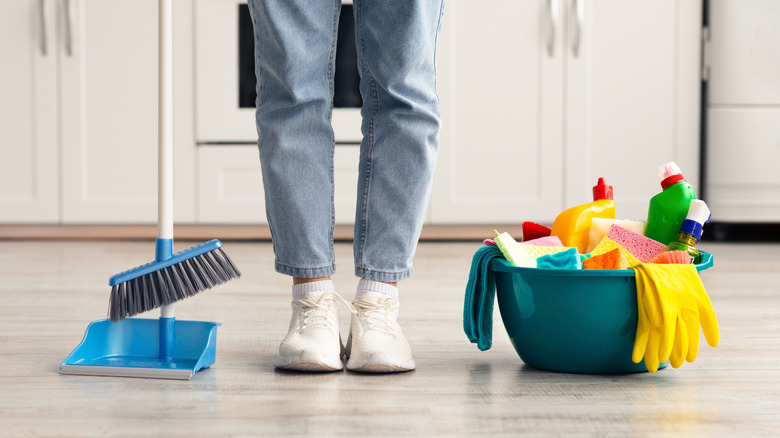
While your broom may not require as intense a sanitation process as your mop head does, this tool still needs to be regularly cleaned to ensure your chores are actually effective. Depending on the typical state of your floors, your brooms may need to be regularly shaken, combed through, or wiped down every few uses. Some experts recommend a cleaning your broom four times a year to get rid of residual hair, dirt, grime, etc. You can use your hands or a vacuum attachment to clear out the bristles.
For a clean and long-lasting broom, you will need a wash or mop bucket, as well as a few drops of dish soap. You can even add a small amount of bleach for extra sanitation. Dip your broom head into the soapy mixture and leave it submerged for about 30 minutes to remove all of the buildup. Note that plastic-bristled brooms can be soaked for 30 minutes, while other, more natural ingredient brooms should not be submerged for more than 15 minutes. Once the timer is up, you can rinse your broom with clean water and hang it up to dry. (Don't forget to wipe down and clean your dustpan as well.) Your broom should be replaced every one to two years.