

Plant This Perennial In January For Stunning Blooms That Last From Summer Until Fall
In the heart of winter, your yard may be draped in shades of gray and white, but January is the perfect time to take out your sketch book and plan your garden. It's also not too early to start some seeds indoors, including plants for your pollinator garden like the underrated perennial flower, Astrantia (Astrantia major). Astrantia, also known as masterwort, is hardy in Zones 4 to 7 and provides stunning blooms from summer to fall. It grows best in a shady garden with moist soil and is used as a low-maintenance and trouble-free companion plant to cottage garden favorites like yarrow, cowslips, and betony.
Astrantia is actually a genus of small plants that grows in clumps of dense green foliage and gets about 1 ½ to 2 feet tall. Astrantia species are members of the carrot family, native to Asia and Europe. They are quite popular in English-style gardens, and the color and texture of Astrantia makes it a good filler in perennial flower beds. It's easy to see why this showy flower attracts so many pollinators with its long stamens and papery bracts. However, from a distance, these unassuming plants blend into the background, so they're typically used to provide the perfect backdrop to other flowers in the garden. With a variety of colorful cultivars available, Astrantia are right at home in any cottage, pollinator, or woodland garden.
How to plant astrantia from seed in the middle of winter
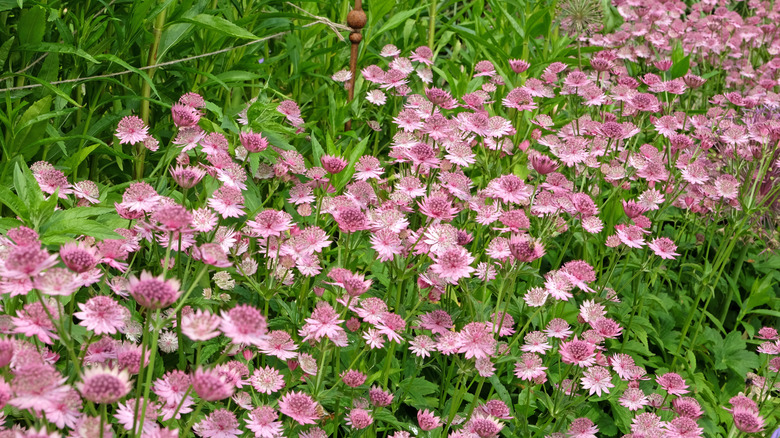
Astrantia is a beautiful late summer flower that'll draw pollinators to your garden, but January is a good time to start the seeds. Starting perennials from seed is one of the most economical ways to fill your garden with flowers, and there are a variety of techniques to use during different times of the year. Astrantia requires about two to three months of cold stratification to ensure germination, which is just a fancy way of saying that the seeds need a period of cold that mimics winter conditions. Cold stratification can be achieved using techniques such as winter sowing, and can be done from late fall to winter. Unheated porches and sheltered areas behind your garage are some examples of the best places to use moist chilling methods.
In some climates, you may be able to sow directly outdoors, but if you're starting the seeds indoors or in a greenhouse, you'll want to ensure a temperature of about 35 to 45 degrees Fahrenheit, which mimics natural conditions. You can plant your seeds in flats or milk jugs, but just be sure to avoid common mistakes like overwatering and overexposure to sunlight. Scarifying the seeds before planting may help them germinate.
One of the most difficult parts of growing Astrantia is choosing from the different cultivars available. From the white-flowered Astrantia major 'Alba' to the vibrant purple 'Abbey Road', the list also includes various shades of red and pink. Some more unusual cultivars include 'Vanilla Gorilla', which has variegated green and white flowers, and 'Sunningdale Variegated', which has gold-edged leaves and pinkish flowers.