

The Sustainable Garden Trend We Want To See More Of In 2026 (& The Best Plants For It)

Green spaces gained popularity in public areas in the form of parks that were used as a healthy place for social interaction between the upper and middle classes in England during the Victorian era. However, America already had public nature spaces like the Boston Common since the early 1600s. People believed that being in nature was more sanitary than meeting in close quarters. As cities grew and urbanization took over, green spaces began expanding from public parks to indoor and outdoor gardens for public facilities and businesses as a key aspect of sustainable, healthy recreation and education. One sustainable gardening trend that is gaining popularity in 2026 blends infrastructure and nature in public and in the home with rooftop gardening. It favors lightweight plants with shallow root systems, and those that can provide extra value, such as vegetables and herbs.
Rooftop gardening isn't a new concept. These gardens have been around since the dawn of time, from Egypt to Babylon. Yet, back when public parks became the hub of social interaction in the 1800's, there was a clear distinction between gardening and farming. Gardening was reserved for private estates and the aristocracy, whereas the working and lower classes would farm to produce food and herbs to survive. After public parks and green spaces became popular, rooftop gardening regained popularity as a sustainable gardening solution that was quickly labeled a 21st-century trend. Between the countless benefits and the accessibility to all types of people, we're hoping to see rooftop gardens flourish in 2026.
Rooftop gardening: what it is and why we need more in 2026
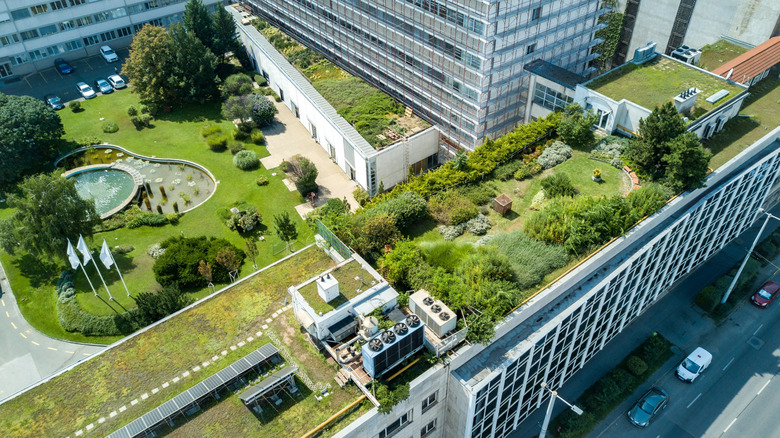
Rooftop gardening is the practice of creating a full-scale garden on flat roofs. While container gardening can be a form of rooftop gardening, the trend we have our eye on is the installation of waterproofing, soil, irrigation, drainage, and a root barrier. These can be installed in the form of modular garden boxes or as a permanent part of the infrastructure.
Rooftop gardening provides a wide range of public, private, and design benefits that shouldn't be ignored. Some of these benefits include waste diversion, stormwater management, moderation of the urban heat island effect, improved air quality, energy efficiency, increased roofing durability, fire retardation, reduction of electromagnetic radiation, noise reduction, and increased biodiversity, to name a few. Not to mention, the gardens look amazing!
Whether you live in a single-family home or have property investments, rooftop gardens are part of sustainable real-estate trends, too. As such, both homeowners and renters can take full advantage of these benefits. Reports from 2025, 2024, and 2023 show that commercial buildings and apartment complexes are taking advantage of this trend, but they still only account for around 22% of buildings. Single-family homes, however, are trailing behind with less than 2% of homes having a true green roof. With new policies and incentives for homeowners, the outlook for the continued growth of this sustainable gardening trend is positive for 2026.
Choosing the best plants for a rooftop garden
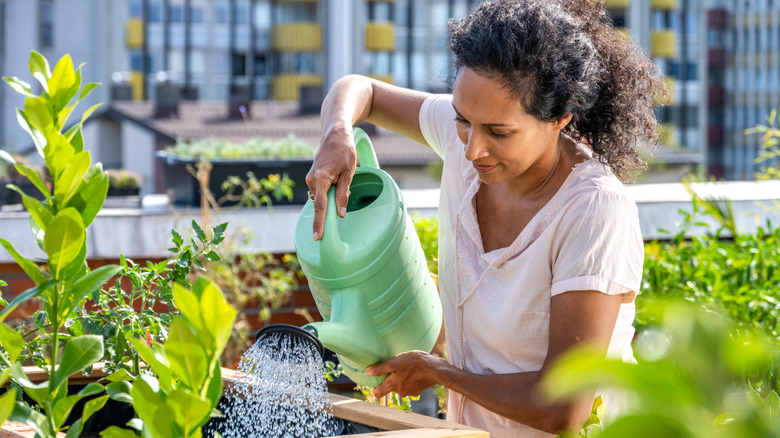
With the right setup, you can easily repurpose your rooftop space to be the ultimate retreat space with a green roof, but you still need to select the right plants. As much as these installations act like normal, in-ground gardens, your roof still has its limits. With all the extra layers of protection, water, and soil, the added weight of certain plants could be a recipe for disaster. Of course, the actual plants for the project will depend on the structural integrity of the building, the equipment used for the install, and the intent for the space. For this reason, it is best to consult a professional to discuss the limitations of your green roof project before making any final selections.
For residential rooftop gardens, like single-family homes or garden plots that residents can use at an apartment complex, consider plants that are lightweight but provide value. Herbs, succulents, and dwarf vegetables are good options for smaller spaces. You can also include low-maintenance flowering plants that thrive in the sun or provide benefits for your other plants. If you go with modular garden boxes, you may want to consider plants that do well in containers. On the other hand, if you have a permanent installation, you may want to consider plants that have a shallow root system. Some notable options include peppers, kale, collard greens, sedum, elephant ears, ficuses, irises, petunias, calla lilies, begonias, hostas, kousa dogwoods, Japanese maples, eggplant, cucumbers, lettuce, oregano, tomatoes, thyme, sage, basil, cilantro, and lavender.