

Put Your Old Coffee Mugs To Work As Planters: 8 Plants That Will Thrive Inside
We may receive a commission on purchases made from links.
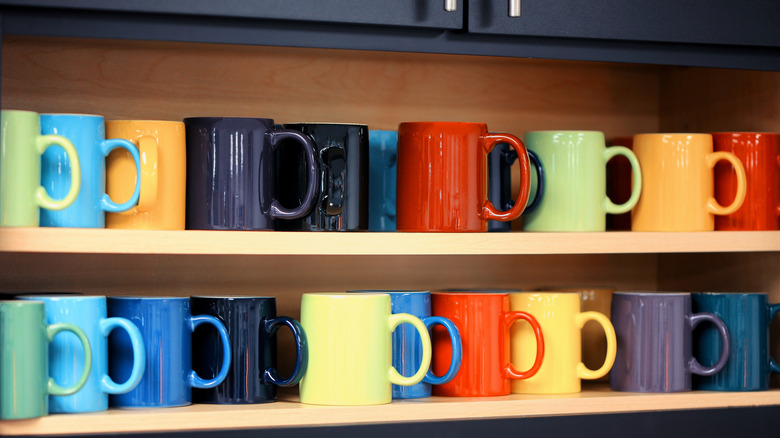
Whether you consume hot beverages or not, mugs are a staple in most kitchens. And it's not just because they make the perfect vessel for coffee, tea, hot cocoa, and plenty of other drinks. You keep them around because they are personable. They boast glazes in your favorite colors or fun phrases like World's No. 1 Dad. Then there's that souvenir you picked up while on vacation with your best friend. The problem is, odd coffee mugs don't make for a pretty, coordinated display. Keeping them hidden away in a cabinet or a box in the attic isn't the answer, either. Still, you may want to think twice before tossing old coffee mugs. Turn them into unique planters instead.
Believe it or not, coffee mugs are the perfect size for plenty of indoor greenery. African violets, juvenile arrowhead vine, moss rose, pothos, and wandering dude are just a few of the houseplants that can thrive in a ceramic cup. Ideally, you should drill a hole in the bottom of the coffee mug for drainage; it's easier than you might think. When drilling ceramic, use a carbide drill bit and wear ear and eye protection. If you don't want to drill into the mug or don't have access to the right tools, there's an affordable solution to keep your plants hydrated. You can DIY a self-watering planter. Simply fill the coffee mug with water, then place a smaller porous plant pot inside, like these 2-inch diameter Aunmas Aeroponic Net Baskets.
African violet
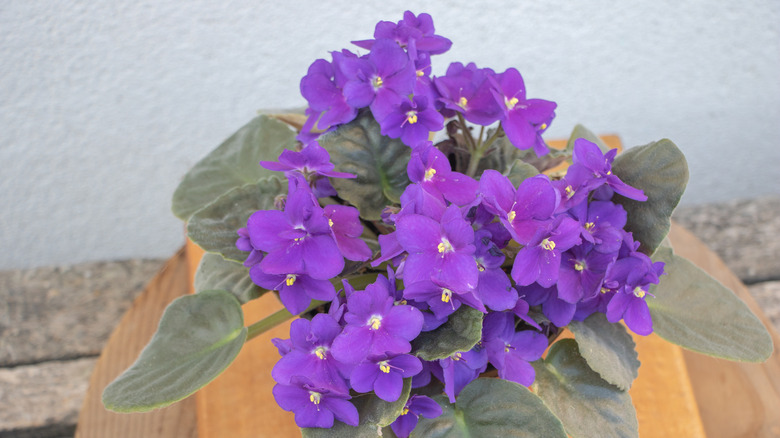
African violets (Saintpaulia ionantha) are a beautiful houseplant you can grow indoors without using any soil. They aren't the best houseplants for beginner indoor gardeners. They have some nuances when it comes to growing conditions and care. However, once you're familiar with these preferences, you should see success. In the wild, they set down roots in rocky crevices with little soil. Plant your houseplant in a self-wicking pot with glass pebbles or a specially formulated potting mix like Top Tier Genetics Premium African Violet Soil. Place it inside your coffee mug — sans drainage holes and filled with nutrient-rich water.
Aloe
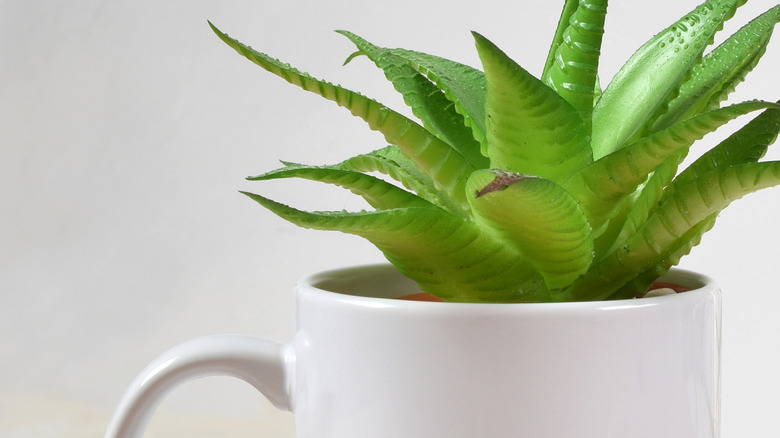
Aloe (Aloe vera) is one of the most popular succulents for indoor gardens. It's easy to care for and also has proven health benefits. Just like many other succulents, aloe thrives in small containers. In fact, it prefers to have its roots slightly constricted, which makes an upcycled coffee mug planter the perfect starter pot for a small plant. Fully grown aloes can reach up to 2½ feet in diameter, so you will eventually have to repot. When growing succulents in homemade containers, remember that drainage is essential. Drill three to five drainage holes in the mug.
Arrowhead vine
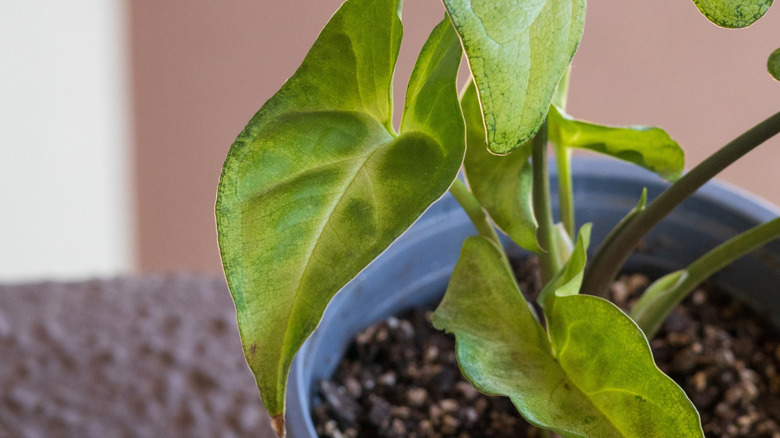
The arrowhead vine (Syngonium podophyllum) is a great option for coffee mug planters when it's in its more petite juvenile form. It's favored for its trailing habit and striking foliage. In tropical climates, arrowhead vine is grown outdoors as a perennial, but you can grow it in a small container indoors — for a while at least. Good drainage is vital to prevent root rot, so use a mug with holes drilled in it. It's a moderate to fast grower, so expect to repot your juvenile arrowhead vine into a larger planter (or mug) after about two years.
Moss rose
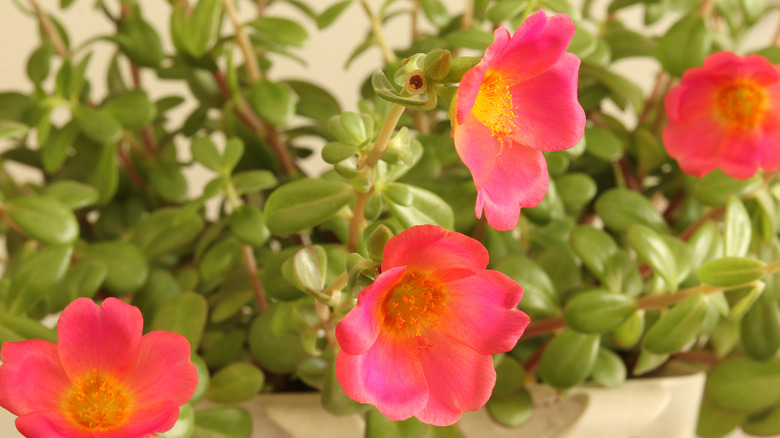
Moss rose (Portulaca grandiflora) thrives in small containers with little care; it's a cheerful houseplant perfect for your repurposed coffee mug planter. The most important thing to consider for this desert native is drainage: drill lots of holes in the mug and use a specialist potting medium, like Tinyroots Succulent and Cactus Soil Mix. Then place your potted plant in a spot that gets six or more hours of sun a day. The colorful flowers won't open without ample light. Coffee mugs are also ideal for starting moss rose cuttings, helping you cultivate new plants for free.
Pothos
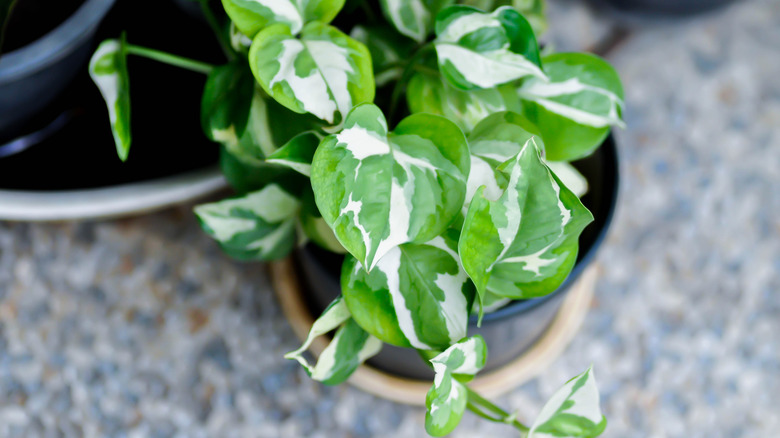
Pothos (Epipremnum aureum), also known as Devil's ivy, is widely regarded as one of the easiest houseplants to care for. Unlike some of the more delicate plants on this list (here's looking at you, African violet), vining pothos are arguably more difficult to kill than they are to keep alive. In fact, the plant is considered invasive in some parts of the U.S., so only grow it indoors. A small pothos is perfect for your upcycled coffee mug planter. Just make sure the interior of the mug is 1 to 2 inches larger than the plant's root ball.
Rubber plant
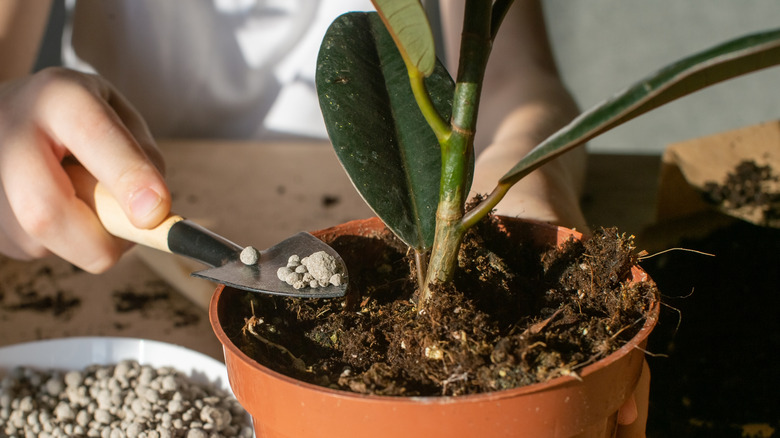
You've probably heard that rubber comes from a large tree, so growing a rubber plant in a small container — like a converted coffee mug — may not seem possible. The truth is, young, small rubber plants (Ficus elastica) do just fine in diminutive planters. Plant them in too large a pot and they're susceptible to root rot. So long as your coffee mug (with drainage holes) is about 30% larger than the plant's root ball, you can keep it in there. Prune regularly to keep your rubber plant compact, though it will need repotting after two or three years.
Spider plant
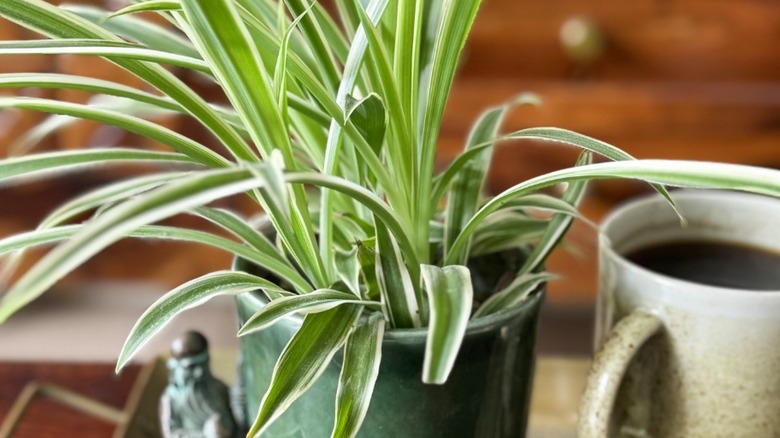
Spider plants (Chlorophytum comosum) are a common houseplant favored for their lively variegated foliage and minimal upkeep. There are lots of spider plant varieties to choose from for your indoor garden, and they should all grow well in a coffee mug planter. These grass-like plants are highly adaptable and can handle being slightly root bound; a small plant may last longer than you think in your mug before it needs repotting. If you see roots growing out of the drainage holes you drilled, observe slow growth, or notice pups, it's time for a size upgrade.
Wandering dude
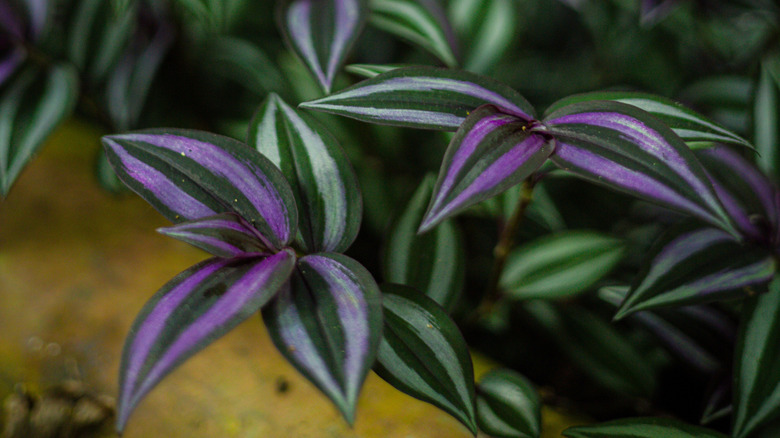
Wandering dude (Tradescantia zebrina) or inch plant has stunning deep green, purple, and silver foliage. You can easily start this houseplant in a coffee mug planter, but you will want to keep an eye on its growth. The plant may begin to decline if its roots get too crowded, necessitating a repot. Wandering dude doesn't do well in porous planters, like terracotta, because the soil dries out too quickly. Glazed ceramic coffee mugs are actually the perfect choice for this pretty plant — they make it easy to keep the soil consistently moist.