

The Best Time To Repot Outdoor Plants For Optimal Growth
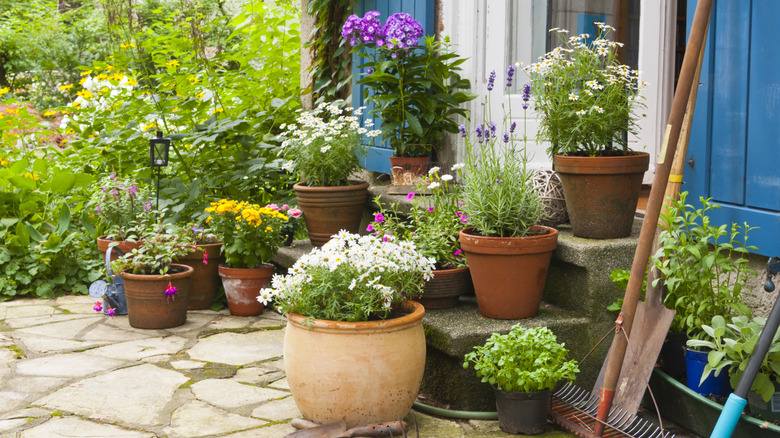
Potted plants are a big part of some garden designs. They bring life, color, and texture to enclosed outdoor spaces, like patios, decks, entryways, and balconies, while offering lots of flexibility. But they also have one problem. Sooner or later, container-grown outdoor plants need to be repotted. Sometimes they grow too large for the pot they are in; at other times, the soil loses its richness, starving the plants of nutrients. Repotting fixes these issues. However, many people don't know the best time of year to repot outdoor plants for optimal growth. In general, repotting works best when plants are actively growing — usually in spring or, at the latest, early summer.
However, keep in mind that spring and early summer repotting is not a universal rule. For instance, deciduous shrubs (after leaf drop) and evergreen conifers survive the stress of repotting easier if you undertake the task in early fall. Some plants benefit from repotting later in the growing season because they don't have to deal with the potentially intense heat of late spring and summer. Keep in mind, too, that the right timing is only part of the equation. There are hidden dangers of using a pot that's too big for your plant or too small — from moisture retention to cramped roots to stress. Don't forget to break up the root ball before placing the plant in its new home; it's a risky mistake everyone makes when repotting plants. Also, make sure you're using well-draining, nutrient-rich soil in most cases.
Repot most outdoor plants in spring for optimal growth
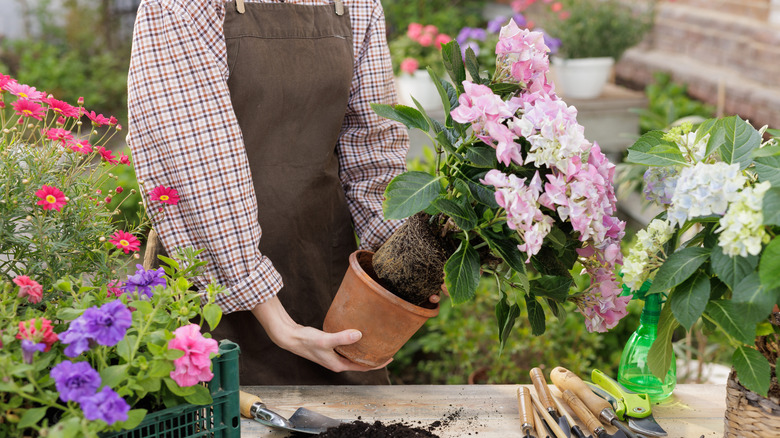
Spring serves as the prime window for repotting most outdoor plants. It's when many species come out of dormancy and enter a period of rapid metabolic activity. Plants produce large amounts of growth hormones during this time, which help them quickly reestablish their roots after repotting. Furthermore, in most places, outdoor temperatures are just rising during spring, not scorching, so the risk of transplant shock decreases quite significantly. You should also repot your plants as early as possible in spring, well before they start growing vigorously or flowering, if applicable.
Wait until the risk of frost has passed, and then head to your potting station or get out your gardening tools. If repotting is done right, it leads to lush foliage, healthy growth, and abundant flowers. Early spring repotting gives the roots enough time to expand into their new home before the demanding season of blooming or fruiting begins, or before the wild winter weather returns. Depending on where you live in the U.S., you may be able to repot plants into early summer — for example, chrysanthemums, bearded irises, and day lilies will survive. Generally, you should avoid repotting plants on overly dry or windy days — conditions common to late summer — to reduce transplant stress.
There are some plants you need to repot in fall for best results
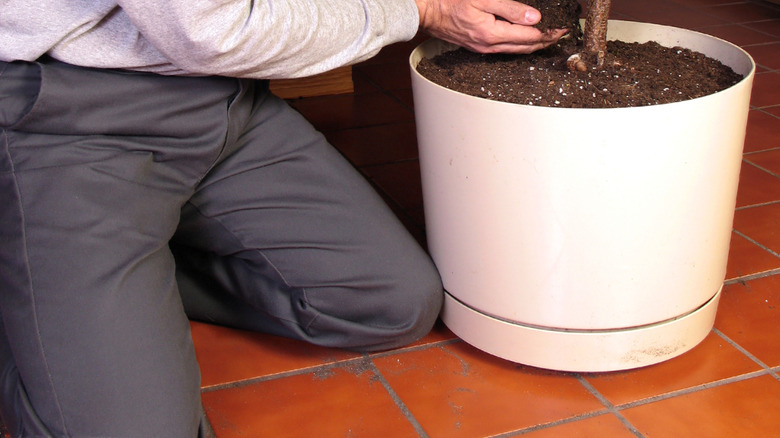
For some outdoor plants, especially those that bloom and fruit in the warmer months, repotting during spring or early summer is not a smart move. When plants are flowering, they cannot devote as much energy to root growth. This can lead to transplant shock because quick root recovery is vital for successful repotting. For these plants, waiting until fall to repot can help.
Furthermore, since top growth slows down in fall, outdoor plants typically shift their energy resources to root growth. They dig their roots deeper and more broadly into the ground as they get ready for the vigorous growth of spring. Remember that you need to repot plants right after the last frost in spring. Fall is similar, only in reverse. Aim to repot your plants at least five to six weeks before the first hard freeze. Plants that are sensitive to heat benefit from fall repotting, too.
In particular, some perennials, woody shrubs and evergreens — varieties of trees that grow happily in garden containers — do better if they're repotted in fall. As the name implies, they keep their leaves all year long. The downside to perpetual greenery is that they lose moisture through their leaves even in winter. They need a healthy root system to avoid winter burn, and repotting too late doesn't give them enough time to get established in their new home.