

The Non-Invasive Method That'll Make Removing A Tree Stump Easier
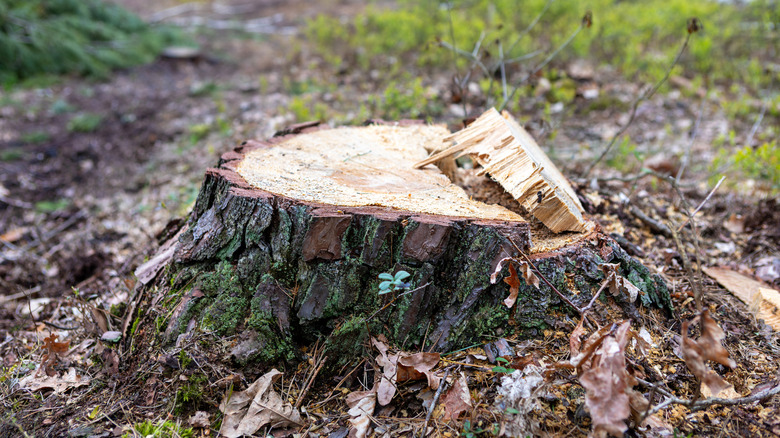
You recently had to cut down a tree that was threatening to fall on your home. While it's regretful that these majestic plants sometimes have to come down, it's better to be safe than sorry. What you're left with, however, is an unsightly tree stump. While a stump may seem harmless, homeowners have lots of understandable reasons to remove them. They can mar a carefully cultivated landscape, pose a tripping hazard, and make lawn mowing difficult. Cost and method are the main things you need to consider before removing a tree stump from your yard. Thankfully, the former can be reduced to practically nothing by burying the stump in compostable materials and leaving it to rot away.
If you've decided removing a tree stump is the right choice for you, you can enlist fungi and microorganisms to do the job instead of paying a tree surgeon hundreds of dollars. These tiny beings are slow workers; they can take 10 or more years to rot a stump without intervention. But they'll do it easily, for free, and with minimal chemicals or labor on your part. If allowing the stump to rot naturally and non-invasively sounds appealing, there are ways to drop the timeframe to one to three years, after which time you can effortlessly remove the remains. You may have come across products that claim to rot a tree stump faster. While these chemical solutions accelerate decomposition by 25%, natural decay — with tweaks — can boost rotting speed by 50%.
How to encourage a tree stump to rot in place naturally
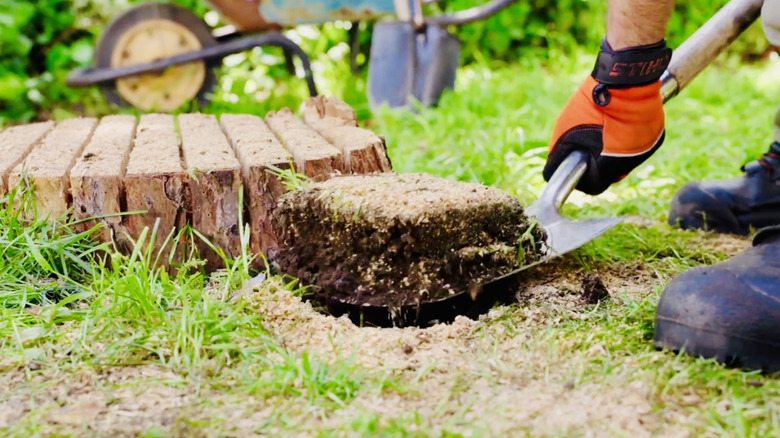
First, cut the stump as close to the ground as you can and remove any bark. You then need to create a surface microbes will want to colonize. Drill holes in the stump or cut horizontal, vertical, or crosshatched lines across the stump. The tree stump will release carbon dioxide while rotting, so it's a good idea to aerate the soil around the stump. This ensures sufficient oxygen for the resident microorganisms.
Now it's time to bury the stump in compostable materials that have a lot of nitrogen, like kitchen scraps and grass clippings. Decomposition requires both nitrogen-rich (green) and carbon-rich (brown) materials. In this scenario, the tree stump itself is the brown material. An alternate approach is to give the stump slow-release fertilizer that's high in nitrates. Follow the manufacturer's instructions to avoid the mistake everyone makes when removing a tree stump from their yard — using too much nitrogen fertilizer. Apply four ounces in each of the holes you drilled (or the cuts you made) every few weeks.
Just as you would water compost, you'll want to water your rotting stump regularly. Cover the stump with a layer of mulch to help retain moisture. Yes, you'll have an odd lump in your yard for a while, but the stump will shrink as it decomposes. The time it will take for your stump to fully decompose can range from one to three years, depending on weather conditions. Once decomposition is complete, you can use a spade to break up and dig out the remains. It's best not to replant the site with another tree as old roots may still be present.