

Think Twice Before Shoveling Snow Into The Street
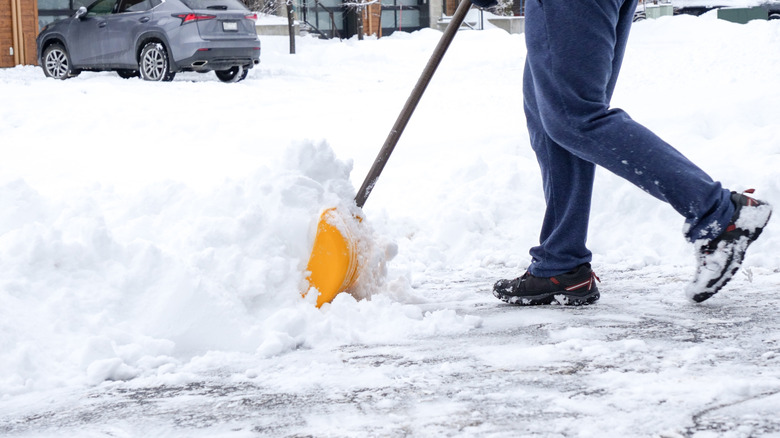
Shoveling snow isn't anyone's idea of a fun morning. In most cases, you wake up to a blanket of snow, put on your winter boots, grab your shovel, and try to clear out your property in time before heading to work. And while doing it, it might be tempting to give that shovelled snow a toss into the street and call it a day. Surely, this will make shoveling snow easier and, eventually, the city's snowplowers take care of your pile of excess snow, right? Well, not so much. Before you turn your personal driveway cleanup into the city's problem, there are a few things to consider. What might seem like a brilliant winter hack might, actually, get you in legal trouble.
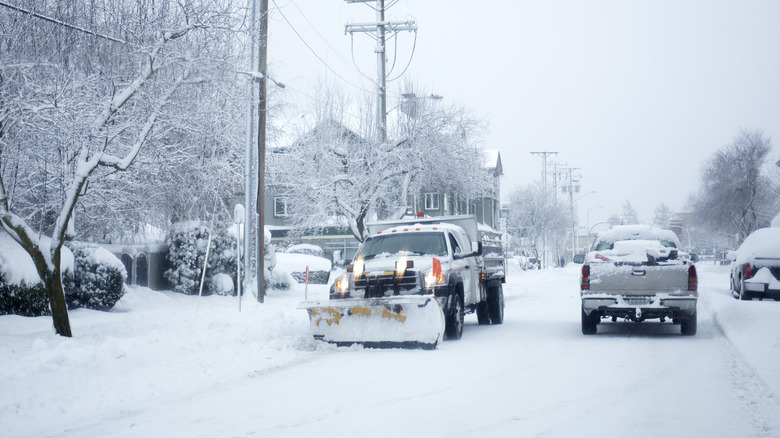
The main issue with shovelling your snow into the street or curb is that it makes roads dangerous for everyone, including drivers and cyclists. It also makes the work of city plows much harder, which means roads stay unsafe for longer after a snowstorm. To avoid this whole mess from happening, cities have rules against people shoveling snow into the street. Doing so is typically banned by city ordinances or by state laws regarding obstruction of roads, like in Indiana and Colorado. If you go against these rules, you might get fined and even held liable for any injuries that result from your mess. There are very few exceptions to this rule, but you can always look up your city code to learn more.
So if you're tempted to push your snow onto public property, don't. Instead, it's best to keep snow on your property, somewhere it won't cause any dangers to pedestrians and cars, like a lawn. We know that those huge mounds of shoveled snow aren't pretty, but that's the price to pay for communal safety.
Where should you place shoveled snow, if not the street?
Whether you're shoveling your driveway, parking spot, or walkway, you're responsible for pushing the snow onto your private property, and not the street or gutter. But this is also true when you're shoveling the sidewalk in front of your house or side alleyways. In short, avoid placing any shoveled snow into the street, curb, or gutter, and always opt for a safe spot that belongs to you, like your lawn or yard. If you don't have a lawn, push the snow to the edges or sides of your driveway or walkway.
If you really don't have the space on your property to leave the excess snow, or if you simply cannot stand the sight of a snow mountain on your lawn, there is one solution: Call a landscaping company to come remove the excess snow for you, for a fee. You can also hire someone to handle the shoveling for you altogether, but do make sure that it's done within 24 hours after a snowfall (this is typically how long cities allow to get this done). If the company is booked up, you'll have to grab the shovel yourself to meet the deadline.
And of course, these same rules hold true no matter which tool you're using for snow removal. If you're using a snow blower instead of a shovel, make sure that the chute is angled towards your property, and not the street. That way, the snow that it picks up will be thrown back onto your lawn. This rule of keeping snow off public property also applies to snow pileups created by other activities, like removing snow from trees in your yard, or raking snow from your roof.