

The Aggressive Grass You May Want To Reconsider Planting
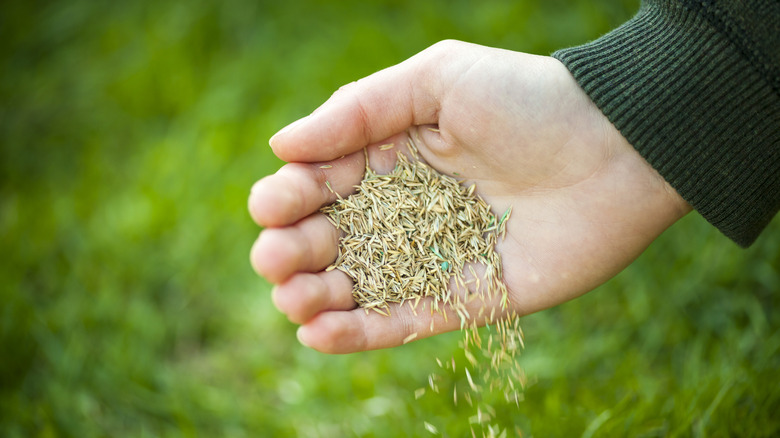
When choosing groundcover for residential properties, grasses are often the first option many homeowners consider. They are generally easy to care for and create a finished, cohesive look around a home. But if you choose the wrong kind, it will create problems not just for you but also for others and the environment. Take, for instance, the weeping lovegrass (Eragrostis curvula; USDA Plant Hardiness Zones 6-9). It gets its name from its arching and drooping growth habit, which creates a soft, weeping form. Unfortunately, though, its name and arching foliage are the only admirable things about this grass. That's because weeping lovegrass is an aggressive spreader. Also, it can survive even in the poorest of soils, has a deep root system that is extremely difficult to get rid of, and even competes with and drives out the local plants, so you'll definitely want to reconsider growing it.
And thanks to all of this, weeping lovegrass has now spread across much of the Eastern U.S. and is considered invasive in Virginia, Georgia, and South and North Carolina. But what makes the weeping lovegrass so successful is that it greens up quite early in the spring. This essentially lets it "shade out" other later germinating native species. Accordingly, this leads to a local decline in biodiversity, which is not a good thing if you are trying to turn your garden into a wildlife habitat. On top of that, it is also a prolific seed producer. And the worst part? These seeds can spread through the air and remain viable in the soil for years. So even after you remove it, it might come back.
Identifying and getting rid of weeping lovegrass
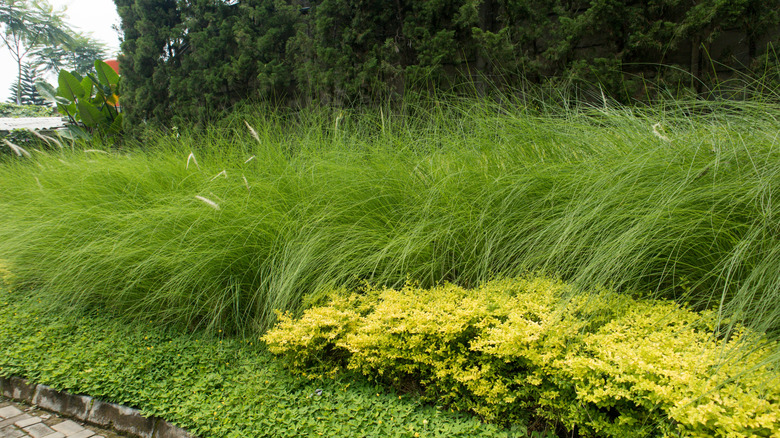
Even if you don't intentionally plant weeping lovegrass, it could be introduced in your yard from elsewhere. That's why it is essential that you know how to identify and remove it, in case it pops up in your lawn. Weeping grass plants often appear as compact clumps of slender leaves with their tips bending softly downward. The leaves are narrow, about two feet long, and have a bluish-green color. You can further verify its identity by checking for its collar. If it is weeping ryegrass, the collar area will be covered with elongated hairs and a small, hairy ligule.
Once you have positively identified the weeping lovegrass, there are mainly two ways you can eradicate it. For smaller infestations, physical removal is a good option. Just make sure that you pull the whole plant out along with the roots. Weeping lovegrass is a perennial plant, and if you leave the roots behind, they might grow into new plants the following year. Also, since it has deep fibrous roots, hand pulling might not suffice. So, you will probably need some type of weeder tool, like a sharp spade or a grubbing tool, to sever the roots several inches below the surface.
For large infestations, chemical treatment is usually the more practical approach. You can use any non-selective systemic herbicides like glyphosate to get rid of weeping lovegrass in your yard. However, for store-bought weed killers to work effectively, you must apply them when the grass is still green and actively growing. If the weeping lovegrass enters dormancy and turns brown, these chemical treatments won't be very effective.